Saturday, December 15, 2018

Book-A-Day 2018 #349: Matt Wagner's Grendel Omnibuses (4 Vols.) by Wagner & various collaborators

Grendel was an adventure-story anti-hero in an anthology before anything else. He later became an idea, or a project, or a grandiose vision, or a symbol. But, in the beginning, he was a cool idea from a very young creator, a crimelord with a shock of white in his hair and a unique weapon who could have awesome fight scenes and overly dramatic dialogue.

Those very early Grendel stories, by a very young Matt Wagner, don't appear in any of these books. They're apprentice work, and Wagner later reworked the bones of those stories, and that initial idea, into the first "real" Grendel story, Devil by the Deed. This series of omnibuses collect the legend, not the false start that was the raw material for it.

(You can find those early all-Wagner Grendel stories in the 2007 book Grendel Archives, if you like. They're not as good as anything in the main series, obviously.)

In the version of Grendel continuity in these books, the first Grendel -- that we see, at least -- was a boy from the American midwest named Eddie. He's was preternaturally smart, collected, and good at fencing, in the way of a comic-book hero, but he was also almost completely devoid of any human feeling. Somehow, at the age of fourteen, the fencing team he was on went to London for a championship, where Eddie deliberately lost in his final match. A beautiful trainer for a rival team, with the unlikely name of Jocasta Rose, found Eddie and seduced him because of that, whisking him away for a whirlwind few months before she died of the usual popular-fiction Ali McGraw Disease.

Somehow Eddie got back to the US, took up the name Hunter Rose, became an immediately best-selling author under that name at the age of eighteen and simultaneously became the mysterious masked mob assassin named Grendel. Within a year or so, he'd taken over the New York mob he worked for, and not much longer afterward, he controlled crime on the entire Eastern seaboard.

(The details of Hunter Rose's career were locked in by Wagner when he was 21, and are about as believable as most of the fictions any of us make up at that age. You may notice my description has a lot of "somehow" in it. But they're baked into Grendel. And we'll see Wagner tack hard in the opposite direction with later Grendels -- if Hunter is the Grendel who makes no mistakes, several others are Grendels who make little but mistakes.)

All of the stories of that first Grendel are collected in the first omnibus, Hunter Rose. Devil by the Deed is the essential story, those early stories distilled down to an illustrated storybook format. It is overwritten, much like Wagner's straining-for-significance dialogue in the contemporaneous first Mage series, but that's only to be expected of comics writers: they've been overwriting madly since Stan Lee discovered adjectives. The later stories collected in that omnibus (mostly written by Wagner and drawn by others, in two different mini-series from 1998 and 2002) are only occasionally overwritten, like the tedious "Devil, Deed, Denouement," which is written in bad verse to boot. Most of the short pieces are solid crime stories, only slightly flawed by having the can-never-loose Hunter Rose in them: the better ones treat him as a force of nature or an evil god, giving a noirish mood.

There are two later all-Wagner stories in Hunter Rose as well. First is the very short and question-begging "Sympathy from the Devil," from some benefit anthology or other, in which we learn that Grendel is a murderous evil crime boss who slaughters innocents for no reason but is not prejudiced against homosexuals, so he's actually a nice guy. Yes, exactly. Last up in this book is Behold the Devil, a nine-issue series from 2007 in which a policewoman and reporter chase Grendel a few months before his inevitable fall and end up the same way as everyone else who encounters the Hunter Rose Grendel in any of these stories.

Hunter Rose is a boring character: he can't grow or change, since hie entire story arc was baked into that very first story. I've called him "evil Batman" before, but he's even more than that --in the '80s, he was already the evil version of the omniscient Grant Morrison Batman, able to not only do everything but already knowing everything. Literally nothing can harm or foil him, except that inevitable final fight with Argent (a large wolflike and semi-immortal being affiliated with the local police and with a vague and possibly racist Native American origin), so every later Hunter Rose story boils down to "see this new character get crushed by Hunter in some new and inventive way." It's a lot closer to horror than I'm interested in.

The remaining three volumes collect material mostly in between the stories in Hunter Rose, which is slightly odd. Wagner launched Grendel as an ongoing series in 1986 with a series of artists working from his scripts, following the idea of "Grendel" into the future from Hunter Rose's death. That comic lasted for forty issues, until 1990. Two years later came Grendel: War Child, officially a ten-issue miniseries but internally following the issue numbering of the main series. Omnibuses two to four reprint that material -- in a slightly different form as reprinted by Dark Horse a decade or so later, but that material, with a few later additions.

The Legacy, the second book, picks up with "Grendel's granddaughter." Christine Spar is the adult daughter of Grendel's ward, Stacy Palumbo. Palumbo had her own tragic story, partially explained in Devil by the Deed and expanded in Devil Child, a 1999 mini-series written by Wagner's long-time editor Diana Schutz and drawn by Tim Sale, the first story in Legacy. Next up is a twelve-issue story, Devil's Legacy, featuring Spar, a journalist and single mother famous for writing the definitive book on Hunter Rose, puckishly titled Devil by the Deed in-universe. She runs into a small group of vampires, who kidnap her son almost immediately. Since the true message of all the Grendel stories is  that the authorities are at best useless and usually corrupt functionaries of evil, the police are not only no help, but actively hostile to Spar, who turns herself into the second Grendel to get vengeance. Since she is not Hunter Rose -- and I think Wagner was deliberately working against those superhero expectations he'd set up with Hunter -- it does not go very well for her. Devil's Legacy has dynamic, angular art from the Pander Brothers, and starts the transformation of Grendel from the vaguely mid-century mobster feel of the Hunter Rose stories to the various flavors of dystopian SF that it became from that point.

Next in The Legacy is a shorter story, The Devil Inside. Brian Li Sung, who had a brief relationship with Spar in Legacy, is the next, even lesser incarnation of Grendel, and is pretty much the opposite of Hunter Rose. His story has cramped, claustrophobic art by Bernie Mireault. Last in the second volume are a few transitional stories drawn by Wagner under the title Devil Tales, as Wagner sets up a substantially more dystopian world a few hundred years in the future for his next major story.

The third volume, Orion's Reign, collects the two long storylines that ended the late-80s Grendel comic, but starts with four more transitional issues of the '80s Grendel first, under the title The Incubation Years. (These loosely continue from the transitional stories from the second book, and continue seeing Wagner using lots of captions to set the stage for his crapsack twenty-fourth Century world.) Art for those stories is by Hannibal King and Tim Sale.

The first major storyline in Reign is God and the Devil, in which the local American incarnation of a Balkanized Catholic Church is the particular evil oppressive authority. This time, though, Wagner separates Grendel in two -- first there's the obvious costumed figure (the anarchic, violent destructive impulse) and then there's a cooler, corporate-based opposition to the Church, which will eventually lead into the next story. This piece is drawn mostly by John K. Snyder III and Jay Geldhof (swapping out pencils and inks, and working with Mireault as well), and is less dense than the transitional and Li Sung stories, coming back to more of an adventure-comics style.

The rest of Reign is the much denser Devil's Reign storyline, drawn by Tim Sale, in which the text boxes explode and the action stretches over years without any single incarnation of Grendel to follow. (In retrospect, far too much of Grendel was made up of long stretches of text talking about political struggles and social upheavals just to set up another story with someone in a neat costume actually doing things.) This is the story that sets up the end-state of the Grendel universe: a loose global confederation, run by a militaristic somewhat merit-based warrior class of Grendels, which in practice seems to be less "government" and more "local thugs." From that, Wagner launched a new series of miniseries, entirely by other people, under a Grendel Tales title...but I'm not here to talk about those stories today.

The last volume of the Wagner Grendel Omnibus series is Prime, collecting stories of the superpowerful cyborg Grendel-Prime, his contribution to the grim & gritty early '90s. Prime contains the main Prime story, War Child, in which he abducts the young heir of the dead Grendel-Khan and the two take a violent tour of how horrible Wagner's world is at that point. (Art by Patrick McKeown with Wagner inking.) Then there's a short prose novel by Greg Rucka, Past Prime, which I've never read and didn't read now. (There's enough endless text from Wagner earlier in this series, and I'm not particularly fond of two hundred pages of prose interrupting my two thousand-plus pages of comics.) It ends up with two shorter all-Wagner stories. The longer, directly related one is Devil Quest, a very episodic, very violent, very dark set of events that ran as backups in a bunch of Grendel Tales comics and served mostly to winkingly explain this universe's end of the Batman/Grendel Prime crossover.

And then, at the very end, is A Grendel Primer, a short abecedary summing up the entire series.

Grendel, at is core, is a deeply pessimistic, cynical concept: people are horrible, evil creatures, and (even without the occasional supernatural elements of the series) will kill and destroy and exploit each other all of the time as much as they possibly can. Grendel itself is possibly some kind of semi-sentient spirit -- it seem to be so in the Spar/Li Sung/transitional era, but that disappears in the later stories, possibly because the spirit has by that point incorporated itself into every living human. Along the way, Wagner made some great comics out of that concept -- the Legacy, God and the Devil and War Child stories are the best -- but also spent a lot of time filling a myriad tiny text boxes with all of the minutia of how the world went from Horrible State B to Horrible State C, which I might suggest is not necessarily the best use of anyone's time.

There's also a lot of good art in this series -- in particular, a lot of Wagner's most interesting and formally inventive stuff is in the odd transitional issues and sidebars -- not so much the late Hunter Rose stories, which are crisp noir exercises. A lot of his collaborators do very good work as well -- The Panders, Mireault, Snyder and Gedlhof, and Sale all have strong work here.

There's a lot of good stuff in Grendel. My only caveat is that you need to wade through a lot of words about the specific ways this world has gotten really lousy -- and do so repeatedly -- to keep getting to the good stuff.

Friday, December 14, 2018

Book-A-Day 2018 #348: Beanworld Omnibus, Vol. 1 by Larry Marder

I have to admit this: I'd never read Beanworld until now. Maybe you're the same: I obviously can't judge, if so.

Larry Marder's Beanworld has been around since 1984, perhaps the quintessential quirky comics series, lauded and awarded regularly and loved by lots of comics creators but looking really, really weird to a general comics-reading audience. It's the kind of book I expect to like -- and, not to bury the lede, but I did, once I finally got to it.

Beanworld Omnibus, Vol. 1 collects the twenty-one issues of Beanworld's original run, from 1984 through 1993, when Marder took a full-time job running Image Comics. (I gather that there are new Beanworld stories since 2007, when Marder left Image, and I'm now trying to figure out where to pick them up. There is not an Omnibus, Vol. 2 yet, sadly, and I'm trying to figure out how this Omnibus lines up with the smaller collections.)

Beanworld was unlike any other comics on the racks in 1984, and there's very little like it even now. It's fiction, with a slant towards metaphor or allegory, and no obvious relationship to any of the genres dominant in any part of American cartooning up to that point (superheroes, westerns, horror, romances, or the strip staples of gag-a-day, soap opera, and adventure). Instead, Beanworld is about an entirely separate world with its own complex rules and systems, and the story of the comic is how the inhabitants of that world work through those rules and systems, interact, and live together.

There is conflict, in the sense that different characters want and need different things, and some are thoughtless or selfish or just trouble-makers. But there are no villains, no one that needs to be defeated. There is a hero, though -- that's Mr. Spook, the guy in the center of the cover with the fork. Being the hero doesn't mean he's always right, or even the center of the stories: just that his role is to be the strong, assertive leader of his people when strong, assertive leadership is needed.

Since Beanworld is the story of a world, let's take a look at it -- this image shows the immediate surroundings. (There's a wider world further away, which will come into the stories eventually. But we start here.)

The Beans live on an island, in the shade of Gran'Ma'Pa, a tree-like living thing that is their ancestor and provider and center of their lives. That island floats above a sea, topped with water. Under the water are first The Four Realities, containing four different basic items -- slats, hoops, twinks, and chips -- that can be combined to make useful tools by someone with the skill and knowledge to do so. Below that is another community, the Hoi Polloi.

The Beans and the Hoi Polloi are dependent on each other: the Hoi Polloi need the "sprout-butts" that the Beans bring, and the Beans need the "chow" that the Hoi Polloi break the sprout-butts down into.  But, even though Beanworld is something like an ecological fable, there's not going to be a peaceful, happy, let's-all-sing-Kumbaya solution: Marder has set up this world so that the Beans need to fight for the chow every time. It all works -- and he spends time as these stories goes on examining various ways it could work better or worse -- but it doesn't work in a simplistic, "nice" way. It's complicated and competitive, like life itself.

All of the aspects of the Beans' lives are like that: superficial simplicity over deep complexity. Not just anyone can combine the building blocks of The Four Realities: that's another specific role among the Beans, like Mr. Spook is the hero. Their tool-maker is Professor Garbanzo. And we see other specific Beans "break out" to be something more particular in these stories, with a particular focus on Beanish, their first artist.

Beanworld is not a formal allegory: it doesn't line up to anything else. But it is deeply metaphorical in its use of simplified characters and objects, telling a widely applicable story that is both entirely its quirky specific self and parallel to a thousand things in our real world. The tag line since 1984 has been "a most peculiar comic book experience," and that's very apt -- but "peculiar" doesn't express how smart and deep and thoughtful Beanworld is. Marder's drawings look simple, but they're very precise, just like his writing. Beanworld is a comic with vast depths, simple enough on the surface for readers as young as grade school but implying and suggesting vastly more for those with more experience.

You probably shouldn't wait as long as I did to read it. That was not my smartest idea. But the great thing about a good book is that now is always the right time to read it. And now is a great time to read Beanworld.

Thursday, December 13, 2018

Book-A-Day 2018 #347: Justice League International, Vol. 1 by Giffen, DeMatteis, Maguire, & Gordon

Eventually I made it all the way back.

Over the summer, I noticed my library system had the two books collecting the mid-00s return engagement of the Giffen/DeMatteis/Maguire bwah-ha-ha era Justice League -- Formerly Known as the Justice League and I Can't Believe It's Not the Justice League -- and thought it might be fun to read them again. (I'd owned them in floppy form but lost those copies in my 2011 flood.)

So I did.

Book-a-Day kept running on, and I kept needing to find more books to read every day, and I kept poking through the library system to find other things, mostly thinking "what's the next in this series." In this case, I went backwards instead.

It turned out they had Justice League International, Vol. 1, collecting the first seven issues from the 1987 series that launched the Giffen/DeMatteis/Maguire League in the first place. So why not? (Note that series was actually just Justice League for the first six of those issues; JLI became the title for #7 and then it turned to Justice League America with #26.)

Amusingly, this Justice League had an origin not unlike that of Grant Morrison's 1989 Doom Patrol run, which I just wrote about a few weeks ago -- launching out of an event (Legends) that defined what characters would be available, trying to salvage a valuable IP after the previous version killed reader interest and sales, given more freedom to do their thing than they expected. So plotter Keith Giffen, scripter J.M. DeMatteis, penciler Kevin Maguire, and inker Al Gordon (with an asterisk for Terry Austin, who inked the first issue) sat down to re-launch the Justice League for the mid-80s: serious, tough, ready to take on the big challenges.

And, somewhere along the way, it also got funny.

There's an introduction by Giffen that explains some of that, both the unlikeliness of this team (Giffen was best known for Ambush Bug, DeMatteis for Moonshadow, and Maguire for nothing at all yet) and that the humor came out of the interactions of that team as they discovered each others' strengths. Maguire was really good at facial expressions, which allowed verbal humor room to work, and DeMatteis liked writing that kind of dialogue...plus, obviously, the idea of "wisecracking superheroes" wasn't precisely new in 1987. But a team that functioned almost like a sitcom was.

On that other hand, that conception of the series -- that it was full of running jokes and silliness, completely unlike other superhero comics at the time -- is overstated as well. There were moments when the overall series got very silly, particularly later on, when it had bifurcated into Justice League America and Justice League Europe and even more specifically in deliberately silly stories like the fourth annual, the big "Justice League Antarctica" story.

The seven comics collected here are not tooth-gnashingly serious, but that wave was still building in 1987, as only the first imitators of Dark Knight had launched. Grim and gritty really hit four and five years later, with the '90s. It was, though, about as serious as any other superhero book of the time: real villains doing dangerous things, some interpersonal conflicts among the team, occasional mild laughs.

Instead, these initial Giffen/DeMatteis/Maguire stories are just solid superhero work in the prevailing late-80s style -- the "squabbling team" was old hat by then, thanks to Claremont's X-Men and everybody's Legion of Super-Heroes. Giffen had some interesting ideas to spark superpowered conflicts; DeMatteis could keep their dialogue distinctive and specific, and have them bounce off each other well; and Maguire sold the stories by giving all the characters exactly the right face for that dialogue.

So, if you're looking for the goofball JLI, you need to go deeper in the series than this, and realize it was always more of a flavor than the whole package. (If you want the whole goofball enchilada, Giffen's Ambush Bug, which I've already mentioned, is a better bet.) If you want decent superhero adventures in the brief moment between decent characterization finally becoming standard and the excesses of the '90s, this is one of the better examples.

Wednesday, December 12, 2018

Book-A-Day 2018 #346: Dork by Evan Dorkin

There are days when I think that Evan Dorkin exists so I can be regularly reminded that I'm not the most cynical, negative person in the world. But most days I manage not to be that solipsistic.

Dorkin is probably the most cynical, negative person in comics -- I could remove the "probably" if I limited that to creators. (Otherwise he'd be fighting with Gary Groth for the throne, and who wants that?)

He's best-known for creating Milk and Cheese, the reductio ad absurdum of '90s hyper-violent comics heroes, but he's done a lot of other work over the years, starting with his early Pirate Corp$! ska-fuled adventure stories in the '80s and running through a lot of projects in comics and animation.

One of the spines of that long career has been his occasional (yearly, optimistically) solo comics series Dork, from the company that was once named Slave Labor. (And which I will keep calling that, since I am old.) Dork is a big new collection of the stories from the comic of the same name, leaving out stories already collected in Milk & Cheese or The Eltingville Club and matching the format of those books. It's large, almost album-sized, and has sturdy paper-over-boards covers and nice glossy paper.

So now Dorkin fans can have a trilogy of bile on their shelves, collecting pretty much all of his central work, which is nice for us. We can wish that he did more work over the years, was less obviously conflicted about working in comics at all, and that he made several more boatloads of money along the way, but those would be as futile as all of our wishes.

Dork starts off with a new two-page introduction (in comics format, of course), and then seems to reprint the eleven issues of comic Dork more-or-less chronologically, starting with the first "Murder Family" story from 1991 and running through about two hundred pages of black and white comics and then twenty-seven pages of color comics before hitting a final supplemental section of covers from the comics and previous collections, plus similar stuff. At some point, material from the 2012 one-shot House of Fun -- which was not Dork #12 for some reason I didn't know, then or now --is included as well, though there's no way to know where unless you have those comics and pull them out to compare. It's a lot of good comics, organized well to read, but there's no explanation of where else any of this stuff originally appeared.

This is probably the complete Miscellaneous Dorkin to date, as far as I can tell. It's definitely almost three hundred pages of comics full of bile and spleen, featuring all of the appearances of the devil puppet and those late '90s stories that made us all worry whether Dorkin was OK or not. (He seems to have been about as OK as he could be, which can be good or bad, and is maybe somewhat more OK these days.)

The work is is very mixed: there's a lot of very short gag strips, mostly organized into pages of "fun" with seven four-panel pseudo-strips, each with one (generally dumb) joke. Longer pieces include several "Murder Family" stories, his early "Fisher-Price Theatre" pieces, his work from the early-'90s book Generation Ecch (the Gen X version of today's self-hating millennial websites), and a bunch of semi- or fully autobiographical stories, culminating in those '90s pieces about what looks really close to a nervous breakdown.

Dorkin's comedy is usually aggressive, about sex and violence and anger and fear and hatred, no matter what the length. Nothing is nice, and if Dorkin has ever been happy in his life, it doesn't come out in this work. It's also deliberately dumb humor a lot of the time: obvious jokes told in boundary-pushing ways. It is really funny a lot of the time, and regularly creepily true -- his more ambitious longer stories are really powerful.

Since this collects work from twenty or more years, the reader can trace the evolution of his art: he started pretty "punky," possibly self-taught, with lots of little lines and and a mania for details. His line has strengthened and simplified over the years -- he got very precise starting in the late '90s, and has kept that look since. I've said in the past that the early look was great for Milk and Cheese, but this book shows the real strength of his mature style: he definitely got better as he got more disciplined and worked on laying down that one right line.

All of the coloring here is provided by Sarah Dyer, who is also married to Dorkin. It is traditional here to use the word "long-suffering," or to make a comment about Dorkin's struggles with depression, but none of us really know anything about other people's relationships, and doubly so when we're experiencing someone else's life through art. So I'll just say she does good work, and it's more obvious with Dorkin's later work, where the cleaner lines give more space for the color to work well.

Dork is primarily for readers who are already fans of Dorkin, since it's so miscellaneous. Most people would be better off starting with The Eltingville Club (if you have a love-hate relationship with comics) or Milk & Cheese (if you have a love-hate relationship with the entire world). But, if you like confessional cartooning and sick humor -- maybe you're a fan of Ivan Brunetti or R. Crumb, and haven't encountered Dorkin yet -- this could be a good place to dive in.

Tuesday, December 11, 2018

Book-A-Day 2018 #345: You Are Here by Kyle Baker

I don't think anyone's hired Kyle Baker to write screenplays for romantic comedies yet. But, from the evidence of books like Why I Hate Saturn and I Die at Midnight and this book, I think he'd be really good at it: he has a knack for screwball complications and the kind of dialogue that only tangles up a complicated situation more, no matter how much his characters try to be clear.

You Are Here is a romantic comedy with thriller elements, or maybe a comedy-thriller with romantic elements, published as an album-format graphic novel in 1999. It's in what I think of as Baker's "cinematic" style, with mostly wide panels over captions and dialogue and sound effects, looking like storyboards more than a traditional comic. His art is vibrant and full of color, with a painterly feel most of the time; I think it was mostly achieved through digital tools.

I have the sense that Baker's work failed to hit its audience in this era, despite high-profile publications and some really good work. (I remember not-loving the "cinematic" format and Baker's shift to glossier art and computer drawing tools art at the time; maybe that was part of it with the wider audience.)

But You Are Here is manic and zippy and fizzy and total goofball fun from beginning to end; it might not be old enough to be a "lost classic," but it's a damn good book that got very little attention, from a creator who I don't think has ever gotten his due.

Noel Coleman is happy: he's been living in bucolic splendor somewhere in upstate New York [1] with Helen Foster for the last year, blissfully in love and doing good work on his paintings. Unfortunately, he's also lied entirely to Helen about his past, making himself out to be some kind of choirboy when he's actually a longtime minor criminal who only recently went straight by painting scenes from various crimes and events he witnessed.

Now he needs to head south to the city to sell his apartment. If he does that, he can get rid of the last vestiges of his old life and return to Helen unencumbered and ready to completely live the lies he's been telling her.

But she follows him. And a maniac killer, Vaughan Dreyfuss, is also after him: Dreyfuss killed his wife after finding out she was having an affair with Noel, and has now announced, on a live TV spot for his new bestselling book Yes I Did It and I'll Kill Again, that Noel is next. And all of his old friends refuse to believe he's gone straight. And the cops are no help with the Dreyfuss thing, because Noel is still sort-of wanted himself.

And so Noel is running frantically around New York City, trying to keep Helen from realizing he isn't who he said he was, trying to keep away from Dreyfuss, trying to avoid as many of his old crime acquaintances as he can, and trying to just get back out of the city to peace and quiet.

That leads to nearly a hundred and fifty pages -- big pages, with lots of action and activity and screwball dialogue and unlikely situations -- of complication, before the inevitable collision of Noel, Helen, Dreyfuss, and Noel's past. It all smashes up gloriously, and Baker spins out both a great confrontation/hostage scene with those core three characters, but a witty denouement after that, too.

Frankly, I think You Are Here is too big and too overstuffed to be turned into a movie, and the random nudity and violence of Noel's lowlife NYC hangouts might be a problem as well, but it could be a glorious one if anyone ever did it right. Even if that never happens, it's already a glorious romantic/thriller/comedy on the page. You might have missed it; a lot of people did. It's worth looking for, these almost twenty years later. And, luckily for you, there's a new edition, straight from Baker himself, just waiting for you.


[1] Upstate in the NYC sense -- maybe Putnam county, maybe the Catskills, maybe the Hudson valley. Definitely no further north than Albany, which means not really "upstate" to anyone who lives there.

Monday, December 10, 2018

Book-A-Day 2018 #344: Love and Rockets: New Stories, No. 8 by The Hernandez Brothers

We're deep into the metafiction era of Love and Rockets in this 2016 entry, the last of the book-format annuals before L&R once again reverted to a more regular publication schedule in stapled form, as it did twice before.

(Even this quintessential alternative icon can't escape the black hole of American periodical comics and the undertow of the Wednesday Crowd. Nothing can: there is no escape for any of us.)

So this is the state of play in Love and Rockets: New Stories, No. 8:

In Gilbert's pages, we're diving deeper into the multiple-Fritzes story, one turn sillier and more self-indulgent than even the Killer stories, escalating the Gilbert nuttiness as we move deeper into the sordid world of strip clubs and fetish porn and crazy scientists modifying bodies for those activities. Oh, and drug smuggling, too, because where you have mad scientists you have crazy drugs.

I also should mention here that a throwaway line a book or two ago about Killer not being old enough to remake Fritz's movies "for seven years" was apparently meant as a trigger for a flashforward: all of these Killer-as-a-busty-teen-exploitation-star stories (and presumably the related everyone-wants-to-be-Fritz stories here) are all set in 2018 and later, according to the Love and Rockets Companion. I don't think that was clear at all, but Gilbert's stories were always more about feeling than particular facts.

It's all very sordid, including a drug-addled guy with two dicks, various background characters with freakish bodies created by a frankly mad scientist, and a confusing plot of double-crosses, murderous overdoses, and corrupt use of law enforcement. I have a hard time keeping the not-Fritzes separate, figuring out what scenes happened in which order, and (worst of all) caring about any of it. The writing gets stiff and mannered, too, even in the "real-world" scenes where it's not supposed to show that we're watching a bad movie. (Maybe that stiff writing is deliberate, to show us that these people live like they're in bad movies -- that would make sense. But it doesn't make it more pleasant to read.)

On the Jaime side, The Maggie-and-Hopey story started in the previous volume is back, with eighteen pages at the end of the book following Maggie as she goes to the reunion and does the usual Maggie thing: running back and forth as she tries to decide if she wants to be part of something or not. Hopey, also as usual, has flaked out on her without explanation -- this whole storyline feels like a summing-up of their whole thirty-year relationship, and how it never really changes. (At least, at this point it does.)

Also back from Jaime, earlier in the book, are the goofy Tonta and the bewildering Princess Animus, whose adventures here may be the the continuation of the movie that broke while Maggie and Hopey were watching it in the last volume or may be something quirkier like the Ti-Girls story of a few years before. I doubt that it will all turn out to be part of one overall story, the way "Browntown" and the other flashbacks were actually part of "The Love Bunglers" a few years before, but who knows?

The Tonta stories look like they may add up to a book eventually, but they're feeling more episodic -- what could have been the big climax, the plot by her older siblings against their mother, fizzled in the previous book, and Tonta wasn't directly part of that. Frankly, Tonta is an odd choice for a viewpoint character: she's misinformed or just confused a lot of the time, resistant to learning anything new, and no one seems to actually like her. (She's a bit like what The Frogmouth would be if she weren't sexy; maybe that's the point.)

Love and Rockets: New Stories ended as it began: with mostly quirky stories at right angles from what most of their audience wanted or expected from Jaime and Gilbert Hernandez. After thirty years, it may be time to admit that our wants and expectations don't match what the Hernandez brothers are going to do, and that we keep coming back because they confound our wants and expectations.

Note: Though this is the last-published physical book with the most recent Love and Rockets material, I do have a few more bits and pieces to fill out the last few weeks of the year. I Love (and Rockets) Mondays will continue through December 31st. Next week I'll hit The Love and Rockets Companion.

Reviewing the Mail: Week of 12/8/18

Every week, I list here any new books I've seen -- sometimes (as the title implies) through the mail from the fine publicity folks of publishing, sometimes from the library, and sometimes that I bought myself. This week, there's one book that came in the mail and then a large stack from a book-shopping trip on Friday. As always, actual new publicity books come first, so let me lead off with...

Terran Tomorrow, a new SF novel from Nancy Kress, published by Tor in hardcover in November. It's the concluding volume of her trilogy "Yesterday's Kin," after Tomorrow's Kin and If Tomorrow Comes, about first contact and some kind of interstellar killer spore-cloud. In this one, the human expedition comes back from the alien World to see what has happened to Earth in the intervening twenty-eight years...and I doubt there's be a novel if the answer was "everything went better than expected!"

And the rest of these are from that shopping trip:

Giant Days: Not on the Test Edition, Vol. 3 is the (yes!) third big hardcover collection of the Giant Days comic by John Allison, Max Sarin, and Liz Fleming. I covered the first two hardcovers in one post earlier this year, and I have actually already read this since buying it. (So, yeah, I do recommend the series: Allison does great stuff, alone or with other writers, and the Sarin/Fleming team work really well on this as well.)

Nexus Omnibus, Vol. 6 is credited to series creators Mike Baron and Steve Rude, but there's also a lot of art from other people -- this is the back half of the First Comics Nexus, when Rude was doing other projects. (And so was Baron -- he had a strong run on Punisher and some decent Flash stories around the same time -- but it's easier for writers to do multiple books at the same time.) I had a post earlier this year covering the first half of Nexus; I expect to have one next year on the back half once I get omnibuses 7 & 8.

Calla Cthulhu, Vol. 1 is a Lovecraftian comics series that I think is aimed at a YA audience, written by Evan Dorkin and Sarah Dyer with art by Erin Humiston. I got it, I think, mostly because I recently read Dorkin's Dork and feel sad about the self-reported state of his career and so want to support him. It's not the worst reason to buy a book! (And when I say "recently," I mean "the post about it doesn't go live until the 12th, so no link for you.")

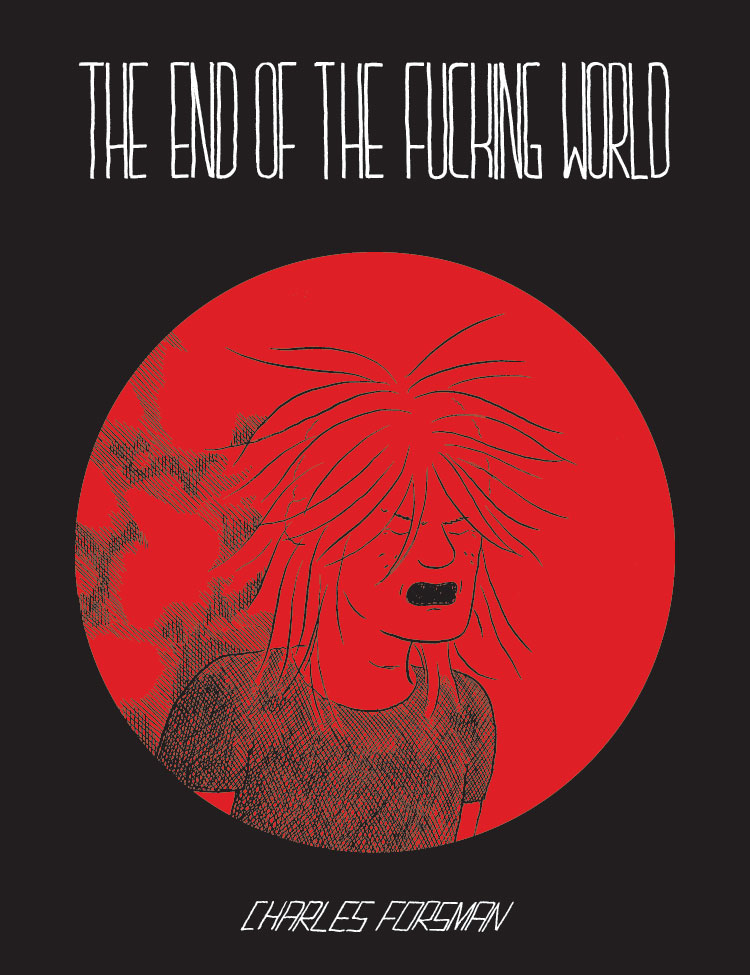
The End of the Fucking World was the breakout book by Charles Forsman, and maybe even his first book-format work; I'm not all that familiar with his career. I was impressed by his I Am Not Okay With This earlier this year, so I figured I should hit his big famous book next.

Tales of the Beanworld is "volume 3.5" of the collected Beanworld comics by Larry Marder. I finally read some Beanworld recently -- that post goes live on the 14th -- and now I want more. I believe the first omnibus collects the first two regular-size books, so I should, in a perfect world, read volume 3 before this. But I don't think I'm going to wait. Tales collects color stories that appeared in anthologies and other places -- outside of the regular Beanworld comic -- so it's not wrong to read it out of continuity...that's what I tell myself.

Michael Moorcock's Elric: The Balance Lost, Vol. 1 collects the beginning of a comics story about everybody's favorite mopey doomed albino from 2011, written by Chris Roberson and drawn by Francesco Biagini. I think I heard about this at the time, was vaguely interested, but never saw a book in person and forgot about it.

Paper Girls, Vol. 5 is the latest in the series by Brian K. Vaughan and Cliff Chiang, and I don't think I'm hate-reading it yet. (Though it is beginning to annoy me in its very Vaughan-esque "let's throw more complications in and hope no one notices there's no through-line" plotting. See my post on volume four for examples.)

Speaking of Vaughan, there's also Saga, Vol. 9, the comic he writes and Fiona Staples draws. You've probably heard of this one, and you might not agree with me that Vaughan is also stretching this one out, if you're enjoying the stretch. (The comics audience is eternally forgiving of things that seem to be stories and go on endlessly.) Here's my post on number 8 for reference.

Mage: The Hero Denied is subtitled "Vol. 5" to confuse everyone -- it's the first collection of this third series of stories about Matt Wagner's semi-autobiographical hero Kevin Matchstick. (So it's the fifth book overall, if you count the whole thirty-five year thing as one ongoing story, which you really shouldn't.) I recently re-read the first two stories, Hero Discovered and Hero Defined, because I knew this was coming out in floppy form.

Poochytown is the new book by the unique Jim Woodring. I ams going to read it, and I am going to try to sting words together to describe reading it, but I expect that will not be much more coherent than what I wrote about Weathercraft in 2010 or Fran in 2014.

Norse Mythology is not comics; it's a prose retelling of various legends by Neil Gaiman. And it's another piece of evidence for my theory that Gaiman, even at this point in his career, is deliberately making each book of his the first time he does something.

Time Travel: A History is a nonfiction book by James Gleick, the guy who wrote Chaos and Genius. It appears to be the story of both fictional time travel and whatever in modern physics is most relevant to the potential of actual time travel -- and that's a great combination for a reader like me.

Last is Kevin Young's big book Bunk, subtitled "The Rise of Hoaxes, Humbug, Plagiarists, Phonies, Post-Facts, and Fake News." It's been really well-reviewed, and it's out in paperback these days, so I might actually read it. Frankly, I suspect everyone in the US should be forced to read it, and maybe not allowed to vote unless they can pass a test on it, but I should put a damper on that opinion until I actually read the book to see if I agree with it.

Sunday, December 09, 2018

Book-A-Day 2018 #343: B.P.R.D.: Hell on Earth, Vols. 11-13 by Mike Mignola and various collaborators

Mike Mignola's fictional world is big and capacious; I find I come back to it intermittently and in big clumps, rather than trying to keep up with all of the strands as comics or books are published.

So this will only be the third post I've had on the B.P.R.D.: Hell on Earth overall storyline, even though that's been running since 2010: I hit the first three books in 2014 and then the next seven a year later. And there have already been two more books published to finish up Hell on Earth since then -- plus one to start up the next account of the ongoing apocalypse, The Devil You Know.

(Other, related stuff: the last two Abe Sapien books this May, a bunch of earlier Abe books in 2015, and a link to random posts on single volumes.)

This lassitude may have to do with the bleakness of this storyline: Hellboy may have died stopping the immediate end of the world, and some people may be still alive, but the Apocalypse has happened and gigantic alien monsters rampage across the world, tens of stories tall and mostly invulnerable to whatever conventional weaponry is left. It's hard to root for the people fighting the rearguard action so at least a few people can die of more natural causes before humanity is inevitably snuffed out.

These three books are more closely related than the big middle of Hell on Earth was -- this picks up on the thread of some of them with the new Hulk-ish Black Flame and his rule of NYC, and actually sees our heroes of the BPRD attack him directly. (They've been so defensive so for long -- quick! go to this place where an apocalypse megafauna has appeared and kill it, at whatever cost! -- that it's surprising to see them actually plan something.) As has been usual for a while, all three books are written by Mignola with John Arcudi, and there are different art teams for each story arc.

So the eleventh volume, Flesh and Stone, with moody art from James Harren, has the usual interrelated stories -- Fenix and Panya and the rest back at BPRD HQ in Colorado, trying to run the war and start a vegetable garden (because supply chains, as I've been complaining for a few years, have got to be blown to hell by now); a strike team under Johann clears out a small town while taciturn field agent Howards get some kind of magical power boost; sometime back in prehistory, a guy who looks just like Howards gets some monster-fighting experience and, yes, a magical power boost; Russia is getting overrun with the giant monsters and deathless Director Iosif is considering releasing Varvara; and the Black Flame is doing some kind of strange experiments in NYC with his team of soldiers and scientists.

But those stories do seem to be moving closer together, even in this volume, and things happen that aren't just "monster appears, kills a couple of field agents, and is defeated at great cost."

The next book is Metamorphosis, focusing on Johann: he's creeping his men out with his habit of using their corpses during field ops, and that's not surprising. Through a complicated series of events in two time periods, he tries to enter the vril armor from Sledgehammer 1944 -- yes, every last little bit of the Mignola-verse is connected; you can't avoid reading any piece of it if you like any of it. The art for the first three issues collected here is by Peter Snejbjerg, which is a bit too crisp and standard-comics for my eye, and the last two issues are drawn by Julian Totino Tedesco, who is closer to the doom-haunted standard BPRD look.

Then End of Days feels like it's wrapping up at least some of those plotlines: Liz Sherman and Johann in his new fancy suit (Spoilers! I guess) have a big fight scene with the Black Flame in NYC, which ends up feeling like more of a win that the BPRD has gotten in a long time. But, of course, at the same time one of the actual Ogdru Jahad -- a mountain-sized creature, one of seven gods of the apocalypse, and not just their merely monstrous spawn -- has manifested in Kansas, and even the new Liz & Johann team can't touch it. The other plotlines from Flesh and Stone move forward, though -- Howards, Iosif and Varvara, Fenix and Panya -- so maybe they will together provide some hope for the last two volumes. This one is drawn by Laurence Campbell, who is the very moodiest and darkest of the current gang of BPRD artists -- that's entirely appropriate, and works well.

This is still a lot of middle -- and, worse for any potential new readers, middle separated by a couple of dozen books from any beginning. You could potentially begin at the start of Hell on Earth, ten volumes earlier, but that was very middle itself. Really, to get here, you need to start at the beginning of BPRD and Abe Sapien at the very least, and probably Hellboy. This is an intricate and detailed world, but that means that there's a lot of backstory. Every reader needs to decide if getting into that detailed world is worth it -- particularly when so many of the details are so horrific.

Saturday, December 08, 2018

Book-A-Day 2018 #342: Spell Checkers, Vols. 1 & 2 by Jamie S. Rich & Nicolas Hitori De

I usually like anti-heroes. The pure goody-goody types are bland and dull; I like a bit of edge in my main characters, some actual humanity.

But it can go too far in the other direction. I don't insist on pure heroes, but I'd rather not read about out-and-out villains who don't even try to redeem themselves. They need to do something positive for me to be happy; they can't just torment others and destroy their lives.

And that brings me to Spell Checkers, two graphic novels (here, have links to one and two) from 2010-2011 from Jamie S. Rich (writer) and Nicolas Hitori De (art) with some assistance by Joelle Jones (covers and flashback scenes). I see there is a third book to finish up the series; I won't be looking for it.

The concept is great: what if the usual trio of high school mean girls (one with each hair color, natch) were not just mean, but actual witches, with the power to control minds and do whatever they want? Sounds like bitchy fun, right? But what if they get their "revenge" on a mousy girl who tried to get out of their control by destroying her humanity and turning her into their eternal slave? Wouldn't that be the best!?

If you said "yes," I don't think I want to know you.

The above is basically the plot of the first book: mysterious messages appear, magical problems arise, and our bitchy triumfeminate start to fight with each other. But it turns out the culprit is another girl, trying to break their iron hold on the school, and she is utterly destroyed, because the evil girls are our main characters.

(Literally destroyed: she's depicted as a paper-doll version of herself from then on, and doesn't speak again. This is totally horrific, and it's the triumphant action of our heroines.)

The second book, unsubtly subtitled Son of a Preacher Man, isn't quite as unpleasant, but it is more confusing. Two new teenage boys show up in town, the (yes) sons of a preacher, and I had serious trouble telling them apart for a long time. (Hitori De draws these stories in a manga-inspired style that has a lot of energy but also the common manga problem that everyone has basically the same face.) One is a bad boy, and one is a good boy, or maybe they're both bad in different ways, and our three quite bad girls interact with them and call each other sluts for it until there's a big supernatural ending where the girls are once again victorious. This time, they win over something that's at least arguably more evil than they are, which is at least a step in the right direction.

Hitori De's art is fun, and the dialogue is enjoyably bitchy throughout. But the plot of the first book is just so cartoonishly evil -- let's see these teen Dark Lords of Hot Topic consolidate their power! -- that there's no way I can recommend these books to anyone not actually sociopathic.

Friday, December 07, 2018

Book-A-Day 2018 #341: Thornhill by Pam Smy

It can be difficult to talk coherently about a subgenre too new, or too small, to have a name. Before I saw this book, I might have called it "one of those weird novel/comics hybrids like the ones Brian Selznick does," since the format is a lot like The Invention of Hugo Cabret and Wonderstruck. But once there are two creators working in a particular style, it no longer belongs to either of them. And where there are two creators, there's probably more -- I've only seen Selznick and Smy, but there are probably people working in this area from other letters of the alphabet.

That style is pretty strict: a book, for younger readers, told in alternating viewpoints, one of which is in prose and the other in full-page cinematic illustrations. (I've tagged all of them as "Comics," but it's not really comics, since each page is a single image and the page-to-page transitions are much more like film than comics.) Oh, and, so far, the two stories need to be separated in time -- at least a generation. Again, there are at least three books in this subgenre, with two from Selznick and this 2017 book from Pam Smy, and I bet there are other similar books I haven't seen as well.

Smy's entry into this small, quirky subgenre is Thornhill, about bullying, silence, revenge, the yearning for true friendship, and the dark, forbidding orphanage of the title, in the British provincial town of Midchester.

In 1982, Mary Baines is one of the dwindling number of children living at a cold Victorian pile called the Thornhill Institute; the place is being shut down and all of the children are being re-homed elsewhere. Mary is quiet and alone, living in a garret room on the top floor and afflicted with a selective mutism that keeps her from talking in groups and often even one-on-one. She prefers to spend her time by herself, walking through the gardens and making intricate puppets. But another, unnamed girl delights in tormenting and bullying Mary, and she's just come back to Thornhill after a failed "re-homing." All of the other girls, and even the staff, love this unnamed girl, and the staff doesn't realize that she orchestrates nasty, sneaky attacks on Mary. They just see this girl saying that she wants to be Mary's friend, and get involved to urge Mary not to be standoffish, to let this girl be her "friend."

We read Mary's story in her diary, day by day.

In the modern day, a girl of about the same age, twelve to fourteen, has just moved with her (widowed? divorced?) father into a house nearby. We never see her father, who works long hours and leaves her alone. Her window looks out over a back garden towards the decaying, boarded-up Thornhill; occasionally we see newspaper stories in her sections bemoaning the fact that all attempts to redevelop it have failed for more than thirty years. We eventually learn she is named Ella Clarke.

Ella is also solitary, at least as we see her. She's fascinated by Thornhill and particularly the figure of a slim blonde girl of about her age who she sees, first in glances and then for longer and longer, leading Ella into the ruined orphanage. Eventually, Ella finds Mary's diary, and knows the things the reader already knows.

We see Ella's story, in double-page black-and-white art, full of texture and washes in various shades of grey. Smy is not working in anything like the traditional comics pencil-then-ink-then-color-overlay; she's an illustrator using moody tools suitable for this particular story.

The two stories intersect, of course. The reader hopes for some kind of happy resolution, a surprising twist in 1982, a redemption or transformation in 2017. There are surprises at the ending -- and not even the ones I was expecting. Thornhill is a chilly, subtly creepy book that ends as it begins, and I was impressed and gratified by that.

There are things that seemed to be loose ends, though, and I wonder if Smy hid those ends somewhere and I failed to pick up on them. Most centrally: what is the name of Mary's tormentor, and does she have any connection to the 2017 story? I won't say the answer is not in Thornhill, but I didn't catch it. I do have an explanation in my head, but I always like to check those against the author's actual words -- I don't know if Smy would agree with me.

In any case, Thornhill is a neat, distinctive, spooky book, suitable for tweens and up who like creepy stories. I actually liked it better than Selznick's books, which I suppose means this -- whatever we decide to call it -- is a viable subgenre.

Quote of the Week

"It could be cold, but what's cold anyway?
Cold's just the stillness of small things.
And stillness is the key."
 - The Indelicates,"Stasis," from Elevator Music

Thursday, December 06, 2018

Book-A-Day 2018 #340: Kaijumax, Season Three: King of the Monstas by Zander Cannon

The third story arc for Zander Cannon's quirky giant-monsters-in-prison series returns the focus back to that prison, after the Electrogor-on-the-run plot of the second "season." (Cannon is putting out Kaijumax in discrete six-issue clumps, collecting them, then coming back a few months later for the next one -- it's the classy-cable-show model applied to comics.)

In case you're saying "giant-what-in-prison?," have some links to Season One and Season Two. If you don't want that much detail: yes, giant monsters. Yes, prison. Yes, some implied and/or metaphorical racial issues from this being a series created by an American for an American audience. And, yes, it does all work better than you might expect.

So we come to Kaijumax, Season Three: King of the Monstas with some backstory. But our focus this time is mostly on Whoofy, supposed head of the Japanese kaiju because his father Ape-Whale was before him, and with the Creature from Devil's Creek, bottom critter on the totem pole of the Cryptids, a gang planning a coup against the kaiju's dominance.

Both are sad sacks, both are deeply in trouble, both don't seem to have any way out of their troubles. Even more, both are being manipulated  -- knowingly and not -- by others for their own ends, as a major riot-cum-power-struggle among inmate groups brews, and one of the guards carries on a dangerous relationship with one of the very worst inmates. And Electrogor is back, with his son Vogo, to shake up things even more.

The elements are very prison-movie: the weakling with one big valuable piece of information, the returning guy with something to protect and someone to take revenge on, brewing race wars fomented by charismatic tattooed crazies, junkies and their sneaky ways of getting drugs into the facility, a hidden murder in the past. But it's all among giant monsters, so the gangs are cryptids and kaiju and robots and so on. And the drugs are radioactive. And the prisoners are mostly five stories tall.

Cannon draws it all with style, giving a lot of body language and expressive faces to his monsters -- you can see it in Whoofy and the Creature on the cover. His colors (credited as "assists by Jason Fischer," and I don't know what that means) have a lot of brightness in the background, but his characters are usually in shadow -- they're in a world that has light, but they're in the darkness themselves. Cannon does a lot of subtle things like that, and a lot of nutty things like a Hamilton-esque rap musical about monsters and monster-hunters.

There is nothing else like Kaijumax, in comics or out of it. And something this special, this actually unique, is a treasure to be savored.

Wednesday, December 05, 2018

Book-A-Day 2018 #339: 3 Story: The Secret History of the Giant Man by Matt Kindt

Craig Pressgang just kept growing: he was nine feet tall in high school, and as tall as a three-story building by the time he was thirty. (Hence the title.) He's obviously a fantasy character, for those of you about to cite the inverse-square law, and his condition is almost as much a metaphor as it is a real thing.

This is Matt Kindt's 3 Story: The Secret History of the Giant Man, one of that early burst of Kindt stories that all seemed to be about WWII and/or spycraft. (Craig's father died in the war, before he was born, and he was an odd CIA asset in the '60s.) I saw the original edition back in 2010, but this new paperback also includes some related stories from a one-shot and the inevitable concept art.

I covered the plot and themes of the main book in some depth the first time, and I still agree with those opinions. So I won't repeat myself; follow that link if you want more detail.

The additional materials here are slight -- three "Secret Files" stories of Pressgang, working as a CIA asset in Paris, Egypt and Vietnam, and then those early drawings to close out the book. The package is nicer this time around than the first edition, with a better-looking cover.

Kindt's books have gotten slightly larger-scale and more traditionally active recently, but 3 Story is from fairly early in his career -- it's a quiet, distanced story about a man who is about as distanced as a man can be. The spycraft feels unnecessary here, like something that Kindt included because there were spies in all of his previous books. (You could imagine a book all about how the most recognizable man in the world could have massive secrets, but that's not what this book is.) If you're interested in that kind of story, this is a particularly good one.

Tuesday, December 04, 2018

Book-A-Day 2018 #338: Mage: The Hero Defined by Matt Wagner

Saving the world alone is easy. Working with other world-savers is tough.

That's more-or-less the moral of the middle book of Matt Wagner's Mage trilogy of transmuted fantasy autobiography, The Hero Defined.

Mage: The Hero Defined was published in 1997-1999, a little over a decade after the original 1984-86 Hero Discovered. (See my review last month of Discovered and an over-long, misshapen post about Defined from the really early days of this blog -- no, wait, actually don't see the latter, since it's pretty lousy.) And if the first book was about finding your power -- a big glowy baseball bat for hero Kevin Matchstick, standing in for the joy of comics creation for Wagner -- than Defined is about learning to work with others.

(This is somewhat buried in the book itself, but once the reader realizes all of the other hero characters are based on other comics creators, most if not all of them collaborators with Wagner on various Grendel stories over that previous decade, it gets clearer.)

Defined opens with an interlude, set some unspecified time after Discovered. Kevin has been wandering the world -- we saw him in Paris in a similar interlude at the end of Discovered, so we know he's been outside North America at least once -- fighting and killing "nasties." This time, he's at the Grand Canyon, and he runs into another hero, Joe Phat. They team up to take out the ghoul, and apparently fall into a lasting partnership.

Kevin is a brick: tough, strong, with that magic baseball bat which is more-or-less Excalibur. Joe is a trickster figure: fast, sneaky, able to mend things and find things. That's pretty complimentary, and Joe is also a world-class mooch, so he's quite happy to glom onto Kevin and his magic ATM card that provides endless money for the nasty hunt.

We learn that Joe wasn't the first hero that Kevin met; there are more and more of them these days, and they're meeting each other more often. In the immediate world of the story, that may mean the nasties are getting tougher, or that they're getting over-hunted. In the metaphor, it's emblematic of Wagner's greater immersion in the world of comics -- going from a lone-wolf doing his own stories all by himself to writing Grendel for various artistic collaborators, and, maybe, his work-for-hire stuff as well. (The nasties themselves don't line up well to anything in the metaphor, but the hunt for them is the work heroes do -- tough and demanding, requiring all of their effort, energy, and intelligence -- just like creation is the work comics-makers do.)

There are other magical people than heroes, too: Kevin knows the witch Isis and her husband Bartholomew Gretch, a giant. Those map to editors, more or less, but it's not a consistent part of the metaphor. Discovered tends to say that help on the nasty hunt is sometimes useful, but not consistently necessary. (As an ex-editor, I'm not sure if I'd agree with that in the real world, but it works in the metaphor.)

So there are more and more heroes, and they're running into each other more and more often. Sometimes working together; too often fighting each other first about who gets to take out the nasty.

And this story proper gets underway when Kevin and Joe run into Kirby Hero, the Olympian -- he's basically Hercules, in the middle of his famous dozen labors. The three clear out a nest of harpies, who seem to have enthralled a crazy old bum, Wally Ut. But Wally claims to be Kevin's second Mage and chases them around, occasionally showing hints that he might be doing magic but no solid proof. He also insists that Kevin head north, which they end up doing, more in spite of Wally than because of him, with Kirby dropping in and out as he follows his own labors.

Meanwhile, there's a shadowy figure watching Kevin, and readers of Discovered soon realize who he is. This time, he's calling himself the Pale Incanter, and he sends his five sons/minions, the Sprigginflints, to follow and harass Kevin as the Grackleflints did in the first book.

Eventually, Joe and Kevin and Kirby and Wally all do head north, to an unnamed Montreal. There, many other heroes have arrived, either called on specific quests or seemingly randomly. There's no indication this is all of the heroes, but it is more than have gathered anywhere, as far as anyone can remember. There's bickering and petty fighting among them, of course, but also allies -- the Dragonslayer picks a fight with Kevin and the Presbyter helps him out.

All the heroes are searching for the reason why they were drawn there: Kevin is sure it's all about him, which does not exactly lessen the sense in many of the other's that he's a self-obsessed prima donna. But Kevin is right, and there are shocking losses and, finally, a confrontation with the Pale Incanter and his creation.

Does the hero win? This is adventure fiction. All of the other questions also work out in ways that should be familiar to readers of stories about heroes and the nasties they fight.

This also supposedly is the metaphorical story of how Kevin/Wagner met and fell in love with his true love/wife -- in the metaphor, that's Isis's sister, Magda. Unfortunately, Madga is in about five short scenes over four-hundred-plus pages, so that becomes very much a subplot. I mean, it's very nice that Wagner found his love through comics, but he doesn't make it central to the story he's telling here.

This time out, Wagner inks his own work, giving all of Defined a consistent, strong look -- again, Defined is more than a decade later than Discovered, so he's had a lot of time and work to hone his skills, both at writing words and drawing pictures. Defined is better-looking than Discovered and has more varied characters. But it's also, maybe inevitably, somewhat middle-booky: this is another big event in Kevin's life, and possibly transformative, but that transformation will happen after the last page. What we see is mostly him comfortable and good in his role as a sole nasty-hunter, and more uneasy and less useful as a leader of nasty-hunters. And what we see him do is defeat a lesser villain than in Discovered with more help but more trouble -- he's definitely still heroic, but his semi-implied claim to be the best of them all and the natural leader of heroes takes more than one hit.

It's not entirely fair to judge Defined all by itself, since it is the middle book of a trilogy. Luckily, the third book is almost complete -- we'll be able to see the whole picture very soon.