This is one of the stuffed-full weeks, so I won't spend much time up top here introducing things. As usual, these are all books that arrived during the past week, sent by the hard-working publicists of their respective publishing houses. I haven't read these books yet, but every one of these books will be
someone's favorite book of the year (and that might be you), so here's what I can tell you about them now. It's very likely I'm making any particular book sound much less appealing than it really is, in cases of doubt.
I'll start this week with the new standalone novel from Karl Schroeder -- fresh from the four-book Virga saga -- which is
Lockstep
, coming March 25th as a Tor hardcover. It's a medium-to-far-future space adventure with a teenaged protagonist, an evil empire, and what looks like really serious hard physics behind it. (One of the big organizing principles of the Lockstep Empire is coldsleep, since all travel between its worlds is at sublight speeds.) I haven't read the last few of Schroeder's books,but what I have read by him has been zippy, smart, and full of wonders, so I have high hopes for this.
(Though I do have one odd book-design quibble: the letters on the cover are not
quite white; they're at something like 90% opacity. So I keep thinking there are smudges on the letters, when it's the art behind, ghosted to within an inch of its life. That's an interesting artistic choice.)
Also from Tor this month -- but already out, since it was published last week -- is Will Elliott's
The Pilgrims
, the first in a portal-fantasy trilogy from the author of the multiple Aurealis-winning
The Pilo Family Circus. It looks to be a much darker, creepier world on the other side of that portal than usual -- closer to
The Iron Dragon's Daughter than Narnia -- and the two men who travel through it are a middle-aged drunk and a slacker would-be journalist.
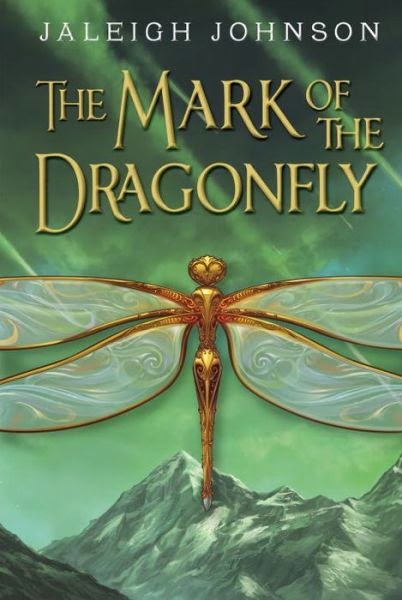 The Mark of the Dragonfly
is, I believe, the first novel by Jaleigh Johnson, and a middle-grade fantasy set in a secondary world. There, one girl scavenges for a living on the outskirts of a Scrap Town, until the day she finds an amnesiac girl with the tattoo of a dragonfly on her wrist -- proof the lost girl is someone important in the rich and powerful kingdom to the south. The only way to get there is to stow away on the 401 train -- this is a steampunk-flavored fantasy -- and evade the train's guards and the mysterious forces chasing them the whole way.

The massive, wonderful reprint anthology of the year might just be
The Time Traveler's Almanac
, edited by Ann & Jeff Vandermeer. It's got seventy-two stories -- up to novellas like Charles Stross's
"Palimpsest," which ends the book -- including four original essay/stories from Charles Yu, Charles Love, Genevieve Valentine, and Jason Heller. I'm particularly impressed to see that the Vandermeers haven't allowed themselves to be constrained by the usual only-one-story-per-author straitjacket of the historical anthology: both of Turtledoves "Counting Up, Counting Down" stories are here, plus a couple of Gene Wolfes, two great Kage Baker stories, and a lot more. Oh, let me just list a few big titles: "Ripples in the Dirac Sea," "Pale Roses," "The Gernsback Continuum," "Himself in Anachron," and "Young Zaphod Plays It Safe." And those are all just from the first section of four in the book. This
Almanac has nearly a thousand pages of great fantastic stories -- "Enoch Soames"! "Fire Watch"! "Vintage Season"! -- and I can't imagine any reader of SFF who wouldn't want to have it on the shelf, to read straight through or to dip into now and then. It's from Tor, it's in trade paperback, and it's available now.

Paul Park is back with a new novel --
All Those Vanished Engines
-- and he also (like Karl Schroeder, up top) is coming off a big series with a smaller single novel. And that's what the comics-industry people call a "jumping-on point:" Park is a ferociously smart and exciting novelist, so this slimmer book -- an alternate-history triptych, focused on the Civil War Battle of the Crater and Park's own real and fictionalized family -- will be a great way for new readers to sample his strengths. This is also from Tor, and will be a hardcover in July.

Max Gladstone's pseudo-legal-thriller urban fantasy series/world, The Craft Sequence -- I believe all three novels so far are independent, with separate characters -- returns with
Full Fathom Five
, following
Three Parts Dead (which
I reviewed and really liked) and
Two Serpents Rise (which I'm still hoping to get to). This time out, he's writing about Kai, who builds gods to order -- but discovers that her creations are dying for reasons that may be dangerous to her own career and life. This is from Tor, publishing in hardcover in July.

And my last book from Tor this week is Katherine Addison's debut novel,
The Goblin Emperor
, a secondary-world fantasy about a neglected younger son -- this one the exiled half-goblin son of the elvish emperor -- who is suddenly thrown into the snakepit of the royal court by an "accident" that kills the emperor and the closer heirs, and leaves him scrambling to fit into his new role, or just survive it. It's got a bunch of laudatory quotes -- from industry rags like
Kirkus and
Publishers Weekly as well as fellow writers like Jim C. Hines and Chaz Brenchley -- and it's a hardcover hitting April 1st.
Everything else I have this week is from the mighty Yen empire of manga, and all, I believe, published this month. I'll organize them as I usually do -- more or less by volume number, so we can go from most accessible to least. (Though even a couple of the "Volume Ones" this month are side-stories to other things, so it's not necessarily the most accurate metric.)

The thing that seems the closest to standing alone has the unwieldy title
Sword Art Online 1: Aincrad, and is credited to Tamako Nakamura for art, Reki Kawahara for the original story, and abec for character design.
Sword Art Online began as a series of light novels -- not yet available in English, though the first couple seem to be on their way -- about MMORPGs in the near future, enhanced by virtual reality, and featuring the usual VR dying-is-real trope.
Aincrad is a manga spin-off, and there appear to be two volumes. If this is successful, look out for a flood of
Sword Art Online novels, manag, anime, beachtowels, decorative wallhangings, snack packs, and carburetors.
 Bloody Brat, Vol. 1
collects humorous side stories and
4-koma (4-panel gag strips, like American newspaper comics) spinning off Yuuki Kodama's
Blood Lad series (see
my review of the first one). These stories, though, are by Kanata Yoshino, who contributes the usual I'm-not-worthy afterword here and whose first published work this seems to be.

Similarly, I think
Puella Magi Madoka Magica: The Different Story, Vol. 1
is some kind of retelling or alternate-world version of the main
Madoka Magica story (which is already confusing enough to me, with spin-offs for
Kazumi Magica and
Oriko Magica). This time, it's credited as art by Hanokage and original story by the Magica Quartet. The whole thing came from an anime TV series, so I expect there are lots of people who aren't the slightest bit confused by any of it.

Shiwo Komeyama's back with
Bloody Cross, Vol. 2
-- see
my review of the first one -- which is a demon-fighting story with a strong love/hate romantic subplot and a lot of energy.

And here's
No Matter How I Look at It, It's You Guys' Fault I'm Not Popular!, Vol. 3
, continuing Nico Tanigawa's story of a profoundly unpopular and geeky Japanese teenage girl. (See
my review of the first two volumes.) I'm fascinated both by the very different kind of geekery in these books -- what fascinates a Japanese girl is nothing like what fascinates an American boy -- and at the heroine's amazing lack of self-knowledge...oh, but I already said she was a teenager, so now I'm repeating myself.

Coco Fujiwara is also back, with
Inu x Boku SS, Vol. 3
-- and, again, I can point you to
my recent review of the first two books for more details of this rich-supernatural-kids-in-Tokyo story. From the back-cover copy, it looks like this series is still aimed towards romance than fighting among the supernatural beings, so set your assumptions accordingly.

And then there's Shiro Amano's
Kingdom Hearts: Three Five Eight Days Over Two, Vol. 3
. Yes, the cover and spine do spell out "Three Five Eight Days Over Two," and I'm still at a loss as to why. But it's here, it continues this version of the very popular story from the video games (and, more distantly, from Disney movies and characters), and a million kids will love it.
 Are You Alice?, Vol. 4
is by Ikumi Kataghirl and Ai Ninomiya, and it's still, as far as I can tell, a guns- and violence- filled
shonen retelling of Lewis Carroll that does not strive for accuracy so much as name-checking and a few ideas the creators particularly like.

Getting into the higher numbers, here's
Soul Eater, Vol. 19
by Atsushi Ohkubo. I've reviewed
the first volume and
number 8, but I've gotten out of touch with this series -- though both of my teenage sons love it for it's very
shonen and very energetic story of sentient shapeshifting weapons, their magical wielders, and the school they all attend.

I've spent more time than I'd like to count explaining the details of the
Higurashi: When They Cry franchinse, and here's
Higurashi When They Cry: Festival Accompanying Arc, Vol. 4
, which has a story by Ryukishi07 and art by Karin Suzuragi. Look, there's a series of murder-mystery games with a common setting and opening, OK? And the manga adapt those games -- this is the fourth volume (of eight) adapting the eighth game (of thirteen). Got it?

There's a similar series of games called
Umineko: When They Cry, and a similar series of manga adapting them, as well. And so here is
Umineko When They Cry, Episode 3: Banquet of the Golden Witch, Vol. 2
. The story of this series is also by the post-human entity Ryukishi07, and the art is by Kei Natsumi.

Returning to relatively easy-to-explain series by specific humans, Yumi Unita's generational family/love-story manga comes to a conclusion with
Bunny Drop, Vol. 10
.

And last from Yen this month is a rare hardcover manga, the gigantic
Wolf Children: Ame & Yuki
, credited as original story by Mamoru Hosoda, art by Yu, and character design by Yoshiyuki Sadamoto. I believe that this is the official comics adaptation of the 2012 animated movie
Wolf Children -- and not a side-story or otherwise different version -- about a young woman who falls in love with a werewolf, has two small children by him, and then has to raise them alone after his death.


 is a collection of mission and other patches associated with "black" (i.e., secret) aviation projects of the American military apparatus. Paglen admits that it's a haphazard and random collection, not arranged historically or operationally or according to any other specific scheme -- but, then, it has to be, since all of these projects were or still are secret, and the patches themselves (passed on to collectors, photographed in passing, or allowed to be semi-public because they're enigmatic enough not to violate mission secrecy) are often the only real public records that any of these things existed. The Pentagon certainly wasn't going to answer his questions about the Space Warfare Center's Special Projects Division or the Directorate of Special Projects. (There's a whole lot of "Special" on these patches: it's military-speak for "don't ask.")


 . It seems to be the sequel to something -- maybe another album, maybe a short story somewhere, maybe just the original idea that Trondheim didn't turn into a published work yet -- since this French family already has their pet monster, which has to be explained before the story proper can begin.

 -- right at the end of February 1988 -- and it was almost a clean break, with only a few three-panel strips before that and a handful of four-panel strips afterward. Schulz did start indulging some one-panel strips during this stretch though, which is interesting: they're clearly his work, and feature Peanuts characters, but they don't have the same rhythm as his main strips; they're "off" in the same way the 3D '60s Viewmasters and the comic-book versions of the characters are "off."


