


Vertical launches a new manga series this month with Tsutomu Nihei's Knights of Sidonia, Vol. 1
 . It's a far-future story, set aboard the seed ship Sidonia on its long mission to escape the nearly-ubiquitous, barely-sentient aliens that have destroyed most of the human race. The hero is a young recluse, an unmodified human male in a society dominated by new genders and where most people can photosynthesize, who is sent out to battle those hideous aliens (in, I'm going to guess, a giant robot mecha suit, because Japan). Nihei is known for dark, brooding stories, so I wouldn't expect too much slapstick or panty shots in this one -- it looks to be a more adult, serious look at some genre tropes, perhaps the manga equivalent of Greg Bear's Anvil of Stars.
 Also from Vertical this month is a continuation: Toru Fujisawa's GTO: 14 Days in Shonan, Vol. 7
 . The "great teacher" Eikichi Onizuka, on vacation in his hometown after events in the main GTO series, finds himself a "father" one afternoon, according to the back-cover copy -- though the early pages of the book see him burn down a group home to stick some girl with an arson-murder rap. (If that's what passes for "great teaching" in Japan, I'm happy to have grown up on this side of the Pacific!)
 Switching gears to books without pictures briefly, I also have here Brandon Sanderson's first novel for young readers, The Rithmatist
 , coming from Tor Teen in May. It seems to be set in a fantasy version of America, where dangerous Wild Chalklings threaten civilization, held back only by the magical power of the Rithmatists and the controlled Chalklings they can create. The novel follows one teen boy who desperately wants to be a Rithmatist -- and I'll bet that this isn't the one YA fantasy about a protagonist who isn't magically special.
 This week I also got a big box of Yen Press's February books, which will fill up the rest of this week's post. This time out, I'm not organizing them in any particular order -- we'll see what I can figure out about them as I go.
Triage X, Vol. 2
 comes from Shouji Sato (artist of Highschool of the Dead), and seems to be about a group of hyper-violent nurses from Mochizuki Hospital -- though I think they're only hyper-violent against some gang lord, or something like that. It's rated M-for-Mature and comes shrinkwrapped, so I expect there's quite a bit of fanservice along with the blood.
 Launching this month is Junya Inoue's BTOOOM!
 , with a first volume that has the word "Games" prominently displayed even though it doesn't seem to be part of the title or subtitle. My guess is that it's either a story arc or a Yen sub-imprint, though the book doesn't explain it either way. The story follows an addicted gamer, who gets kidnapped away to an uninhabited island, where he has to play a real-life game almost exactly like the one he's really really good at online in the usual death matches against colorful adversaries. Once again, Japan has really weird wish-fulfillment fantasies.
 The Haruhi Suzumiya juggernaut rolls on with another side volume, The Misfortune of Kyon and Koizumi
 , a collection of short stories about the two male members of the "SOS Brigade" from a dozen-plus manga-ka. The book doesn't credit an editor, but it looks like all of the stories were written by Haruhi creator Nagaru Tanigawa. If you have only a slight familiarity with Haruhi, this is nowhere near the place to start; this is serious otaku territory.
 Yuhki Kamatani's Nabari No Ou
 -- some kind of ninja-in-the-modern-world story -- returns with a thirteenth volume, which seems to focus on the mother of the series main character.
 Pandora Hearts
 -- a vaguely Alice in Wonderland-inspired manga series by Jun Mochizuki, whose first volume I reviewed a few years back -- has a fourteenth volume this month, in which things like "the tragedy of Sablier," "the sinister blade of the Headhunter," "and "the mysteries of Fianna's House and Humpty Dumpty" are all of utmost importance.
 Umineko When They Cry
 -- a series that's a sister (I think) to the longer Higurashi: When They Cry series, and similarly based on a series of computer games -- comes back fora second volume, again from Ryukishi07 and Kei Natsumi. This one is about a powerful family gathering on a remote island (of course), where they start being killed off one by one by either one of their own or a mysterious extra person on the island. Either way, the survivors want to stop it quickly.
 One of my favorite titles that I don't understand at all is The Betrayal Knows My Name
 , which always sounds to me like a piece of particularly arch, over-the-top dialogue from a really juicy soap opera. I have no real idea what Hotaru Odagiri's story is actually about, I'm sorry to say, but this 5th volume features a visit to the Hidden Springs of the Giou, which has got to be good.
 And last for this week is the third volume of Until Death Do Us Part
 , the story of a blind swordsman and a precognitive girl battling the evil forces that want to enslave her (and probably do much more than that, since evil forces rarely have small plans). It's by Hiroshi Takashige and DOUBLE-S.


 has as much Scott Turow in its DNA as it does J.R.R. Tolkien -- and that's much to its advantage. Max Gladstone's heroine Tara isn't a lawyer, exactly -- she's a very young necromancer, just expelled precipitously from the Hidden Schools and newly installed at the internationally renowned firm of Kelethras, Albrecht, and Ao -- but she's thrown into the deep end of complicated deals and maneuverings just as quickly as her legal equivalent.


 , written in-world by Lady Trent, her world's preeminent dragon naturalist, and in our world by Marie Brennan, author of a bunch of fantasy novels I've heard of but not yet read. Obviously, it's the story of Lady Trent's discovery of dragons -- in her cod-Victorian world -- and it has a bunch of Todd Lockwood illustrations as well. I suspect it won't be as quirky and odd as my favorite book in this subgenre, Pamela Whatron Blanpied's
  , but if Natural History is half as engaging and fun as that cover, it will be well worth reading. Tor is publishing this in hardcover on February 5th.
 , and I'm happy to see that at least one of the monster-fighters on the front cover is somewhat sensibly dressed this time. (The first book had a very distinctive hotsy-cheerleader-on-a-rooftop cover that may perhaps have not been 100% serious.)
 , the thirteenth book (and thus the beginning of the fifth trilogy). This series was really compelling for a long time, though I lost track of it after my fall from grace a few years back -- as far as I know it's still as compelling.
 series, bringing together Barakhai's Beasts and Lost Dragons, which were originally separate novels.
 , about a modern "guerrilla documentary maker" working on a project about a '70s cult, the Temple of the Last Days, that met an violent end thirty years before -- but this is not the cult you're thinking of, since this one had a female head and its death site was in the Arizona desert. And, of course, the new investigations was something up, leading to new horrors. Last Days is a trade paperback from St. Martin's Griffin imprint, hitting stores February 26th.
 , featuring 22 new stories from Jeffrey Ford, Mary Robinette Kowal, Laird Barron, Naomi Novik, Carrie Vaughn, Harry Turtledove, Alan Dean Foster, L.E. Modesitt, Jr., Austin Grossman, and plenty more. The title explains it perfectly: these are all stories of mad science and the perpetrators thereof, tales of evil geniuses and plans to SHOW THEM ALL!!!! And you can get them all as a Tor trade paperback on February 19th.
 . In it, four ordinary London policemen accidentally develop the Sight during a murder case, and can see true monsters haunting their streets. And, of course, they can't just leave them be, can they? London Falling is a Tor hardcover, coming in April.
 . I believe this is a lower-key alternate-world fantasy than usual, focusing on a traveling theatrical troupe (with magic, of course) and not saving the world at all. Elsewhens is a Tor hardcover, coming February 19th.
 , fourth in the fantasy-adventure series by legendary comics writer Steve Englehart. The title character -- of all books so far in the series; they're all The {Foo} Man -- is a Timeless alchemist and Nam vet, dedicated to battling the near-ubiquitous conspiracy that rules politics and the media and nearly controls the world. Arena Man is also a Tor hardcover hitting stores February 19th.

 , written and published all at once in physical form, like most books. Fell Beneath has a clearer arc than Circumnavigated, but it's still a novel of episodes -- Valente has a joy in discovery and storytelling, and sends her heroine through another series of strange situations and characters in the tradition of Alice in Wonderland and a thousand other books of wonders.
 by Stephan Pastis
 by Chester Brown
 by Jimmy Gownley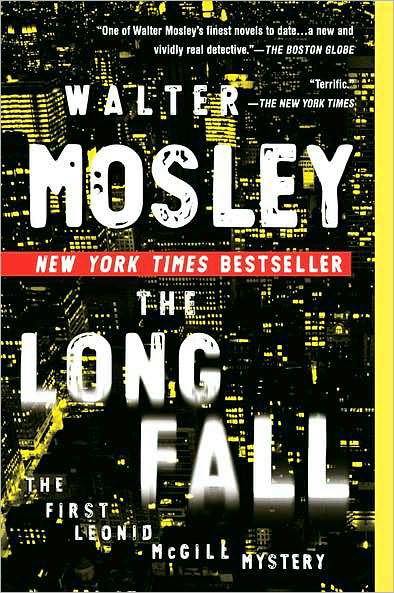
 (1/2) -- The first book in a new mystery series (new as of 2009) by the author of the excellent Easy Rawlins novels (and of the smutty, odd
 (1/4) --
 (1/7) -- Second in the humorous mystery series, after
 (1/22) -- Susan Hill may be a dark, cutting novelist, telling stories full of nasty doings and the horrors that mankind can get up to -- I've never read her novels, so it may be so. But, on the basis of this book, I highly doubt it. Hill spent a year reading only books that she already had in her (apparently large and wonderful, thoroughly English country) home, and wrote this book about the experience. There's quite a bit about the books she loves, about writers now forgotten, about the Great Books, about the joys of re-reading, and various other booky topics. There's also a few bits of autobiography, mostly concerned with Hill's very early days in the literary world -- her first novel was published in the early '60s, when she was a 19-year-old college student, and I'm afraid she does talk about how nice all of those older literary gentlemen were to poor young her without seeming to realize why they were so nice -- but she does stick to her topic most of the time. And she's entertaining about it, if quite English in an old-fashioned sense: country, Anglican, serious, pull-up-your-socks kind of English. This is exactly the kind of book you'd expect from a sixtyish British female novelist writing about the books she likes to read, and, as long as that's something you're likely to enjoy, Howards End Is on the Landing is delightful.
 (1/24) -- Third in the series; see above for my spiel. I'm now two books behind, and I hope that the status will not remain quo when I catch up with the series in another month or three. (There's one sure way for a mystery series to kill itself: flash-freeze the background and characters, so that nothing ever changes or grows, no one seems to get any older, and the same comedy bits can get trotted out like clockwork in each book. So far, Lutz does not seem to be falling into that trap, which is especially keen for funny writers -- the audience wants the same old stuff over and over, since they liked it the first time, and writers must be cruel and sure, like a shark, and always move forward.)
 (1/31) -- Ten years after the first series of Demo stories, more or less,Wood & Cloonan came back for six more stories of unusual young people and their travails. (See