Wednesday, January 05, 2022

Karmela Krimm, Book 1: Ramadan Blues by Franck Biancarelli and Lewis Trondheim

I appreciate creators who get bored easily. I may not always love every last random avenue they go down - who likes everything? - but I love that impulse, and I strongly believe creators who go really different from project to project are the best, most exciting ones.

So Lewis Trondheim is low-key my favorite French comics-maker, because he's gone off in so many different directions. Light adventure comics with anthropomorphic animals? See McConey. Fantasy adventure, on a widely sliding scale from ultra-bleak to entirely silly? See Dungeon. Slice-of-life vignettes about his own life? See Little Nothings. Goofy comics for kids? See Monster Christmas. Artsy slapstick about the inevitability of death? See Mr. O.

Most of that is from the subset of comics that Trondheim draws himself; he also writes for other artists. Dungeon is probably the best-known of those; it's a long series he co-writes with Joann Sfar, with usually different artists on each volume or sub-series.

Sometime recently - and I have no idea if "recently" means five years or ten or even more, since I'm getting books at the other end of an unreliable translation pipeline - Trondheim has been writing more and drawing less. And he's also been doing crime stories set in the modern world in a realistic, dramatic style: quite different from everything else. I've already seen Maggy Garrison, which collects three albums about the title character, a young British woman who gets caught up in criminal activities but comes out well, which he wrote for the art of Stephane Oiry.

And he seems to have a new series in Karmela Krimm, drawn by the credited-first Franck Biancarelli. The first book is Ramadan Blues, which came out in French and English in late 2020; a second book is coming along, at least in French, in early 2022.

Karmela is a private investigator in Marseilles; she was a detective but left the force as the fall woman for an investigation that got messy. She did that to protect her partner. She's not so sure any of it was a good idea now, a couple of years later. This is, again, in a realistic style, so Karmela is tough and resourceful, but also smart enough to know when she's getting into too much danger to handle herself.

This story takes place during Ramadan, as the title implies. That's important in quirky ways, but not any ways you'll expect. Karmela, whatever her personal religious beliefs are, is not fasting. She doesn't seem to be particularly observant at whatever religion she might be. She definitely has Muslim family members; we can assume she was brought up in the faith. (We might be wrong, but we'd be reasonable to assume it.)

She's hired by Florence Perrini, widow of Rene, who was both a major local mobster and president of the popular soccer team. Florence has inherited the team and has a complicated relationship with the mob. Also, Rene was clearly murdered, and the police seem most interested in Florence for it. She says she had nothing to do with it, and seems sincere. She wants Karmela to investigate.

That's potentially dangerous: if Florence didn't kill Rene, one of his gang contacts or rivals certainly did. Karmela only agrees after getting her fee raised several times and getting an assistant: Tadj, Florence's personal bodyguard, a tall shaved-head Black man. Tadj is observing Ramadan, and is more than the hired muscle he appears to be.

At the same time, Manon, the tween daughter of Karmela's old partner on the police force, is spending time with Karmela on a work-study. Karmela intends to keep Manon away from the dangerous Perrini case, but...she is not as successful as she would like.

Karmela investigates the case, with the aid of Tadj and (more than she wants) Manon. Ramadan Blues is conventional enough that we learn all of the truth by the end, and enough of a series that we know Karmela will be back for more cases.

Karmela Krimm is smart, character-driven crime fiction, set in a real, lived-in world. I could see it as a classy TV series, or a movie equally well - but, instead, it's comics, so the eye can linger over page composition and re-read dialogue to try to untangle the mystery. Since I like comics better than TV or movies, that counts as win for my team.

Tuesday, January 04, 2022

Beasts of Burden: Wise Dogs and Eldrich Men by Evan Dorkin, Benjamin Dewey, and Nate Piekos

I'm not sure if this is the second book in the series or not.

On the positive side, after the original Beasts of Burden - there can be no argument that's the first book - the next substantial series was called Beasts of Burden: Wise Dogs and Eldrich Men, and that is definitely collected here.

On the negative side, there were four other comics-format Beasts of Burden issues (some collecting anthology stories, to make it all more complicated) published before this series, and those are collected, along with a couple of later stories, as Neighborhood Watch. And most of those stories are drawn by original series artist Jill Thompson, if that makes any difference in the what-comes-first argument.

So, in my considered opinion, Wise Dogs is Schrodinger-ly the second book of the series, along with Neighborhood Watch: if you want to argue it's clearly not, go ahead but do it somewhere else. It's two, or two-and-a-half, or possibly three. (Five is right out.)

Now, I read the first book more than a decade ago - I gather the stories slowed down after that initial rush, as Thompson got busy with other things, but they did keep appearing; there was no huge gap in the actual real world - so my memories are vague and possibly confused. (I had a sense that the non-Thompson stories would have a different cast; that does not seem to be the case.)

Anyway, here's the scoop, as I remembered and re-discovered it: animals are intelligent and can talk to each other, as in many other stories, and to a few special humans. Magic is real, with vaguely Lovecraftian implications: there are monsters that can be created or called or unsealed, and the good side of magic is one part protecting yourself and others from monsters, about three parts getting rid of monsters, and absolutely no parts doing anything else.

These stories follow a group of dogs in a rural part of Pennsylvania, centered on Burden Hill, which has an unusually high level of supernatural disturbances. These dogs fight the evil and get rid of it. All of the stories are written by Evan Dorkin; Thompson was the original artist, but Benjamin Dewey (whose first work on the series is in this book) looks to be the main artist these days. (Nate Piekos is the letterer; I don't usually list those, but my current rubric is "include everyone listed on the cover in the largest size type, unless I disagree and want to include more people" so he counts that way.)

This is actually one longer story - the first multi-issue Beasts of Burden story, I think - in which a team under Lundy (the dark Scottie who is the biggest head on the cover) travel across the local landscape to deal with a couple of problems that, inevitably, turn out to be related and bigger than they expect. As will surprise exactly no one, they do not fail and let a magical apocalypse destroy...um, what would be closest? maybe Harrisburg?

It's all pretty straightforward contemporary supernatural adventure, with all of the expected story beats done professionally and well - except for the fact that the entire cast runs around on four legs and eats out of bowls on the ground. I am not a big animal person, to put it mildly, but these are fun stories, and it's particularly interesting to see how Dorkin deals with a cast that have no hands and who would have trouble accessing anything more than four feet above ground-level.

So this is not great literature of any kind, but it's solid adventure comics that does not involve anyone wearing spandex. That's a win in my book.

Monday, January 03, 2022

Reviewing the Mail: Week of 1/1/22

This past week, I got the third of three packages of comics that I ordered over the past month: there were three big sales from different folks, and I like taking advantage of sales to get things that I wanted anyway.

I probably shouldn't buy more books any time soon, but these are all comics-format stuff, so I'm reading them quickly: I should be done with all of this by the end of January. We'll see if I get more then.

For now, here's what just arrived in the house, because I wanted it and paid for it:

Rebecca & Lucie in the Case of the Missing Neighbor - a graphic novel by Pascal Girard that is, I think, at least based on real life, since it's about his wife and infant daughter solving a local crime. I suspect it is somewhat fictionalized, but I guess I'll find that out by reading it.

Factory Summers is a new autobiographical story by Guy Delisle; this time he's doing the Michel Rabagliati thing and writing about his youth. As I understand it, this is the story of one summer, when Delisle was sixteen and he worked on the floor of the paper mill where his father was an engineer.

Scoop Scuttle and His Pals is a big collection of nutty Basil Wolverton stories, I believe mostly from the '40s and '50s. (I've only seen Wolverton's stuff in passing; I'm not even all that clear how long his career lasted.) He's supposedly one of the great funny cartoonists, so I'll see.

Dungeon Zenith, Vol. 4: Outside the Ramparts is the first new book in the "Donjon" series to get translated into English since I did a big read-through of the whole series a couple of years ago. (I think there may have been other, uncollected books - the graphic on the copyright page now has two more subseries, one set in the distant past and one in the distant future, and it's not clear if those are real things or plans.) Both of the bandes dessinees collected here were written by Lewis Trondheim and Joann Sfar (like all of Dungeon) and drawn by Boulet, who has done several Dungeon books.

Perdy, Vol. 2 continues the story of the hard-living, hard-fighting, hard-fucking woman gunslinger of the title, written and drawn by Kickliy. Perdy is not some pretty young thing, though, in case the "fucking" is arousing a certain kind of prurient interest - she's the female equivalent of John Wayne, only lustier. I liked the first one, so I'm back for this one.

And last is The Golden Age, Book 1, another book translated from the French and the beginning of what I think is an epic fantasy series. (It's from First Second, so I suspect it will be slightly more family-friendly than a lot of the French comics I read. But maybe only slightly.) This is written by Roxanne Moreil, whose work I haven't seen before, and drawn by Cyril Pedrosa, whose Three Shadows is one of my favorites books of all time and whose Portugal was just one of my favorites of 2021 (despite being published a few years before).

Sunday, January 02, 2022

Books Read: December 2021

And here's what I read at the end of 2021. As always, this list is mostly for me, as an aide memoire in the future.

Herge, The Adventures of Tintin, Reporter for "Le Petit Vingtieme," in the Land of the Soviets (12/4)

Naoki Urasawa, Asadora!, Vol. 2 (12/5)

Tom Standage, Go Figure (12/10)

Jeff Lemire and Wilfredo Torres, The Quantum Age (12/11)

Charles Stross, Dead Lies Dreaming (12/11)

Neil Gaiman and Dave McKean, Mr. Punch (12/12)

Rick Geary, A Treasury of Victorian Murder, Vol. 1 (12/18)

Kim Deitch, Alias the Cat! (12/19)

Peter Milligan, Brett Ewins, and Steve Dillon, Skreemer (12/22)

Joshua W. Cotter, Skyscrapers of the Midwest (12/23)

Debbie Tung, Happily Ever After and Everything in Between (digital, 12/24)

Shannon Wheeler, Why Did We Trust Him? (digital, 12/25)

Will McPhail, In. (12/26)

Jonathan Yardley, Second Reading (12/26)

Daniel Clowes, Patience (12/27)

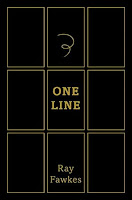
Ray Fawkes, One Line (12/28)

Dash Shaw, Discipline (12/29)

Barry Windsor-Smith, Monsters (12/30)

Jason, Good Night, Hem (12/31)


Links will follow later; I've written posts for all of those books but I'm currently running about six weeks ahead. (Mostly so I have a buffer if/when the next bout of reading ennui hits.)

Saturday, January 01, 2022

Favorite Books of the Year: 2021

I used to have a whole series of New Year posts, that I'd write during Christmas week (when I was generally on vacation) to sum up the year. That fell apart the last two years, for reasons that aren't the ones you might think. But things got better in 2021, and I think I can pull together a post of the books I want to celebrate and remember.

It might not be like the past, but here's what I did in the past: 2020, 2019, 2018, 2017, 2016, 2015, 2014, 2013, 2012, 2011, 2010, 2009, 2008, 2007, 2006, and 2005.

It looks like I'll end this year at 175 books, mostly graphic novels - that's right in line with my recent years that aren't Book-A-Day. For comparison, the past few years in reverse chronological order, running back through the last three Books-A-Day, had 75, 44, 433, 139, 161, 175, 282, 156, 158, 146, and 362 books read, respectively.

So I'm going to do this like 2017-2015 and 2013-2011, with the caveat that I know I didn't read a lot of books. But here's what's worth remembering of what I did read.

First, the short form of my

Rules & Explanations:

  • This list is finalized on December 31 on purpose; it includes everything I read this year.
  • These are favorites, not "best." I can't define "best."
  • This is not separated or compartmentalized by genre; it's everything I read all in one stew.
  • Each month gets some also-rans; the bolded book is the pick.
  • I try to gravitate to newish books for the picks; it doesn't always work.

January

I read new collections from both of the Hernandez Brothers: Jaime's Tonta and Gilbert's Maria M., both of which were strong and good in their own ways. Tonta was a weird mixture of goofy and serious; Maria M. was all serious, bordering on the melodramatic - both of which are pretty typical for their creators.

Maggy Garrison, by Lewis Trondheim and Stephane Oiry, was surprising - a modern-day crime thriller set in the UK, not at all what I expected from Trondheim - and very good.

But the book of the month was Michael Swanwick's novel The 
Iron Dragon's Mother
, which closed out a very loose "trilogy" of fantasy novels with a deep, resonant book that ranged across a dark, specific world to tell one of the very best fantasy stories I've ever read.

February

When I do these lists each year, I find my reading in particular months often falls into unexpected categories - or, at least, the books that loom in memory do that. For February 2021, I had three very memorable reprints of comics projects, very different from each other.

Trese: Murder on Balete Drive began a US reprinting of the excellent urban-fantasy series from the Philippines (and steeped in local folklore and color, the way the best urban fantasy is) by Budjette Tan and KaJo Baldismo.

Flaming Carrot Comics: Omnibus Vol. 1 collects roughly half of the title series, the central work of Bob Burden, who will always be to me the madman of comics. And I mean that in the very best, most positive way: Burden writes and draws and thinks like no one else, telling stories like the fever dreams the most interesting people in the world have.

And Mister X: The Archives collected the classic run of that series, by Dean Motter and a whole bunch of other people. It wasn't always consistent, and it isn't necessarily coherent all as one package, but it's a huge package of attitude and style and energy that is uniquely '80s.

But the book that stands out the most for the month was newer: Snapdragon, a young adult graphic novel by Kat Leyh, about all of the kinds of family and connections that young people make and need and find.

March

March, on the other hand, was all about new comics projects - new or almost new things that were all exciting and energizing in their own ways.

Ryan North and Albert Monteys brilliantly adapted a book that shouldn't have been adaptable into Slaughterhouse-Five: The Graphic Novel.

Joe Sacco returned with another deeply researched, carefully reported look at the real world in Paying the Land.

Mariko Tamaki and Rosemary Valero-O'Connell told a great story of modern love and relationships (with a big sideline in getting out of those relationships) in Laura Dean Keeps Breaking Up With Me.

Eleanor Davis gave us a thoughtful, if only mildly hopeful, near future in The Hard Tomorrow.

John Allison and his collaborators (this time, Max Sarin and Whitney Cogar) finished out the Giant Days saga in the last four volumes collecting that comic (Vols. 11-14).

Noelle Stevenson gave us a deeply personal collection of comics covering a tumultuous period of their young life in The Fire Never Goes Out.

Andi Watson returned to graphic novels for adults with the quiet (and disquieting) The Book Tour, a great, deep, resonant book which very nearly took the top slot for this month.

But I also read Solutions and Other Problems, the second collection of Allie Brosh's hard-to-define work (comics? illustrated essays? blog posts?), which is both full of insights and unique thoughts in itself and the catalyst for a lot of thinking about how people are different in their experiences and perceptions. 

April

I had fewer books to mention for April - that happens; sometimes we read less and sometimes we read just as much but enjoy less - but I did finally get to James Gleick's fun non-fiction book Time Travel, a tour through the fact and fiction of that common SF trope. 

The favorite for the month was a fantasy novella, propelled by a great voice: Prosper's Demon by K.J. Parker. Like all the best novellas, it's just as long as it needs to be, aimed straight at a perfect ending. Parker is a writer I keep saying I need to read more of: if he keeps writing novellas, I just might be able to do that.

May

There's no rhyme or reason to the books I read in May, so I won't try to force them into a narrative. Worth remembering:

Adrian Tomine turned to memoir with the deep and affecting The Loneliness of the Long-Distance Cartoonist.

I got to the several-years old SF novel Space Opera by Catherynne M. Valente, which I enjoyed and found infuriating in almost equal amounts.

Another book a few years old: I got to Yoshiharu Tsuge's The Man Without Talent, one of the great books in the entire world about a slacker, featuring a man who could slack for his country if that didn't require effort.

Derf Backderf revisited his childhood - readers, brace for a huge tonal shift in the second half of this sentence - in his excellent, well-researched book on a local massacre you may have heard about, Kent State.

But there was no question about my favorite book of the month: there was a new Murderbot book, and it was just as good as the previous ones. (I may have mentioned that I am a sucker for a good, vibrant first-person narrator, and Murderbot is that in spades.) It was Fugitive Telemetry, it was by Martha Wells as always, and it was wonderful.

June

Another month of randomness; I'll start with Borja Gonzalez's A Gift for a Ghost, a lovely graphic novel that tells two intertwined stories in two different time periods.

I also read Lawrence Block's then-brand-new (my review posted on its publication day, something vanishingly rare for me in these latter days) professional autobiography, A Writer Prepares. It was inevitably lumpy - it was half-written in 1994 and finished in 2020 - but full of great Block writing and thought.

The favorite of the month was, surprise of surprises! another book that I read before publication, as if I were still an editor or something. Barbarians of the Beyond is an authorized sequel to Jack Vance's "Demon Princes" novels, by the most Vancean of modern writers, Matthew Hughes. That sounds like faint praise, but just writing coherently in a Vance style is a massive achievement, and Hughes has been doing that - and other things - well and entertainingly for a couple of decades now.

July

I finally read Joan Didion's famous first collection of essays, Slouching Towards Bethlehem, and found it as strong and true as it had been hyped as: a collection of moments from the late '60s in California, crystalizing a deeply important American time.

I'm still not sure how to refer to the cartoonist who made the graphic novel Room for Love: he's credited as "Ilya" on the book, but has been "Ed Hillyer" on other projects. Whoever he is, he made a strong story of two people connecting through sex, while also not connecting at all.

I found Kij Johnson's The River Bank lovely, if (deliberately) small: a century-later sequel to The Wind in the Willows that finds a way to include female persons in something like a re-run of the storyline of the original.

Another book I finally got to, even though it had been available my entire life and even longer: Chester Himes's gripping A Rage in Harlem, billed as the first of a series of detective novels but really a one-off crime story about one much-too-gullible man and all the chaos he falls into.

My favorite of the month is a book I had been wishing would exist for years: a large, nearly complete collection of Shary Flenniken's strip from the National Lampoon: Trots and Bonnie. It is one of the great feminist books of our times, and a great book to hand to any young man interested in young women but saddled with weird assumptions about them.

August

Richard Thompson - the British singer, songwriter, and bandleader, not the US cartoonist or anyone else by that name - told the story of the first decade or so of his musical career well and with great insight in Beeswing.

Guillaume Singelin told a dark but ultimately hopeful story, set in a mildly dystopian future, about former soldiers and their troubles, in PTSD.

Isabel Greenberg provided an idiosyncratic fictionalized version of the Bronte siblings and their invented worlds with Glass Town.

And my favorite for the month was a collection of immediate, politically-motivated comics stories by Nate Powell, all about pushing back against creeping fascism and authoritarianism, Save It For Later.

September

The best, most perfect book I read this month was Sean Stewart's twenty-year-old fantasy novel Perfect Circle, which I recommend whole-heartedly to anyone and everyone. But it is twenty years old, and I was reading it again, so under my quirky rules it doesn't really count.

Newer, and much more frivolous, was Sarah Andersen's Fangs, the story of the everyday life of a female vampire and male werewolf, told in a gag-a-day style. It was a lot of fun, and a book I oddly look back at with even more affection than when I was reading it.

My actual favorite of the month was the deep and thoughtful Portugal, a graphic novel by the cartoonist Pedrosa, about a cartoonist much like himself and that man's almost accidental exploration into his roots.

October

As I start typing here, I haven't decided what my favorite is: I have two candidates, and need to pick between them. Let's see how I feel as I go.

I'll start with Bowie: Stardust, Rayguns, & Moonage Daydreams by Michael Allred, Steve Horton, and Laura Allred. It's a nice biographical graphic novel, focused on roughly one year in Bowie's life, though its depths are mostly for serious fans.

When Stars Are Scattered is a great memoir in comics form, by Victoria Jamieson and Omar Mohammed, and also a great book about the refugee experience that I wish a lot more people would read and understand.

Speaking of refugees, soon afterward I read Tian Veasna's Year of the Rabbit, another memoir of a refugee family of an earlier generation (Cambodia, post-Khmer Rouge in the late '70s), which is less immediate but darker and more of a warning to the relatively rich and settled among us.

Another step on the same path: Banned Book Club - by Kim Hyung Sook, Ko Hyung-Ju, and Ryan Estrada - showed a different kind of oppressive regime: South Korea just a few years later, through the eyes of a fictionalized version of one of the authors.

Now I come to the hard choice. I think the one that just missed is Lavie Tidhar's great new fantasy novel The Escapement: it's smart and thoughtful and tricky and sneaky and fun, and I'm not going to say one word against it.

But my favorite of any month always has to be the book I keep thinking about afterward, the one that forces me to keep reconsidering it and makes me want to read it again. So it has to be Henry McCausland's Eight-Lane Runaways, a graphic novel that I'm still not sure if it's an allegory or not.

November

So there's a thing in graphic novels - I don't think it has a specific name, but it's nearly its own genre. The creator looks back at an important moment in their earlier life, either directly or semi-fictionalized. As it happens, I read a memorable example of each this month.

Hazel Newlevant's No Ivy League was the one that, as far as I can tell, was entirely factual, telling the story of one summer about a decade ago.

Charles Forsman's Celebrated Summer, on the other hand, is at least slightly fictionalized, since the "Charles Forsman" character is named something else. This one told the story of one day.

But my favorite was an entirely fictional graphic novel, from Dan Abnett and I.N.J. Culbard (which I got to a few years late, but I'll still count it): Wild's End 1: First Light. It's a riff on War of the Worlds in a rural England, among characters who are lightly influenced by The Wind in the Willows, and it's both gripping and smart about its characters.

December

I spent the last week of the year reading a bunch of mostly-new graphic novels that I got myself for the holidays, from various sales in the previous months. (And that's one major reason I've always done these lists to include everything I read that year, and only finalize on New Year's Eve: the book I'm reading that day could easily be one of the best of the year.) So this month may be jam-packed.

It took me longer to read Charles Stross's Dead Lies Dreaming than I would have liked, for mostly "me" reasons, but I loved getting a new perspective on his steadily-worsening "Laundry" world, on the verge of multiple magical apocalypses.

Should I mention that I re-read Neil Gaiman and Dave McKean's awesome Mr. Punch, more-or-less for it's twenty-fifth anniversary? I think I just did.

Dash Shaw's Discipline was a great book from this year, the story of one young Quaker going off to fight in the Civil War and the sister he left behind - told in a very different way than you would expect from that description.

The book that nearly was my favorite was Will McPhail's first graphic novel, In. It is smart and assured and does about a dozen things brilliantly, and I thought when I read it that it would be the obvious choice for the month.

But a couple of days later I read Ray Fawkes's tour-de-force One Line, which does roughly two dozen things brilliantly, and that had to take the crown. But hitting two such great books so closely together is a wonderful, invigorating experience: I recommend both of them very strongly.


And that all means my list, reorganized to be alphabetical by title and with links to the posts that have already gone live, is

2021's Top Twelve:

That's what was worth remembering in my reading from this year. I hope some of it sparks your interest and you find some books that you will love.

Friday, December 31, 2021

Quote of the Week: Summer's Lease

It is easy to see the beginnings of things, and harder to see the ends. I can remember now, with a clarity that makes the nerves at the back of my neck constrict, when New York began for me, but I cannot lay my finger on the moment it ended, can never cut through the ambiguities and second starts and broken resolves to the exact place on the page where the heroine is no longer as optimistic as she once was. When I first saw New York I was twenty, and it was summertime, and I got off a DC-7 at the old Idlewild temporary terminal, and the warm air smelled of mildew and some instinct, programmed by all the movies I had ever seen and all the songs I had ever heard sung and all the stories I had ever read about New York, informed me that it would never be quite the same again. In fact it never was. Some time later there was a song on all the jukeboxes on the upper East Side that went "but where is the schoolgirl who used to be me," and if it was late enough at night I used to wonder that. I know now that almost everyone wonders something like that, sooner or later and no matter what he or she is doing, but one of the mixed blessings of being twenty and twenty-one and even twenty-three is the conviction that nothing like this, all evidence to the contrary notwithstanding, has ever happened to anyone before.

 - Joan Didion, "Goodbye to All That," in Slouching Towards Bethlehem, p.168

Thursday, December 30, 2021

Sex Criminals, Vol. 6: Six Criminals by Matt Fraction and Chip Zdarsky

So I'm a year late here: I was going to point out that this series took longer to complete than I expected, and so I was not as invested in this book as I could have been. But one whole year of the delay is on me, so mentioning that a comic that started in September 2013 and only ran thirty-one issues probably shouldn't have taken seven years might not come across well.

Or maybe I'll passive-aggressively say I'm not going to do that. Pointless passive-aggression is pretty on-brand for a discussion of Sex Criminals, right?

Anyway, Six Criminals is the sixth and last collection of the comic: it includes the final story arc (well, the five issues in which the story ends; it was all one "arc," basically) and the fantabulous extra issue #69, in which two minor characters have a destination wedding a few years later and all of the surviving characters show up to celebrate and bounce off each other one last time in a vastly lower-stakes way. Like the rest of the series, it was written by Matt Fraction and drawn by Chip Zdarsky. (See my post for volume five, or drop back to the first one if you have no idea about the series.)

(Consumer Note: references to this book say it contains issues #26-69, which is technically true but deeply misleading. They mean issues #26-30 and #69. There is nothing in between.)

My reaction to it was pretty muted, and I'm trying to figure out why. Maybe I waited too long, and the previous volumes had gotten fuzzy in memory. Maybe I was secretly hoping for the Big Ending to go a different way - though I think it works just fine, is constructed well, entirely fits the characters as we know them, and is satisfying. Maybe it's just me.

This book does fulfill the promises of the previous collection, where all of the sex-powered people we'd met join forces and start talking about taking down the big bad, a probably borderline-sociopathic business magnate who, we learn in this book, has been stealing all of Our Heroes' precious bodily fluids (well, energy) in order to power what he hopes is a time machine. Yes, that's very weird: Sex Criminals has kept digging new levels of weird from the initial some-people-freeze-time-when-they-come premise, as it finds new possibilities for sex-based superpowers.

(Sidebar: Say, do you think Sex Criminals was originally pitched as "Chew, but about fucking"? If not, why not?)

There is a reasonably happy ending for the world in general, if not for Suze and Jon's relationship, which has looked intermittently doomed the entire length of the series. (Jon in particular has never been the most stable of people.) In the end, it's still basically Suze's story, as it started out, though focus wanders around among the rest of the cast, as it must when you have that many people. That part is very realistic, and I appreciated it: so many stories, in comics and out of it, slam the two main characters together at the end even if that's an inherently bad idea.

I bet this all reads better if you run through it all relatively quickly; I read the first volume back in 2014 and have never re-read older issues before hitting new ones. It's all good stuff, and adult in both the under-the-counter (it's about sex! you see nudity and sexual stuff on the page!) and the grown-up (people have relationships that grow and change! those relationships are often weird or nonstandard!) ways. It's definitely worth reading, if you are old enough to do so legally in your jurisdiction.

Wednesday, December 29, 2021

Saturday and Sunday, Vol. 1: Rock Heaven by Fabien Vehlmann & Gwen De Bonneval

I don't want to be reductive here. (Well, maybe I do.) But it certainly seems to be that the central theme of European comics for younger readers is "what it the point of life, and how can you find the right path?" while the central theme of US comics for young readers is either (Big Two) "hitting people is how you solve problems" or (the YA world) "you are a unique special snowflake, and will have to overcome whatever horrible thing happened to you that you had no control over."

And the European version just feels more appealing and positive.

Is it just me? Maybe it's just me.

That popped into my head while reading Saturday and Sunday, Vol. 1: Rock Heaven, which collects the first fifty pages, more or less, of a series of stories from younger readers by the French creators Fabien Vehlmann and Gwen De Bonneval.

Saturday and Sunday are two little lizard guys, who live on a beach somewhere, part of an atoll. They're fishing one day when Saturday starts wondering why they're there, and how they got there. Turns out their memories are vague, so they're not entirely sure. So they decide to explore the atoll and see if they can figure out where they came from and what they should do next.

That's what I mean: this book is explicitly about "what is the aim of life?" Somewhat in the general, philosophical sense, but even more in the concrete, what should these guys do sense. And since this is a book for younger readers, they do find things to do along the way, and you might guess where all of their journeying takes them in the end.

It's not dumbed-down; the language is relatively sophisticated though the concepts are pretty much Ontology 101, the stuff that every bright person either discovers early or independently re-invents. That's exactly right for a book like this, which will be the introduction of these concepts to most of its readers. Why are we here? What should we be doing? What comes after this? All of those are explicitly part of the conversation here.

That may sound like spinach, but it's not: these are just two guys wandering about, talking to people, learning new things, and trying to figure out where they came from and what they should do. They find things to do everywhere: some positive, some that they need to get away from quickly. And they're fun characters to follow on that journey, like a European Frog and Toad.

The last time I read a book by Vehlman and De Bonneval (who is male, by the way: I don't hit his work often enough not to be surprised by that every time) it was the also somewhat philosophical but more clearly adult Last Days of an Immortal, seven years ago. It should probably be more often than that, but in my defense Euro-comics are published in odd and quirky ways these days, digital-only a lot of the time.

But there are more Saturday and Sunday books; I'll have to check those out.

Tuesday, December 28, 2021

A Shining Beacon by James Albon

In some world that is not precisely our own - maybe the near future, maybe an alternate present - an island nation has an autocratic, near-fascist government. There is, of course, a revolutionary group aiming to overthrow that regime, which includes violent activities.

It is not the UK, exactly. But it is very much like the UK, more than it's like any other nation on earth.

The regime is building a major public-works project in the capital: a large sports facility with a huge swimming pool at its center. And the Department of Culture needs to find an artist to paint a giant mural over that pool. The mural must be uplifting but not political, lovely but not challenging, colorful but not incorporating any imagery or ideas from the rebels or anyone else hostile to the regime, artistically powerful but without any deep or hidden messages, and entirely approved by various top ministers.

This is of course impossible. It's also demanded, and must happen.

Functionaries at the Department of Culture, after several metropolitan candidates are rejected, settle on Francesca Saxon, a youngish woman from the North of the country, an artist with a relatively provincial career so far and no hint of the wrong politics. She is summoned to the capital and set up in a luxury hotel to create that mural. She never applied for the job, or really had a moment to decline it.

She might perhaps have preferred to return home and work in her own studio, but those are not the regime's plans. And the whole point of autocracy is that it demands everything conforms to its plans, even if those plans change instantly.

Francesca's mural, or perhaps the sports centre in general, is meant to be A Shining Beacon for the entire nation; that phrase repeats throughout the graphic novel, and clearly was originated by some very high power in the autocracy.

We don't know who that was; we don't get names for most of the characters and we never see or understand the top level of this government. Instead, people are known by their function - minster of this, secretary of that - or seen doing what they do. If there is a dictator or politburo over it all, we know nothing of that.

The rebels place someone close to Francesca; she doesn't realize this for a long time. The rebels perhaps have a strong case against the regime - it is brutal and repressive and murderous - but they are no better themselves, and it's not clear that this nation would be any better if they were to seize power.

Francesca struggles to make the mural the government demands, as their demands shift almost daily and every one of her sketches is found deficient in some new way. Rebel imagery crops up in some of those sketches as Francesca becomes more frustrated by her gilded cage, and she evades her armed government minder more and more often. She also comes to know that minder better on a personal level along the way; her frustration in being guarded by him is mirrored by his frustration in how she makes his work harder by sneaking away. And this regime is not kind to people who fail it, whether that failure is related to making art or guarding artists.

It all ends in violence and destruction, as always happens in a repressive regime: violence is the tool those regimes know best, and the best tool their enemies have against them.

James Albon tells this story calmly, straightforwardly, in watercolors highlighted by bright, almost day-glo colors on darker backgrounds - Francesca's blonde hair in particular pops in every panel she appears. His lettering is organic, the slightest bit rough, an unexpected touch for a book so driven by dialogue. His camera flies in and out from panel to panel, to share focus between the architecture and the people: both are equally important here.

It comes across something like a historical document: A Shining Beacon reads a bit like the chronicles of something that happened, not that long ago, in a nation not far away from our own. There is an inevitability to all of its plot twists; this is how it all had to happen, and how it would always happen.

It is both not a political book and deeply a political book. It makes no specific points, and never names the ideology of the regime. But then, regimes like this have the same core ideology anyway, no matter what their public statements say. It's all about holding onto power, nothing more. Albon, I think, would not characterize it as a warning about anything: that's not what A Shining Beacon does. It is a story, about one person in an impossible situation, and how she tries to navigate it and eventually sees how impossible it always was.

It does that very well. It may have lessons for those who engage deeply with it. And it may have warnings to those of us who see aspects of Albon's fictional regime in our own nations.

Monday, December 27, 2021

Reviewing the Mail: Week of 12/25/21

For Christmas, I got some books I've already mentioned (not all of those: just the ones that were basically new). I also got a box this week that did not get wrapped up, because there was already enough stuff for me under the tree.

But these are things I bought from the Fantagraphics sale around Thanksgiving (I forget if it was officially a "Black Friday" or "Cyber Monday" sale), expecting that they would be Xmas presents for myself, before those other books lapped them in between.

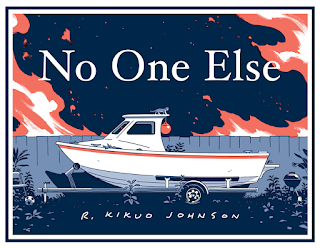
No One Else - a new short graphic novel from R. Kikuo Johnson, author of Night Fisher. That book was from 2005, and I think this is Johnson's first since then.

Good Night, Hem - the new graphic novel from the Norwegian cartoonist who goes by "Jason," making his work nearly un-Googleable. This looks to be a historical story about Hemingway in Paris in the 1920s, though, knowing Jason, there could also be aliens or time-travel or just a lot of punching.

Patience - Daniel Clowes's last big GN, which is a few years old at this point. I like Clowes's stuff without loving it, and that may be why it's taken me this long to get what is a pretty big (expensive) book.

Monsters - this is from Barry Windsor-Smith, and apparently he's been working on it, on-and-off, for three decades. That is not necessarily a recipe for a better book, but the reports have been good so far, and BWS's art looks lovely as usual. (Well, "lovely" may be the wrong word for a book called Monsters that seems to be filled with ugly faces. But you know what I mean.)

And last is Farewell, Brindavoine - this is by Jacques Tardi, and I understand it's pretty early in his career. Maybe his first big success? Maybe his first solo book? Something relatively early and important, I think. And recently republished in a new American edition, probably with a new translation.

Sunday, December 26, 2021

What Fresh Hell Is This?

So, right now, as I'm trying to find a book-cover image for the post I'm writing, I discovered that Google image search, within the Chrome contextual menu, has been replaced by something called Google Lens.

Google image search is a useful tool, that lets a user find similar images to a reference - larger, smaller, sometimes in foreign languages, and so on. It does something specific and does it well.

Google Lens....I have no idea what it's trying to do. It seems to be some vaguely AI-driven tool that finds "similar" things. Maybe similar art styles? Maybe something with similar metatagging? I do know that it fails at finding "this same image, but larger," which is what I was trying to do. Lens seems to be a phone thing, so it's not terribly useful in Chrome on a desktop to begin with.

Google: I've come to accept that you will murder useful functionality all of the time, and sunset all of the tools that are actually of value to me. But can you at least not directly replace those things with a horrible parody of the same thing?

Friday, December 24, 2021

Quote of the Week: Aftermath

The three men rode out of the mission later that day, on three horses that didn't have names. Before they left, they set the church on fire. It wasn't much, but it was something.

The Kid and the Conjurer still looked a little woozy. They swayed in the saddles, this way and that. But it would pass, the Stranger thought. Most things did, sooner or later.

 - Lavie Tidhar, The Escapement, p.192

Thursday, December 23, 2021

It Will All Hurt by Farel Dalrymple

We expect books to be linear: to start from Point A and get us to Point Z, hitting the other letters in between. Not all books do that, obviously: some start on Y and flash back extensively, some start at both A and N to tell two-track stories, some start at Z and run in reverse gear towards A.

Farel Dalrymple's It Will All Hurt starts at about Q and runs through Xi and Alef, among other less-definable places, ending with Omega. Now, that's largely because it's told in a near-sketchbook fashion: many of the pages here are laid out in a conventional way, but some of them just barely so, and there's a lot of "here's the characters, with bullet-point notes to myself about who they are and what's important," and transitions are either lamp-shaded by captions ("Howdy, I'm your narrator: a talking cat!") or smash-cuts between completely different scenes. [1] It has a large cast, all of whom seem to have a lot of background and details that are clear in Dalrymple's head but which never makes it near the page - thus the jumping around different alphabets, as if we're getting pieces of a dozen stories focused on the one event where they all cross.

Even the cover makes it look like a random Moleskine; Dalrymple clearly knows this is how the book is coming across and wants to make that clear.

And I don't quite get the title: it's a bit too grad-school-novel for this story of kid heroes ganging up to defeat the evil Red Wizard in what seems to be the post-apocalyptic world Dalrymple first created for The Wrenchies. Their opponent is pure evil, as the book keeps telling us: he does have a fiendish monologue, admittedly, but we don't see him do much, and the kids are largely problematic murder-hoboes themselves. So that sentiment is either a facile "fighting evil is tough, and be careful lest ye not become monsters yadda yadda" or a second-hand "life is pain, princess; anyone who says otherwise is selling something." Either way, it doesn't feel earned by the material.

Anyway, there's a whole bunch of these kids, who slowly gather. Robot Tod, Leon Fireglove, Hawk Daughter, Bee 3000, Blam Dabit, Gato Gris (our cat narrator), a few more. An alien astronaut, who as an adult isn't really part of the gang and doesn't get a name. Their leader, or the central character at least, is a girl from our world - referred to that way here, not "the world before the apocalypse" or "the past" - named Clementine Almendra. They all have weird powers, and Dalrymple shows those powers in action and occasionally has those little bullet-points on a sketchy page to explain, for example, what's the deal with Leon. (He's cursed, for one thing, but he seems to have about five other deals on top of that.)

Their scenes are separate, but they do start to gather in clumps. They have quick adventures, fighting things and traveling across this broken landscape. Meanwhile, the Red Wizard has scenes in which he also fights things, and we're told he's the villain. He doesn't start monologuing until he meets the kids; he doesn't seem any worse than anyone else in the book when Dalrymple tells us he's the baddie.

There is a big fight. It ends as we expect it will, and the gang breaks up again. There's a weird underlying feeling that It Will All Hurt is a Dalrymple-verse version of a big comics event crossover; as if they all had their own books and return to them after spending this time with the Beyonder or the Anti-Monitor or whatever.

I liked all of the pages of It Will All Hurt without engaging deeply with it at any point. It does feel like the pieces that could be turned into a story more than that actual final story, but I think that was the way Dalrymple wanted to do it: open, free-form, loose-limbed, expansive rather than closed off. It is successful at what it aims to do, but what it aims to do is quirky and likely not that popular.

The Wrenchies was quirky; this ramps that up a couple of orders of magnitude. I think Dalrymple has done more conventional comics as well recently - this was originally serialized on the web, and a couple of references to "new panels" makes clear who it was conceived and perceived - so maybe I'll take a look at those. Dalrymple's art is interesting; he's particularly good at empty space on a page. His characters are specific people, even when we only get partial views of them, as here. I can't quite recommend this except to people who really like experimental comics, but I can recommend Dalrymple in general: he does odd, quirky stuff and is someone to keep an eye on.


[1] There's also a lot of ancillary matter in this book, which all seems to be sketchbook pages: the story ends almost thirty pages before the end of the book, and there's at least a half-dozen similar pages at the beginning of each of the individual issues collected here. Extracting just the story pages could cut It Will All Hurt down to about half its length.

Wednesday, December 22, 2021

Celebrated Summer by Charles Forsman

I didn't plan to read Charles Forsman's comics backwards.

I found I Am Not Okay With This a few years back, and was really impressed by it. Later that year, I read his The End of the Fucking World, at the time his most famous book. There's been TV series of both of those since then, so I'm not sure which is the zingier in the Zeitgeist.

He might have had new work since then, but it's not reflected on Wikipedia, and everything I haven't seen yet is self-published, which means it's more of a pain to find. Don't get the idea I'm against creators taking control of the means of production! But if the only way I can get a book is to go to the guy's table at Comic Arts West Bumfuck and pay cash, I am much less likely to ever see it.

The digital system my library uses does have Forsman's 2014 book Celebrated Summer available, which I think was created before TEOTFW but broadly published later. So I read that.

It's another book about restless, disaffected teenagers: I expect Forsman will need to find another set of protagonists eventually (he's turning 40 next year; that might be the time), but he's good at it, and it clearly comes for a place of real knowledge. Celebrated Summer might even be non-fiction, or close to it: it's about two boys, one of whom either is the young Forsman or modeled so closely on him as to make no difference. That's "Wolf," the larger, lumbering one of the duo - the whippier, more talkative guy is Mike.

This is not the story of a summer. It's not the story of their whole lives. It takes place within about twenty-four hours, mostly on one day off during the summer: both of them are about 17-18, I guess: Wolf has just graduated highschool and Mike apparently has not. They're both still stuck in that mode of life. They decide to drop a couple of tabs of acid each, and wander around and talk while waiting for it to hit them...and then afterward.

(They do take a long drive in the car while under the effects of the LSD, which I suppose I'm expected to condemn as a responsible adult. OK.)

It's a book about the cadence of their conversation, about what two teen boys deep in Pennsylvania (Forsman grew up in Mechanicsburg, in the southwest distribution-center belt of the state [1]) do when they don't have anything to do, and, maybe, don't really want to do much of anything.

I don't know if all of us were once kids like that. There are probably some grinds out there who knew exactly what they wanted from the time the obstetrician smacked their asses, and were working in that direction every second afterward. I was like this, at least some of the time: less drugs, more aimless wandering. But not that different.

Forsman is good at the rhythms of the conversation of people like that, about that time of life. His line is clean, mostly thin, with some crosshatching for dark areas but a lot of white space. His people have big cartoony faces with dot eyes, especially Wolf.

This is a quiet book, without the genre elements of his larger, later serialized works. No one here has psychic powers or goes on a cross-country murder spree. They're just two young guys, like any other two young guys anywhere in the US, trying to get through a day and find something interesting to do. That's enough. Real life, when depicted closely and clearly, will always be enough


[1] When I worked in publishing, my company's big warehouse was in Mechanicsburg, and I was always not quite qualified for the big annual trip out there to see the facilities. Later, we merged with a company that had a warehouse in the neighboring town of Camp Hill. I never got to that one, either.

Tuesday, December 21, 2021

Black Dog: The Dreams of Paul Nash by Dave McKean

You know what's weird? Reading a book about an artist with no examples of that artist's work - but pages filled with art by somebody else. It might be inherent in the form - a graphic novel about an artist who's been dead about seventy years - but it's still weird.

It would be fine if the artist the book was about was someone world-famous - someone's whose style was instant recognizable, and could be called to mind by any of us. Oh, it would still be at least a little weird to have a book all about an artist with art by someone else, but it would be the kind of weird that happens every day.

Paul Nash, though, is not world-famous. He was a British gallery painter in the first half of the 20th century, formed strongly by his fighting in the Great War, and noted as a surrealist for the rest of his life. Art historians know him, devotees know him, probably a lot of museum-goers do - but he's no Picasso or Monet or even Turner, to live in the minds of millions every day.

All that hit me, as I got to the end of Black Dog: The Dreams of Paul Nash, a 2016 graphic novel by Dave McKean. I realized I really didn't know what Paul Nash's art looked like. I now knew how McKean drew Nash, and how McKean interpreted Nash's life, but not what an actual Nash painting looked like. If you're in a similar situation, the Tate (I assume the London museum) has a Paul Nash page with some of his art, a potted bio, and other details.

Unsurprisingly, he looks to my post-Black Dog eye a lot like a Dave McKean precursor, angular figures (very occasionally) in muted landscapes filled with heaped objects. His work, from the little I've seen now, is awfully quiet and still for what I'm told is a war artist: Nash's stuff looks almost frozen to me, pictures in which usually nothing is moving and often it looks like nothing will ever move.

I have no idea what Dave McKean sees in Nash's work: I assume entirely different things, since that's how art works.

Black Dog is a biographical story: it doesn't tell Nash's whole life, or even the whole of his service in the war. Instead, it focuses on a recurring series of dreams he had, about a black dog, starting in childhood and ending around the end of the war. This is a book about the war, but mostly elliptically: not the flow of lives in the war, or the mass deaths, or stories of fighting, or troop movements, but individual, small moments, mostly as remembered afterward. The thoughts of someone who survived the war. But then all stories are from those who survived their wars.

I wanted to read this because I'm a fan of McKean. I missed it for five years because I suspected it was mostly for people who already knew Nash, or at least more about the Great War art scene in the UK. I was not wrong: this book was commissioned by a festival and by a project to commemorate the war a century later; it's a book by one person for his own reasons, but it's also a work of public art for a public purpose, made as part of public commemorations.

Many of McKean's characters are ciphers; Nash is another one of them. We do get some answers, but much of what we see in his dreams is strange and inexplicable because they are dreams. So the more you know about Nash, and the war, and the UK at the time going in to this book, the better.

This is a fine thing to exist, but it is a bit chilly and a bit official, like so much public art is. It can't shake the fact that it was commissioned, that it has a place in the world because of arts bureaucracy and a rollover of the calendar. If, like me, you knew nothing about Paul Nash going into this book, you won't get all that much out of it.