Showing posts sorted by relevance for query strong female protagonist. Sort by date Show all posts

Saturday, November 15, 2014

Book-A-Day 2014 #317: Strong Female Protagonist Book One by Mulligan & Ostertag

There was a time when all superhero comics wore their hearts and their sympathies on their sleeves, when Superman punished crooked industrialists and Batman struck fear (and bullets) very immediately into the hearts of gangsters. But we've had several waves of modernism since then, and increasing levels of irony and self-awareness: when a superhero story has a political slant these days, it's with a wink and a nod and without any passion.

Alison Green is different, though: she's an unreconstructed fight-the-pigs lefty, in a world where it's hinted there are very good reasons to distrust all of those pigs in their various positions of power. But she doesn't live in an established superhero universe, which is probably the reason she can get away with it: useless conflict and cynical plot twists haven't been baked into that world for seven decades, and it still lives and breathes like a real place. (And Alison believes in collective action, rather than individual punching-things-in-the-face, as the way to really change society, which makes her a vanishingly slight minority among all superpowered individuals in all of fiction.)

In Alison's world, a worldwide band of thunderstorms hit, impossibly, about a decade ago -- soon after 9/11 -- and in their wake a whole lot of tweens and young teenagers suddenly had superpowers and strange transformations, all over the world. No one knows if there's a cause-and-effect relationship there, or which way it would run. But some nations now have gods, and some presumably have very scary government enforcers, and some probably have unstoppable criminals. In the US, we got superheroes and a comic-booky strain of supervillains, who appear to have all gone in for the world-domination racket. Alison found herself a brick at age fourteen -- superstrong, essentially invulnerable, able to leap like the early Superman -- and was thrown into a camp (half penal, half training) with others like herself. She became Mega-Girl, and fought crime with a group called the Guardians until she got sick of it and outed herself on national TV. The supervillans had pretty much all been taken care of, by that point.

That took about five years, and is pure backstory: Alison is twenty, possibly the world's most famous college freshman, settling in at the New School in New York. She is the Strong Female Protagonist, which has been appearing twice a week as a webcomic (each update is a comics page, and those pages clump into explicit chapters of widely varying lengths, which is unusual for the web) since 2012, written by Brennan Lee Mulligan and drawn by Molly Ostertag. The first four "issues" of that comic -- over two hundred pages of story -- are being collected next month as Strong Female Protagonist Book One.

Alison's world is complicated and gnarly, with a set of superhero-specific issues overlaid on all of the problems of our own world -- and no easy answers to any of them. Alison, though, desperately wants an answer: she's that stereotypical college student who wants to Do the Right Thing, to Make the World Better, to Find Her Perfect Niche. Even worse, she already has saved the world at least a half-dozen times in her old job, so just getting a decent job at a NGO when she graduates in two years probably won't cut it.

It's all told pretty well: the art is always solid, and the writing believable, though Mulligan sometimes crams a few too many words into a single dialogue balloon. Alison is appealing and real; her concerns are, like the best superhero comics, the real hopes and dreams of her real-world equivalent pushed higher for maximum drama and resonance. There's no ending in this book, and I suspect Alison's story will not end for quite a while: this is a story about finding the right work to do, the right place to be in the world, and the right way to make things better. And none of that can ever happen quickly or easily. But this is a solid piece of story; each issue is a satisfying chapter on its own, and this book collects four long chapters.

Book-A-Day 2014 Introduction and Index

Sunday, December 02, 2018

Book-A-Day 2018 #336: Strong Female Protagonist, Book Two by Mulligan & Ostertag

Even in a comics superhero continuity entirely controlled by one creative team and contained in one series of stories, there can be retcons and changes. And sometimes you don't notice them unless you're specifically looking for them.

Take Strong Female Protagonist by writer Brennan Lee Mulligan and artist Molly Ostertag, originally a webcomic, which has been collected into two big books so far. When I read the first book a few years back, here's how I described this universe's White Event:
a worldwide band of thunderstorms hit, impossibly, about a decade ago -- soon after 9/11 -- and in their wake a whole lot of tweens and young teenagers suddenly had superpowers and strange transformations, all over the world. No one knows if there's a cause-and-effect relationship there, or which way it would run. But some nations now have gods, and some presumably have very scary government enforcers, and some probably have unstoppable criminals. In the US, we got superheroes and a comic-booky strain of supervillains, who appear to have all gone in for the world-domination racket.
But in Book Two, there's some throwaway dialogue about all of the affected kids all having been in utero at the time of the event, which either means I badly misunderstood the first book, or there was a different, much earlier event that actually created all the super-people.

This doesn't actually matter to the story, obviously. But I'm fascinated by the change, and the impulse to change something (or clarify it) that is so unimportant. In both cases, something happened, inexplicable and worldwide, and a bunch of people in a very tight age cohort get superpowers -- none of that changed.

I do wonder why having all of the superfolks be precisely the same age is so central -- it's not like they're all in college together now. I suppose the point was to have this group be the first superpowered people, and to have there be a bunch of them, worldwide. This is a Wild Cards-style superhero universe, without the obvious single-point event causing it. A thing happened, and then a whole bunch of people manifested powers at puberty -- some became heroes, some villains, some just hid, and some did other things.

Allison Green was one of the heroes, the high-powered brick Mega Girl, conscripted by the US government and assigned to a super-team for the duration of her adolescence. But now the supervillains have been defeated and the government regulations seem to have switched to "keep track of" rather than "use as strike force," so now she's retired, just one more, slightly older than usual, sophomore at NYC's super-liberal New School. [1]

This book collects Chapters 5 and 6 of Allison's story, which are as much about what it's right for superpeople to do -- through arguments, discussions, and some strong-arming of a reluctant superperson -- as it is about the things they do. Chapter 5 in particular is a #MeToo story...except that I'm pretty sure those comics originally appeared online starting in 2014 or so, well before that hit the media and became a hashtag. (That's because sexual abuse, and toxic masculinity, was not actually a new thing then -- it's just when a wider world started paying attention and decided it was important now.)

Since this is a superhero story, the initial hook is violence: someone is killing men who have been accused of sexual assault or rape and then been acquitted in court or otherwise "gotten off." And Allison soon gets connected to the mysterious killer, when one of the victims is the potential creeper she saved a drunk girl at a party from (and saw it all blow up in a shaky YouTube video, of course). It gets a whole lot more complicated than that quickly, with Alison's new mentor/partner/friend/independent-study-professor Lisa (aka the tinkerer Paladin) and the break-up of her old superhero team the Guardians and her suspicion that this new killer is her old teammate Mary, aka the invisible superheroine Moonshadow.

In the end, there is superhero violence and long conversations about the right thing to do -- but much more of the latter than the former, as usual.

And those discussions lead into the ones in Chapter Six, in which Allison butts heads with a new philosophy professor who pushes all of her buttons. And dates a boy briefly who turns out to be a massively entitled rich asshole...and more than that. And attends a conference run by her old teammate Brad/Sonar for the "biodynamic" folks who don't look like humans anymore. And a few other things, including finding a new life for her old friend Feral.

Strong Female Protagonist is very much the story of a young person, deeply concerned about meaning and justice and what should be and what's meant to be. Allison is passionately committed to doing the things she was put on Earth to do, but not as clear about what those are. There's no sign that she's thought about the possibility that there is no teleology for humans. But she's young: she'll have plenty of time to figure out that life is pointless and painful and random and horrible.


[1] Which used to, and maybe still does, have an official name that continues "...for Social Research," if you're wondering what I mean by super-liberal.

Tuesday, November 03, 2009

Chemistry for Beginners by Anthony Strong

What is science fiction? Chemistry for Beginners is not a novel most of us would fit under that umbrella, even though it's all about working scientists doing cutting-edge research on the frontiers of biological science in what may be the very near future. But that research is into female sexual response -- Female Sexual Dysfunction, to be even more clinical about it -- and Chemistry for Beginners turns out to be a romantic comedy in the end. (Though it's more Shakespearean in both its romance and comedy than the usual slapsticky modern style.)

So not even the fact that it's written in the form of a scientific paper -- with footnotes and references at the end and everything -- can save it from the taint of un-seriousness and girlyness. SF is about Big Men doing Big Things: shiny phallic rockets thrusting into the void and penetrating alien worlds, giant machines probing deeply into the inner recesses of the universe, wars and fighting and death. Getting an anorgasmic woman to achieve bliss is much too yonic for the True World of Skiffy.

Strong's hero is Dr. Steven J. Fisher, a brilliant young biochemist at Oxford working on a chemical treatment for FSD as head of a team comprising the usual hot-to-trot female sexologist and bevvy of young and eager post-docs. (Eager for each other in particular, as the reader learns bit by bit as Chemistry for Beginners goes on.) Strong has a weakness for the cliche in his characters; Fisher is implausibly innocent for a researcher into sex, and fits far too closely the typical media stereotype of the science nerd. He is our first person narrator, so we get inside his head, the better to learn how carefully organized, disciplined and regimented it really is. We're told that Steven is brilliant, but he never exhibits the quirky, random interests that the truly brilliant acquire; he's focused entirely on his work to an unlikely degree.

The other half of the sexual equation is provided by Ms. G. (Annie Gluck), a late addition to the study. She's goaded into it by her thesis advisor/boyfriend -- she's reading for a doctorate in English -- who gotten annoyed by her lack of response. She's attracted to Steven almost immediately, but denies it for a very long time; we read her locked blog entries interspersed throughout Chemistry for Beginners, so we can see that she's lying to herself as well. Strong isn't quite as clear about the results of the study -- since Annie is lying about it, and Steven is, of course, clueless -- but it seems as if she's quickly become orgasmic because of the sound of Steven's voice during the treatments, but lies about it for personal emotional reasons that never become entirely clear.

Steven and his team are preparing a major paper on his treatment, KXC79, which will be a showpiece of a major conference presented by Trock Pharmaceuticals, the sponsor of his research. Steven is working hard, in the way that only monomaniacal fictional scientists can, to iron out the last few discrepancies -- which are nearly all relating to Annie's continued lying to him and the other researchers about the orgasms that their test equipment keeps recording her as having.

Chemistry doesn't turn into anything like a conventional romance until very near the end, since Annie is trying to deny her feelings for Steven and he's written to be as obtuse as a 179-degree angle. Strong does maneuver them into a position where it makes sense for them to have sex for the good of the experiment, but never plays up the comedy as much as he could.

And, in the end, Chemistry does rely heavily on the expected morals and endings -- there are betrayals, but True Love cannot be defeated, and that nasty reductionist science-y stuff is swept away by feeling. It's a pleasant novel that doesn't aim all that high: it wants to be an amusing novel with some romantic and comedic elements without ever committing to being either a comedy or a romance. Strong is witty, and makes up in novelty and cultural references what he leaves out in gripping plotting. (There is a flurry of plot near the end, to set up the required confrontations and reverses, but most of the book is an amble through a few months of these people's lives.) Chemistry finally is neither a SF novel nor a romance, and is closest to a chick-lit book, with its clueless protagonist documenting everything happening to him. If he'd been actually as smart as he's supposed to be, Chemistry for Beginners could have really been something. But, as it is, its a decent diversion, with characters that came too directly from Central Casting to be entirely believable.

Tuesday, January 01, 2019

Favorite Books of 2018

If you review stuff at all, you have to do an end-of-year list to sum it all up -- I'm pretty sure that's a law somewhere. Since Antick Musings has turned into a book blog (despite my half-assed efforts over the years to do other things), that means it features a list of my favorite books at the end of each year. Because I'm grumpy and opinionated, they will be odd choices. Because I'm puckish and contrary, I insist on doing my list at the very end of the year, and counting only things I actually read that year, not some arbitrary publishing calendar.

(I've been doing this since this blog started; see previous entries for the years 2017, 2016, 2015, 2014, 2013, 2012, 2011, 2010 2009, 2008, 2007, 2006, and 2005.)

My rules have gotten codified in relatively simple terms, so here they are again:

The Rules:

  • My list is finalized on the last day of the year, so it includes all my reading for the year.
  • This is a list of "favorites," not "bests."
  • I try to favor recent/current books -- but this rule has been bent in years when I read fewer books.
  • My reading includes many genres and formats, and the list mixes that all together.
  • I pick a favorite for each month, to make a top twelve.
  • And each month gets a narrative including other notable books I read then.

The Field:

Since I was doing Book-A-Day this year, I read more books in 2018 than any year since I started keeping track (1990, when i graduated college), a total of 433. That's way up from 2017's 139, 2016's 161, 2015's 175 and 2014's 383. (2014 was also a Book-A-Day year -- 2011-2013 averaged a bit over 150).

Still, that's not a lot of books compared to what gets published, and I did a lot of re-reading this year. More seriously for some possible readers, the vast bulk of that was comics (graphic novels, BD, whatever you call it), and some of you, I know, can't stand some or all of that stuff.

But a book can only be someone's favorite if that person reads it, so it's what I had to work from. And here's what was worth remembering and celebrating in a year of Book-A-Day reading:

January

I read a lot of worthwhile books to start off the year, across several different genres. In non-fiction, there was the smart and puckish The Emergency Sasquatch Ordinance by Kevin Underhill (an exploration of "crazy laws" actually researched and written by a working attorney) and the data-soaked Nabokov's Favorite Word Is Mauve by Ben Blatt (a textual examination of a whole bunch of famous and/or major writers). I re-read Teri S. Wood's big SF comic Wandering Star in the gigantic newish Dover edition, and found it just as true and humanist as it ever was.

Welcome returns included Mimi Pond, with her second volume of comics memoir The Customer Is Always Wrong, and Tom Gauld, with the collection of mostly-book-related cartoons mostly from The Guardian, Baking With KakfaSatania, a big, stunningly drawn graphic story from Vehlman and Kerascoet, had a lot of meaty moments but didn't quite have the punch of their earlier Beautiful Darkness. Steven Brust had a new Vlad Taltos fantasy novel, Valista, with his usual sly wit and a unique take on the locked-room mystery.

I only read J.M. Coetzee's 1980 novel Waiting for the Barbarians -- which is not genre, but not a thousand miles from genre, either -- this year. I often say a good book is one that's still good no matter how late you read it: that's definitely the case there.

But it came down to a three-way contest for my favorite, among three modern comics creators -- two telling fictional stories and one reporting from a foreign country, but all striving to show real life with real people. Sarah Glidden's Rolling Blackouts was an honest, multi-faceted look at the thorny, maybe unsolvable Israeli-Palestinian situation. Jeff Lemire's Royal City, Vol. 1 began a strong family story in a decaying city. And, in the end, I had to give the nod to Cyril Pedrosa's Equinoxes, another family story with amazing ambition and reach.

February

I don't like to make old books favorites of a new year, since that feels like cheating. So I'll just mention re-reading the big fat hardcover collection of the beginning of Howard Chaykin's American Flagg!, a great action-dystopian comic from the '80s, fizzy with its own energy and ideas. Similarly, Another worthwhile collection of older work: Julia Wertz's Museum of Mistakes, which pulls together just about all of the comics from the early "Fart Party" era of her career.

In newer books, Jeff Lemire's standalone graphic novel Roughneck was another strong story of hard-hit people in a punishing Canadian landscape of small towns and few opportunities. Louis Undercover is a similarly emotionally powerful story, by Fanny Britt and Isabelle Arsenault, about one boy and his father. And my favorite of the month was the magnificent Spinning by Tillie Walden: a memoir of her childhood and teen years spent competitive figure skating and how those experiences have colored and pervaded her whole (still short) life to date.

March

I'll start off this month with the old book, which I disqualify for consideration in 2018 because it's from 2003. The Night Country is a great borderline-horror novel by Stewart O'Nan, who I'm coming to believe can write absolutely anything he puts his mind to. In some of the same territory is Nothing Left to Lose, Dan Wells's last book about teenage psychopath and monster-hunter John Wayne Cleaver.

Another novel slightly too old for consideration was Nicholson Baker's 2009 book The Anthologist, which had a slightly wider field of view than his other books I've read but the same intensity of focus.

The rest of my candidates are all graphic novels. Particularly timely is The Best We Could Do by Thi Bui, an intensely personal memoir about her immigrant family and life -- I wish I could make a million "build the wall" assholes read this, or live through something similar. You & A Bike & A Road is lighter on the surface, the story of a trip across the Southern US, but cartoonist Eleanor Davis finds deepness in all of the moments of that trip.

And the book I keep thinking about is Charles Forsman's powerful I Am Not Okay With This, which takes the themes of a thousand lesser comics -- teen angst, mysterious power, restless youth -- and transmutes it into something unique and special.

April


Once again, I'll start writing about May with the book that can't be my favorite because it's too old: P.G. Wodehouse's 1932 collection of magazine writings, Louder and Funnier. It is just as loud and as funny as it should be, and still a joy to read three generations later. Similarly, I re-read Dave McKean's great graphic novel, Cages, in its semi-new edition -- but, again, that book is about twenty years old now, depending on how you date it. Another old book: Bruce Chatwin's unique travelogue, In Patagonia, as much the story of his family -- which may be fictional, or at least apocryphal -- as it is the story of his trip. And I re-read Tom Stoppard's famous first play, Rosencrantz and Guildenstern Are Dead, which you don't need me to tell you about.

I was very impressed by The Vision, a story about Marvel Comics's favorite android, by Tom King and Gabriel Hernandez Walta: it's pretty rare that I consider a superhero story for this year-end roundup. Also really strong was Joe Ollman's comics biography of a quirky, little-remembered writer, The Abominable Mr. Seabrook.

Top of the month was the chilling, powerful graphic novel Voices in the Dark, adapted by Ulli Lust from the original novel by Marcel Beyer, with an English translation adapted by Nika Knight from John Brownjohn's translation of the novel.

May

I found fewer books from this month to call out: maybe I was working through the obvious good stuff by this point in the year, maybe I was just getting tired. This is also the month where I dove into the reading-project side of Book-A-Day, which I'll get to in a moment.

I liked the prose and the point of Eating Aliens by Jackson Landers, both a book about going out to hunt, cook and eat invasive species in the USA and a passionate call to do more of that. And I enjoyed I.N.J. Culbard's comics adaptation of the classic Lovecraft novella The Dream-Quest of Unknown Kadath; all of Culbard's Lovecraft adaptations have been gems.

Nearly taking the crown this month was a great memoir, My Father, The Pornographer by Chris Offutt, about his farther (the fantasy and SF writer Andy Offutt), about family, and about two tons of porn.

But the best book of the month came out of the reading-project side. I ran through the entire Dungeon series, written by French creators Joann Sfar and Lewis Trondheim with various artists (including both of them, for various books), and a number of those books could be called out here: The Night Shirt and Soldiers of Honor in particular. And the most powerful book of the month was from that series as well: The Depths by Sfar, Trondheim and artist Patrice Killoffer (in French, Les Profondeurs), the back half of the book Dungeon Monstres, Vol. 3: Heartbreaker.

June

This was the month where the re-reads really kicked in, with an every-Monday series of posts on the Hernandez Brothers' Love and Rockets, which ran through the end of the year. Keeping to my general rule, none of those books can be favorites for 2018 -- but they're great books by great cartoonists.

Similarly, this month and later I re-read major works by Alan Moore and various artists (six volumes of Swamp Thing), Grant Morrison mostly with artist Richard Case (three or six volumes of Doom Patrol), Mike Baron and Steve Rude with occasional fill-in artists (nine volumes of Nexus), art spiegelman (The Compleat Maus), Matt Wagner and a lot of different collaborators (four volumes of Grendel Omnibus), Tim Truman (four volumes of Scout and Scout: War Shaman), and Eddie Campell with occasional assistance (two volumes of Bacchus). All of that is ineligible for the 2018 list; all of it is great comics that is worth your time and attention.

In newer comics that I read in June, there was the crazy Demon saga by Jason Shiga, in four volumes. Nagata Kabi's My Lesbian Experience With Loneliness was a tough memoir to read, but deeply worthwhile. From France, there was the amazingly nutty Mickey's Craziest Adventures by Lewis Trondheim and Nicholas Keramidis, the often nerve-wracking true story of Guy Delisle's Hostage, and the quietly serious On the Camino by Jason.

But my favorite of the month, for once, wasn't in comics form: I got to Charles Stross's Laundry Files novel The Delirium Brief slightly late, but it was worth it.

July

Again, there were a lot of great book-format comics: the translated short stories in Manuele Fior's Blackbird Days, the memoir of Kristen Radtke's Imagine Wanting Only This, the quirky appeal of Eleanor Davis's Why Art?, the YA graphic-novel equivalent of power pop in Hope Larson's All Summer Long.

I almost picked Brazen, a collection of short comics biographies by Penelope Bagieu of interesting and ground-breaking women, as my favorite, but it will have to settle for being runner-up.

Because one of my favorite writers was back after a long hiatus: James Alan Gardner launched a new series of fantasy novels about superheroes in contemporary Waterloo (Canada) with All Those Explosions Were Someone Else's Fault.

August

In the doldrums of summer, I read a lot of things that were either too old to qualify (Steve Erickson's great first novel Days Between Stations, the front half of Baron and Rude's Nexus, Dave Sim's first phonebook collection Cerebus, more Love and Rockets) or that just didn't thrill me enough (no names here).

I'm not going to make Martha Wells's great second "Murderbot" novella Artificial Condition the favorite of this month mostly because I think I may need to hold a slot for a later volume at the end of the year. But it's definitely up there.

Which leaves me with Tom Perrotta's most recent novel Mrs. Fletcher for August: it's a sharp book about today's sexual mores by the current master of stories about suburbanites. (That may sound dismissive, but a huge number of Americans are suburbanites, and we need muses, too.)

September

The token old book that doesn't qualify for this month is P.G. Wodehouse's great 1936 story collection Young Men in Spats.

Some excellent comics-format stuff that also passed under my eyeballs this month -- Come Again by Nate Powell, another atmospheric, creepy story from a master; My Boyfriend Is a Bear, a cute, wonderful maybe-metaphorical romance by Pamela Ribon and Cat Farris; and All the Answers by Michael Kupperman, a deep dive into family history and repression.

But my favorite of the month was Kristen Gudsnuk's Henchgirl, which revitalized the "tell the story from the villain's point of view" idea and delivered several metric tons of fun storytelling.

October

This one was a tough choice, with four strong possibilities. I reluctantly counted Carla Speed McNeil's The Finder Library, Vol. 1 out of contention due to my long-standing "no old stuff" rule; it's several years old itself and collects the beginning of her great SF comics series starting from the mid-90s.

Jen Wang's The Prince and the Dressmaker was a lovely, almost fabulistic story about being yourself and finding your authentic life, and I'm sure it will be beloved by an entire generation of readers who need that message.

I'm holding another slot at the end of the year for Martha Wells's "Murderbot" series, so I'll just point out that it is totally awesome through the third book, Rogue Protocol, which I read in October.

So the favorite for this month is the devastating, DeLillo-esque Sabrina by Nick Drnaso, which I fully expect will be a lot of people's top graphic novel for the year. It is that powerful.

November

Starting again with the old ineligible stuff: I finally read Larry Marder's work in the big wonderful Beanworld Omnibus, Vol. 1, but that's all work from the '80s and '90s. Slightly newer, but still all reprint, is the great single-volume collection of Evan Dorkin's occasional comic Dork.

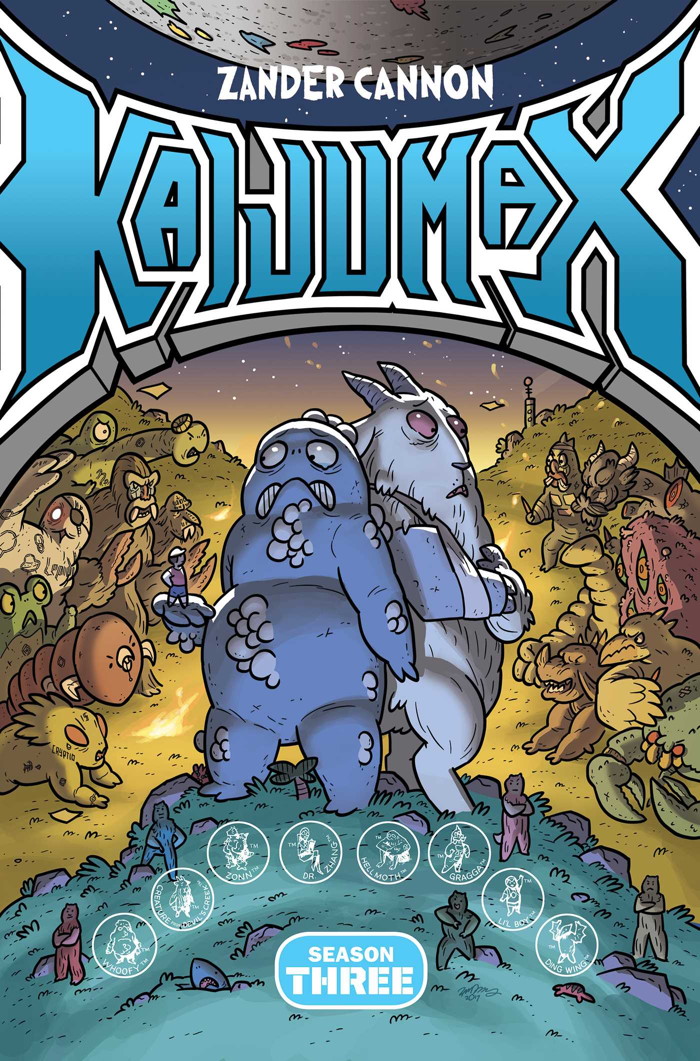
From the present day: Pam Smy's Thornhill was a creepy, excellent story in a hybrid comics/prose format that I've been seeing popping up a little bit more and more -- it may turn into a genre with a name one of these days. And Zander Cannon's third collection of his current comic, Kaijumax: King of the Monstas, was another amazing melange of prison-story, monster-movie, crime-fiction, and just plain drama.

Top of the month, though, was the second collection of a webcomic: Strong Female Protagonist, Book Two by Brennan Lee Mulligan and Molly Ostertag. It's got a smart, often-political edge and a definite point of view, wrapped up in a distinctive version of the superheroes-in-the-real-world plot.

December

Everything that I want to mention for the last month of the year was actually recent: does that mean I finally caught up on my re-reading and older books? (No: not at all. But maybe I momentarily paused. There are always more old good books than any of us can read.)

In comics, I loved the third big collection of the comic about British women at university, Giant Days: Not On the Test Edition, Vol. 3, written by John Allison and drawn by Max Sarin and Liz Fleming. And the front half of Matt Wagner's big trilogy-ending superhero semi-autobiography was also impressive in Mage: The Hero Denied, Vol. 1.

I finally caught up with the first book of Jeff VanderMeer's "Southern Reach" trilogy, Annihilation, which is one of the best creepy books I've ever read and which makes me want to get the two follow-ups immediately.

But best for the month, and summing up the whole year, is the fourth book in Martha Wells's "Murderbot Diaries," Exit Strategies. She's maintained a magnificently balanced, snarky tone through the whole series (three of which I read this year) and created one of the great robot characters in all of SF. (And maybe strike the word "robot" from that last sentence, too.)

And so I end up with...

2018's Top Twelve

  • All Those Explosions Were Someone Else's Fault by James Alan Gardner
  • The Delirium Brief by Charles Stross
  • The Depths (in Dungeon Monstres, Vol. 3: Heartbreaker) by Joann Sfar, Lewis Trondheim, and Patrice Killoffer
  • Equinoxes by Cyril Pedrosa
  • Henchgirl by Kristen Gudsnuk
  • I Am Not Okay With This by Charles Forsman
  • Mrs. Fletcher by Tom Perrotta
  • Sabrina by Nick Drnaso
  • Spinning by Tillie Walden
  • Strong Female Protagonist, Book Two by Brennan Lee Mulligan and Molly Ostertag
  • Voices in the Dark by Marcel Beyer and Ulli Lust
Those are the most memorable books I read this year. I recommend all of them to all of you, whoever you are.

You might hate them, of course: that's how taste works. But I think they're all worth reading even if you hate them; I've had a lot of books like that in my life, goodness knows.

Monday, December 01, 2014

Read in November

Some years, I'm lackadaisical about writing individual posts about the books I read, and so this month-end post ends up capturing a lot of quick thoughts about those books. This is not one of those years: I'm nearly to the end of twelve months of Book-A-Day, so all you will find below are links. I happen to think all of those links lead to deathless prose and fascinating insights, but then I would, wouldn't I?

R. Stevens, Diesel Sweeties: These Is a Cat on the Internet! (digital proof, 11/4)

Bryan Talbot, Grandville Noel (digital proof, 11/5)

Juan Diaz Canales & Juanjo Guarnido, Blacksad: Amarillo (digital proof, 11/6)

Miss Lasko-Gross, Henni (digital proof, 11/10)

Philippa Rice, Soppy (digital proof, 11/11)

Brennan Lee Mulligan & Molly Ostertag, Strong Female Protagonist, Book One (digital proof, 11/12)

Ryo Hanada, Good-bye Geist (digital proof, 11/13)

Donald E. Westlake, The Getaway Car (11/13)

Gabriel Hardman, Kinski (digital proof, 11/14)

Carol Lay, Strip Joint (11/15)

Ben Templesmith, The Squidder (digital proof, 11/18)

Yu Suzuki, VS Aliens (digital proof, 11/19)

Helene Hanff, Underfoot in Show Business (11/19)

Kieron Gillen & Jamie McKelvie, The Wicked + The Divine, Vol. 1: The Faust Act (digital proof, 11/20)

Steve Orlando & Artyom Trakhanov, Undertow, Vol. 1: Boatman's Call (digital proof, 11/21)

The World of George Price (11/22)

Shigeru Mizuki, Onward Towards Our Noble Deaths (11/24)

Brad Teare, Cypher (11/24)

Miss Lasko-Gross, Escape from "Special" (11/25)

Thomas McGuane, The Bushwhacked Piano (11/26)

Terry Pratchett & the Discworld Emporium, The Complete Ankh-Morpork City Guide (11/26)

Neil Gaiman & Eddie Campbell, The Truth Is a Cave in the Black Mountains (11/28)


Next month: more links, as Book-A-Day comes to a conclusion.

Monday, October 01, 2018

Reviewing the Mail: Week of 9/29/18

This week, I have books in all three major categories for Reviewing the Mail: one upcoming book sent by the publisher, one book I bought myself, and two from the library. And I'll tackle them in that order:

First up is the complete surprise: Rudy Rucker has a new novel, it's a sequel to one of his old books, and he published it himself through his Transreal Books imprint. So I was thrilled to see The Hollow Earth & Return to the Hollow Earth turn up unexpectedly in my mail. (There was a Kickstarter campaign, which I must have missed. This omnibus edition also includes both 1990's somewhat steampunky Hollow Earth, about a young man, his wild friend Edgar Poe, the secret world in the center of the Earth that they both discover, and the man's One True Love he finds there. Return is, I suppose, what happened after that, and that sounds like it includes a way back into the center of the Earth. Rucker is a unique writer in so many ways, and it's great to see him back with a new book.

Chester & Grace: The Adirondack Murder is the book I bought: it's the latest self-published book of old murders from Rick Geary and the first in yet another series of similar books from Geary -- this one is subtitled "Little Murder Library." This is the case that Theodore Dreiser fictionalized into An American Tragedy and which was further fictionalized into a couple of classic movies. I got it through the Kickstarter campaign, but it will probably be available in Geary's webstore before too long. Right now, though, it seems to be out in the world only to those who backed it.

The Witch Boy by Molly Knox Ostertag (from the library) is a middle-grade graphic novel from the artist of Strong Female Protagonist (which I see I read one collection of and then lost track of). It's yet another one of the "you will secretly be awesome at the thing you want to be, even though everyone says you can't do it" stories that are perennial popular for adults to tell kids, since we want to believe that's true ourselves. In this case, it's a boy from a magical family where all the boys always become shapeshifters and the girls always become witches -- but guess what? Yeah, check the title.

And last is Nick Drnaso's big graphic novel Sabrina (also from the library), which surprisingly landed on the Booker longlist earlier this year. (I think the first comics-format work to do so.) I've heard good things about it otherwise, and it's from the dependably classy Drawn & Quarterly, and it has killer quotes from Zadie Smith, Adrian Tomine, and Jonathan Lethem. (Drnaso is also the author of the linked collection of comics short stories Beverly, which I read last year in a library copy damaged by a sizable number of missing pages.)

Tuesday, September 14, 2021

The Midwinter Witch by Molly Knox Ostertag

I could pretend that I did it on purpose: that I skipped The Hidden Witch because this book is newer, maybe as some kind of comment on how commercial fiction, especially for younger readers, is so trope-ridden and bend-over-backward accessible that any reader can jump in anywhere and figure out everything important.

I could. But I shouldn't: it's not true. So I won't.

I did read The Witch Boy, the first book in this series of graphic novels by Molly Knox Ostertag (who also, apropos of nothing, is the artist of the great Strong Female Protagonist series). But I missed the second one, and maybe got The Midwinter Witch from the library thinking it was the second one. (I had them in the wrong order in my list there, so that's my excuse.) Whatever: I read book one three years ago, and now I read book three.

There are secret families of magical people - large, extended clans spread across the world, several families, each with slightly different traditions and skills and abilities. As far as we've seen, they're almost entirely good, nurturing people, though, like anyone else, they can be close-minded and unwilling to want change. [1]

Aster is a boy, and in his family, boys are typically shifters - they transform into animals - and girls are witches, casting spells. In Witch Boy, Aster was able to show that typically does not mean must always be, and was able to start training publicly as a witch.

I think Hidden introduced Ariel, a girl about the same age - maybe ten? I'm not clear how old these kids are, but they feel early-middle-schoolish, just prior to the pairing up and worrying-about-sex years - who has witchy abilities, but was adopted, so her heritage was somewhat unknown. Ariel is now part of the same cluster of kids that learn magic (and maybe other things? there may be a Hogwarts-education issue in this world as well) in a homeschooling environment, along with Aster.

This book is about the runup to the big Midwinter Festival, in which Aster's family (Vanisen) gathers together for a combination family reunion and competition. The shifters (just the kids, as far as I can see) compete in one contest, the witches in another. And the drama in this book is about whether Aster and Ariel will compete.

Aster wants to compete: wants to be seen as what he is. Ariel is reticent: she's good at magic, but not good at family, and this is all really new to her. Aster's mother Holly wants Aster to take a pass this year (for what seem to be mostly not-making-waves reasons) and Ariel to compete (since that would help cement her place in the larger family).

Meanwhile, Ariel is having dreams of a powerful older witch who claims to be a living real relative of hers, and trying to drag her into a very different, much nastier kind of magic.

Who! Will! Win!

This is a YA graphic novel series, so obviously it all turns out fine in the end, with all of the good people hugging and being friendly, and everyone winning to at least some degree. I tend to prefer stories with slightly harder choices, but this is fun and positive and affirming: I expect it, and the whole series, are big confidence-builders for all sorts of kids who are odd in one way or another, particularly those whose oddities run up against the gender norms in their families.


[1] This has been a series for pre-sex kids so far, so how people pair up isn't as clear. I'm hoping there are pan-family gatherings at least partially for teens to meet and match with each other, or else each family is going to get really unpleasant genetically.

Saturday, December 01, 2018

Read in November 2018

Coming up on the end of the year, I've hit the point where I have to engage in hard-core planning for Book-A-Day to come out right. You see, this year I'm both reading a book a day and posting a review of a book every day. And I'm now 14 days ahead for posts written and an additional 9 days beyond that in books read and slotted for particular days.

So I've got a few multi-book things I still want to get through, and I'm expecting there will be a passel of posts about those in the frantic last days of the year. (Well, some sooner than that: I hope to write a big post on the Grant Morrison Doom Patrol this coming Saturday, which will go live on November 29th.)

But doing that too quickly will mean that I could overrun the read-but-not-written buffer, and leave me with a day where I can't write about anything. I'm also realizing that if I write a post a day, and I'm already 14 days ahead, Book-A-Day will inevitably run into at least mid-January unless I set up half of December with double posts.

It is a puzzlement. It's also a bizarre, entirely self-inflicted problem. And I tried to solve that problem with these books in this order...

Shannon Wheeler, Memoirs of a Very Stable Genius (11/1)

Gilbert Hernandez, The Children of Palomar (11/2)

Michael Moorcock and Howard V. Chaykin, The Swords of Heaven, The Flowers of Hell (11/3)

Grant Morrison, Richard Case, and others, Doom Patrol, Book 1 (11/4)

Grant Morrison, Richard Case, and others, Doom Patrol, Book 2 (11/5)

Svetlana Chmakova, Crush (11/6)

Grant Morrison, Richard Case, and others, Doom Patrol, Vol. 5 (11/7)

Adam Resnick, Will Not Attend (11/8)

Grant Morrison, Richard Case, and others, Doom Patrol, Vol. 6 (11/8)

Masamune Shirow, The Ghost in the Shell 2.0: Man-Machine Interface (11/9)

The Hernandez Brothers, Love and Rockets: New Stories, No. 7 (11/10)

Brennan Lee Mulligan and Molly Ostertag, Strong Female Protagonist, Book Two (11/11)

Matt Wagner, Mage: The Hero Defined (11/12)

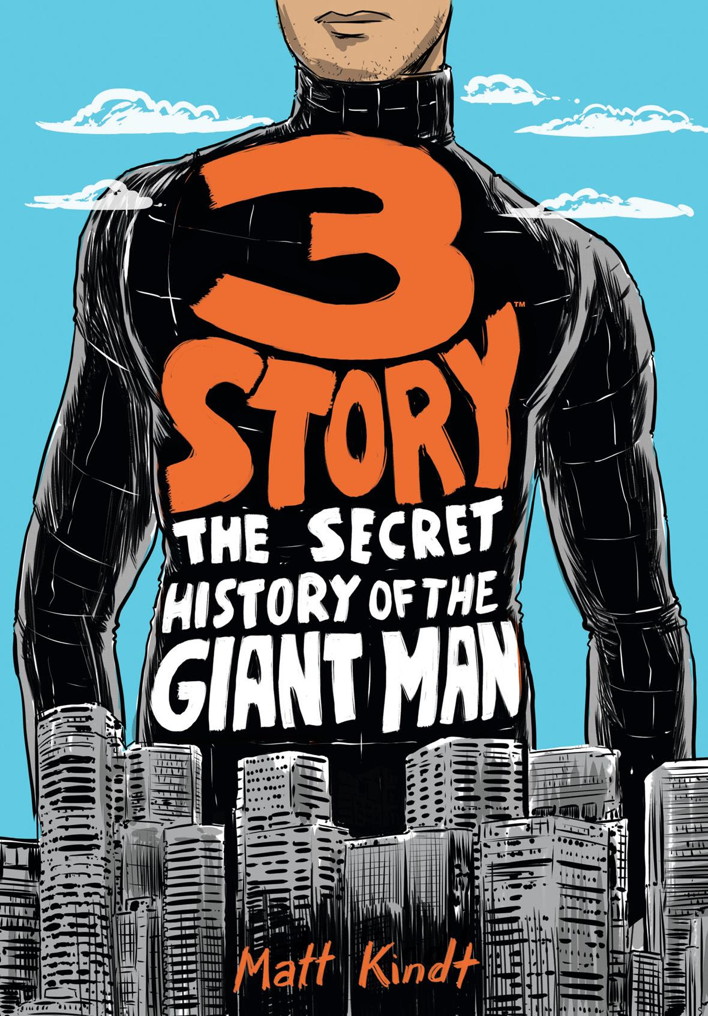
Matt Kindt, 3 Story: The Secret History of the Giant Man (11/13)

Zander Cannon, Kaijumax, Season 3: King of the Monstas (11/14)

Pam Smy, Thornhill (11/14)

Mike Mignola, John Arcudi, and James Harren, B.P.R.D.: Hell on Earth, Vol. 11: Flesh and Stone (11/15)

Mike Mignola, John Arcudi, Peter Snejbjerg, and Julian Totino Tedesco, B.P.R.D.: Hell on Earth, Vol. 12: Metamorphosis (11/15)

Jamie S. Rich and Nicolas Hitori De, Spell Checkers (11/15)

Jamie S. Rich and Nicolas Hitori De, Spell Checkers, Vol. 2: Son of a Preacher Man (11/15)

Mike Mignola, John Arcudi, and Laurence Campbell, B.P.R.D.: Hell on Earth, Vol. 13: End of Days (11/16)

Kyle Baker, You Are Here (11/17)

Evan Dorkin, Dork (11/18)

The Hernandez Brothers, Love and Rockets: New Stories, No. 8 (11/19)

Keith Giffen, J.M. DeMatteis, Kevin Maguire, and Al Gordon, Justice League International, Vol. 1 (11/20)

Larry Marder, Beanworld Omnibus, Vol. 1 (11/21)

Matt Wagner and various artists, Grendel Omnibus, Vol. 1: Hunter Rose (11/22)

Matt Wagner and various collaborators, Grendel Omnibus, Vol. 2: The Legacy (11/23)

Matt Wagner and various artists, Grendel Omnibus, Vol. 3: Orion's Reign (11/24)

Matt Wagner and various collaborators, Grendel Omnibus, Vol. 4: Prime (11/25)

Marc Sobel and Kristy Valenti, editors, The Love and Rockets Companion (11/25)

Dan Zettwoch and Kevin Huizenga, Amazing Facts and Beyond! with Leon Beyond (11/26)

Jim Ottaviani and various artists, Fallout (11/27)

Ryan North and Eric Henderson, The Unbeatable Squirrel Girl, Vol. 6: Who Run the World? Squirrels (11/28)

Brian K. Vaughan and various artists, The Escapists (11/29)

Jeff Parker and various artists, Batman '66, Vol. 1 (11/30)


That was November. Next up: figuring how to end and sum up Book-A-Day 2018.

Monday, October 15, 2018

Reviewing the Mail: Week of 10/13/18

This week I have books from Category Two (library) and Category Three (purchased), and here they are:

Category Two:

Batman: The Jiro Kuwata Batmanga, Vol. 3 by Jiro Kuwata -- I covered the first two volumes previously in these pages; these books collect Batman stories from Japan in the late '60s created in the wake of (and somewhat in the style of) the 1966 TV show. I think this is the end, and I think that these books -- unlike the hey-look-at-this-crazy-thing Chip Kidd book Bat-Manga that preceded them -- reprint the stories complete and in order, or at least as close to that as could be managed fifty years later.

Captain Marvel: Earth's Mightiest Hero, Vol. 2 by Kelly Sue DeConnick with Jen Van Meter and fourteen different artists, plus colorists and letterers. (See my post on the first volume.) This turns out to be more event-epic than I expected, collecting five issues of Cap's comic, issues of two different Avengers titles, and two Avenging Spider-Mans for good measure. So I expect I will not find this terribly to my tastes -- but I'm trying to read a book a day this year, and it's here, so I'm sure I will read it.

Verax: The True History of Whistleblowers, Drone Warfare, and Mass Surveillance by Pratap Chatterjee and Khalil. Chatterjee is the executive director of CorpWatch and author of two (prose) books on Haliburton and the Iraq war; Khalil is a political cartoonist and illustrator of the graphic novel Zahra's Paradise. It's about drones, to be very reductive -- the ones that spy on people and the ones that kill people.

Category Three:

Look Back and Laugh: Journal Comics by Liz Prince. This is, um, journal comics by Liz Prince, who has previously done books like Tomboy and Alone Forever and Delayed Replays.

3 Story is a new expanded edition of Matt Kindt's 2009 graphic novel, which I covered here not too long afterward.

Strong Female Protagonist, Book Two continues the story of Alison Green, former teen superhero, collecting another batch of strips from the webcomic. As with the first volume, it's written by Brennan Lee Mulligan and drawn by Molly Ostertag. I seem to only read this in print; the webcomics I read online I mostly don't buy print collections for. (I don't understand it; all I can do is try to describe it.)

Nexus Omnibus, Vol. 5 collects issues 53 to 65 of the '80s-'90s First series, plus issues 2-4 of the related Next Nexus series from the same time period. The book is credited to Mike Baron and Steve Rude, though a lot of the art inside isn't by Rude -- this is the period when he started to take longer and longer breaks from Nexus to do other work. (I recently covered the first nine Nexus Archives books -- a separate and slightly earlier reprint series -- and that made me want to get the back half of Nexus and read that through, too.)

Beanworld Omnibus, Vol. 1 is a giant slab of Larry Marder's quirky comic, collecting the first twenty-one issues of the Tales of the Beanworld comic, originally published from 1984 to 1993. I've heard about Beanworld since the mid-80s, but I've never actually read it -- it looks like the kind of thing I would like, so I don't have a good reason why it's taken so long to give it a chance. Well, except that the world is huge and full of more things than we can ever experience, no matter how much we want to.

Kaijumax, Season Three: King of the Monstas is, obviously, the third collection of Zander Cannon's kaiju-in-prison saga. You could check out my posts on the first two volumes, if you wanted to.

Memoirs of a Very Stable Genius is a collection of personal comics -- both multi-page comics-format stories and single panels -- by cartoonist Shannon Wheeler. It has, as far as I can tell, nothing to do directly with that other person who insists he is a very stable genius.

The Swords of Heaven, The Flowers of Hell is a 1979 graphic novel primarily by Howard Chaykin, from a Michael Moorcock outline, set in the world of Moorcock's Eternal Champion Cycle, subseries Erekose. I don't think I've ever read it, so this recent reprint was a good excuse to take a look.

And last is Dork by Evan Dorkin, a big fat collection of all of the comics from his miscellaneous comics series of the same name, which has had scattered issues for the last twenty-five (maybe more) years.

Thursday, January 01, 2015

Favorite Books of 2014

Every book pundit and reviewer has to declare a list of books at the end of a year, and this is mine. 2014's list is the ninth time; this has been an annual feature of Antick Musings since the beginning. (Those earlier lists: 2013, 2012, 2011, 2010, 2009, 2008, 2007, 2006, and 2005.)

My introductions to these lists have gotten longer and more Byzantine over the years, which is my general tendency anyway. But I do want to fight that, so I will aim for concision here.

The Rules:

  1. My list is finalized on the last day of the year, so it includes all my reading for the year.
  2. This is a list of "favorites," not "bests."
  3. I try to favor books from this year.
  4. My reading includes many genres and formats, and the list mixes that all together.
  5. I pick a favorite for each month, to make a top twelve.
  6. And each month also gets a paragraph about other notable books.

The Field:

I read 383 books in 2014, more than double the standard for the past three years. (2013: 156; 2012: 158; 2011: 146) That brought me back in line with the average for the prior three decades, so maybe it was doing the other blog (Editorial Explanations) that stole my reading time and energy.

(Other theories: working outside fiction publishing, my big flood in 2011 that destroyed 10k books, sunspots, general ennui, or that it's 2014 that's the real anomaly.)

This was a Book-A-Day year, so it's even more comics-heavy than usual. And the prose books were often chosen because they were short and could be read quickly. That's definitely a bias, but I don't think being biased in favor of entertaining books that go quickly is anything to apologize for.

So here's what I read in 2014 that feels worth calling out at the end of that year: the most interesting and the books that stuck in the mind, the quirky and the bizarre and the wonderful and the impressive.

January

Not eligible under my usual rules is Darrell Huff's How to Lie With Statistics: not only did I read it for the second time, but the book itself is from 1954. But it's a great book -- short, punchy, smart, filled with sneaky tricks everyone should know -- and so I'll mention it here for the benefit of anyone who hasn't read it yet. Julian Barnes brought his typically elliptical style to Levels of Live, a memoir occasioned by the death of his wife. (Although the book itself is more about ballooning than grief directly.) And I discovered Kyoko Okazaki, a great female manga-ka before a horrible accident nearly twenty years ago, with her fearless and era-defining Pink.

But the book of the month has to be Neil Gaiman's slim new novel, The Ocean at the End of the Lane, which is a masterclass in what writing can do and why we read fantasy.

February

I read two excellent fantasy novels from series this month: one was Jonathan Stroud's The Screaming Staircase, ostensibly for teenagers and beginning the story of a world where the dead walk and only young people can see and stop them. The other was Scott Lynch's long-awaited The Republic of Thieves, which was amiably lower-key than the first two books in his Gentleman Bastards series and made me wish he could produce a book like that every year. Gene Luen Yang also came back after what felt like a long hiatus since American Born Chinese -- though he had been working steadily, with various projects coming out since then -- to produce a magnificent diptych of graphic novels in the interwoven Boxers and Saints.

And the best thing I read in February was a graphic novel from France, the devastating and cruel Beautiful Darkness, written by Fabien Vehlmann and drawn by the husband-and-wife team billed as Kerascoet. 

March

After Beautiful Darkness, I wanted more Vehlmann, and I found another excellent book he wrote, The Last Days of an Immortal, that was illustrated by Gwen De Bonneval -- this was chilly in a different way, smart SF in the vein of classic Silverberg or Knight. Marie Rutkowski's The Winner's Curse was a smart novel -- officially for teens -- about war and slavery and conquest and ownership. Takashi Murakami's Stargazing Dog chooses a uniquely oblique angle to tell a tragedy, and turns it into something more celebratory, though still sad.

The book of the month was Sunny, Vol. 1, the first in a series -- it can stand in for all of them to date -- by Taiyo Matsumoto about the inhabitants of a group home for unwanted kids in a minor Japanese town in the 1970s. The characters are intensely imagined, and their world is entirely real.

April

The most disappointing book of April was The Rise and Fall of the Great Powers, Tom Rachman's dull and muted follow-up to his magnificent first novel The Imperfectionists. Not exactly disappointing but reveling in frustrating all expectations and plans was The Incrementalists, a SF novel by Steven Brust and Skyler White that postulates a secret society that controls the world and then runs them around suburban Las Vegas and memory palaces to tell a ground-level story of people and relationships. Surprising and lovely and equally grounded in real people was La Quinta Camera, the story of a group apartment in an Italian city by the Japanese creator Natsume Ono.

And the book I loved the most in April was the first collection of an ongoing comics series by Matt Fraction and Chip Zdarsky, Sex Criminals, Vol. 1: One Weird Trick. Sexy without being pandering, focused on a woman without being heavy-handed, this is fun and funny and silly and loving and passionate and gorgeous.

May

I had a slight disappointment this month as well: Walter Kirn's Blood Will Out, billed as the true story of a serial con man and Kirn's tangled relations with that man. But it turned out to be a well-written story about how appalled Walter Kirn was that Walter Kirn was taken in by a con man -- how could he, Walter Kirn, be so blind! (There was possibly just a bit too much Walter Kirn in it.) Lewis Trondheim began a new epic fantasy-tinged graphic novel series with the intriguing Ralph Zaham,Vol. 1.

And the best book of the month, by far, was the second graphic novel by cousins Mariko Tamaki (script) and Jillian Tamaki (art), This One Summer. Like their first book, Skim, it's about girls growing up and being thrown into situations they don't understand, but the girls in This One Summer are younger and their milieu more distinct and interesting. The art is lovely, the words are precise and true, and the story resonates strongly.

June

Most of the best stuff I read in June was old and not really eligible for this list, unfortunately. I finally got around to Nicholson Baker's aggressively minimalist first two novels, The Mezzanine and Room Temperature -- about riding up an escalator and feeding a baby, respectively. And I also read the first collection of John Allison's great current webcomic, Bad Machinery, Vol. 1: The Case of the Team Spirit, which collects a story from 2011. (Later in the year, I read the next two collections of Allison's strip, which are equally as good but which I won't bother to mention separately.)

But, looking back, the most impressive and interesting book of the month was Box Brown's work of love and obsession, Andre the Giant: a graphic novel biography of the literally larger-than-life wrestler and actor. Brown did more research than most prose biographers, and is excellent at teasing out all of the different levels of presentation and reality in Andre's life, particularly the always-in-character wrestling world.

July

On the old and reprinted front, I have to first mention Bill Mauldin's magnificent achievement, Willie & Joe: The WWII Years, which collected all of his wartime strips, and which I read again this year. There was also the first collection of a great comics series from thirty years ago in Miracleman, Book 1: A Dream of Flying, by a deeply shy Alan Moore, Garry Leach, and Alan Davis. Rutu Modan's The Property was a great 2013 graphic novel -- about history and regret and desire and national character -- that I got to a year late. I was also slightly late getting to the very popular and equally artistically successful Saga series by Brian K. Vaughan and Fiona Staples. I saw a number of books by the Japanese manga-ka Moyoco Anno over the past year or so, all of which were smart and accomplished in very different ways, but the most impressive was the feminist/body-image tale of In Clothes Called Fat.

And the best book of the month has already turned up on a lot of other people's lists: the comics memoir of longtime New Yorker cartoonist Roz Chast, Can't We Talk About Something More Pleasant?, about the decline and fall of her aged parents. It's just as funny and touching as everyone says it is.

August

Pat Grant's graphic novel Blue, a parable about immigrants and strangeness from an Australian perspective, came out of nowhere for me, but it was deep and meaningful and full of heart. Gabrielle Bell collected five years of self-laceratingly funny diary comics in The Voyeurs. Jeff Smith's second big graphic novel was collected all in one volume as RASL: it's very different from Bone, a crosstime thriller with strong noir elements and an appealing antihero at its core. Michael Alexander Kahn and Richard Samuel West, with massive aid and support from IDW, gave us the magnificent and magisterial What Fools These Mortals Be!, a comprehensive look at the cartoons of the hugely influential late-19th century satire magazine Puck. And Michel Rabagliati's strong graphic novel Paul Joins the Scouts almost took the title this month -- it was easily the most emotionally powerful book I read that month.

But Rabagliati was beaten out by a retrospective of the work of National Lampoon cartoonist Charles Rodrigues, who never saw an emotional situation he couldn't satirize and ruthlessly mock. Ray and Joe: The Story of a Man and His Dead Friend collects all of his major story sequences from NatLamp from bizarre beginnings to metafictional ends, in all of their sick splendor.

September

This was another month with a lot of great new graphic novels: Raina Telgemeier's Sisters, a semi-sequel to her great memoir comic Smile. Farel Dalrymple's weird and stuffed-with-wonders The Wrenchies. Lucy Knisley's thoughtful and searching An Age of License. I was also really impressed with some old comics, too: Thirteen "Going on Eighteen" collected a minor '60s teen comic mostly by John Stanley, which was a riot of hilarious action and smart characterization. On the prose side, Jasper Fforde had a very impressive third book in his young adult "Chronicles of Kazaam" series with The Eye of Zoltar, and Michael Lewis once again proved he's a facile, deeply entertaining writer with an unfortunate tropism towards hacking out apologetics for whoever he talked to last with Flash Boys.

The book of the month was almost Danica Novgorodoff's The Undertaking of Lily Chen, which was not just brilliant on its own but a thrilling leap above her previous (already pretty good) books. But even better was Ray Fawkes tour de force The People Inside, which took the idea of his previous tour de force (One Soul) and upped the ante and the difficulty -- and then topped his previous achievement, brilliantly.

October

Bryan Lee O'Malley followed up his Scott Pilgrim series with an excellent standalone, Seconds, all about choices and mistakes and second chances. (There's something a bit Gaiman-esque about it, actually.) Howl: The Graphic Novel is a few years old, but I only found it this year: it spun off the recent movie, and has cartoonist Eric Drooker drawing riffs on the Allen Ginsberg poem.

Best of the month is a book of manga short stories from a creator I'd never heard of and a new press: Sorako by Takayuki Fujimura via Gen Manga. The stories are mostly about aimless young women, and they're as resonant and thoughtful as the similar work of Adrian Tomine or Daniel Clowes.

November

Another stack of excellent good comics, as I saw the end of the year approaching and started trying to gather all of the good stuff with both hands: Grandville Noel, the fourth in Bryan Talbot's alternate-history anthropomorphic detective series, which works vastly better than such a stew of elements should. Onward Towards Our Noble Deaths, the devastating almost-true story from Shigeru Mizuki about the death of a battalion of Japanese soldiers in WWII. The Truth Is a Cave in the Black Mountains, not quite comics but with a powerful story by Neil Gaiman and darkly evocative art by Eddie Campbell. Strong Female Protagonist, Vol. 1, the first collection of Brennan Lee Mulligan and Molly Ostertag's feminist, post-revisionist superhero webcomic. In entirely another vein, The Getaway Car was a great collection of the random non-fiction of the late mystery grandmaster Donald E. Westlake.

The book of the month was Henni by Miss Lasko-Gross, a parable-esque graphic novel about women and men, religion and politics, hope and fear.

December

In the last month of the year, I got to another stack of well-reviewed stuff that I liked a lot as well: Through the Woods, collecting Emily Carroll's fairy-tale-esque stories of terror and creepiness from her website and other places. Jane, the Fox & Me, a story of growing up lonely and bullied but finding ways to get through it, by Fanny Britt and Isabelle Arsenault. The Gigantic Beard That Was Evil, a fabulistic story about conformity and messiness by Stephen Collins. Weapons of Mass Diplomacy, a sharp-eyed look behind the scenes of the diplomatic apparatus at the moment it was falling apart, by Abel Lanzac and Christophe Blain. The Motherless Oven, Rob Davis's precisely surreal story of growing up in a weird, fatalistic world.

Once again, there were two graphic novels fighting it out for the top slot. Only just missing was Beauty, a precise and devastating story about the male gaze, women's power, palace intrigues, and the corrosiveness of desire, written by Hubert and drawn by Kerascoet (of Beautiful Darkness fame). But even more impressive, and a vastly bigger leap forward in comics, was Richard McGuire's amazing Here, the long-gestating expansion of his famous ground-breaking story of the same name.

And then, to pull those top choices all together into a single list:

2014's Top Twelve


Every year when I'm working on this, I'm reminded of the main reason I do this by month. It's both an easier and harder choice by month, since there are fewer books to look it -- so it's easier to focus, but it's also easy to have two books that are both very good. But, when I do it by month, I get a more idiosyncratic list, full of things that I really liked, and not just that I think are worthy. If I did a traditional "Top 10" and looked at the whole year, I'm sure I wouldn't have included Box Brown or Fraction and Zdarsky -- and the list as a whole would have been duller and more similar to everyone else's.

So my first advice is to read the books I listed above, the short list and the long: they're all worth the time and thought. And my second advice is to try to do things a little differently than other people -- make your lists and choose your options and look at things more like yourself and less like everyone else.

Finally, all of these books were all, obviously, from my Book-A-Day project, so also look for the Book-A-Day postmortem, coming later today. That will have a geekier poke at numbers of books and breakdowns by genre.