Wednesday, October 05, 2022

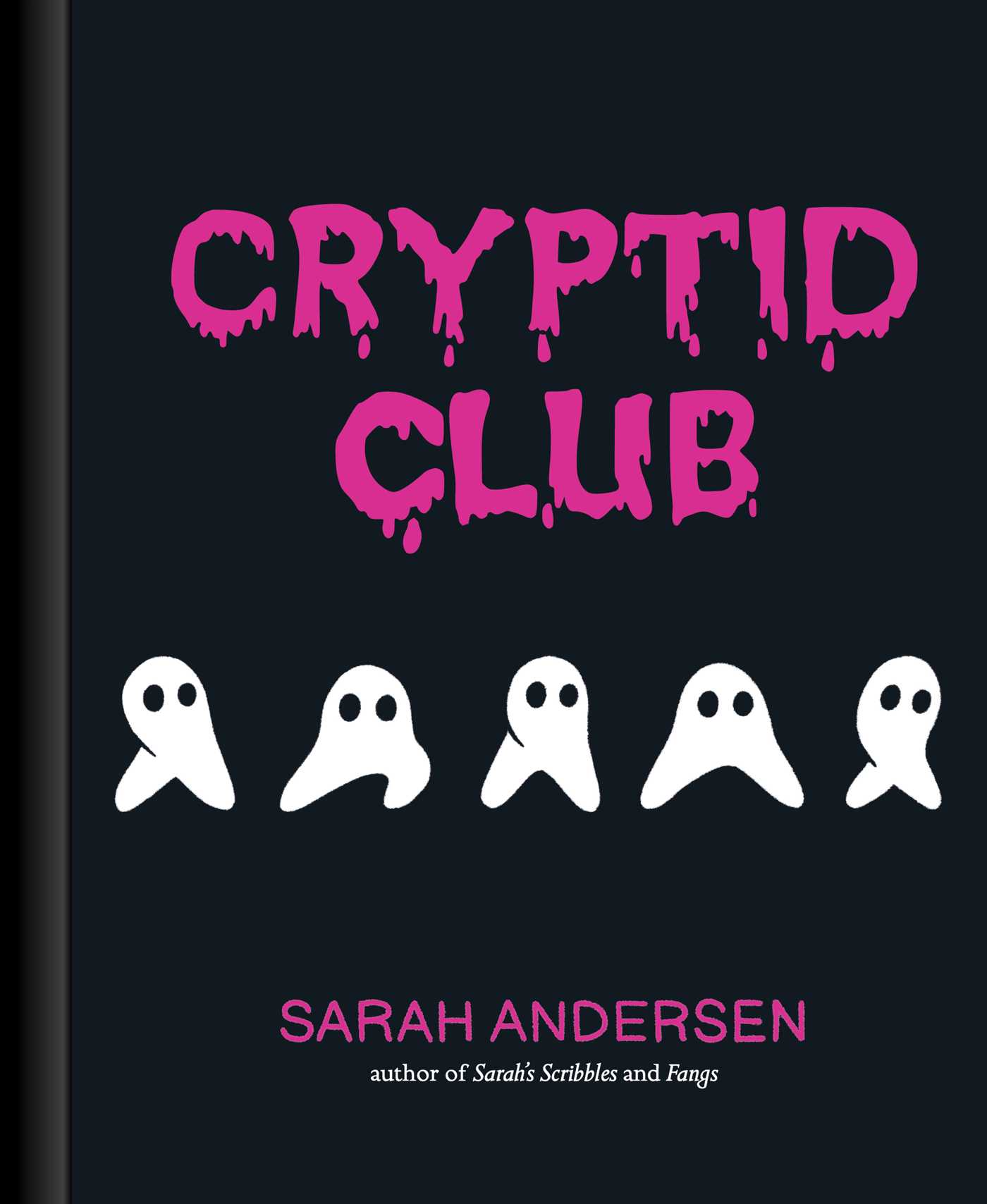
Cryptid Club by Sarah Andersen

So I like reading books of quick, funny cartoons, and I like writing posts about the books I read. But those two impulses don't really work all that well together.

I blame society.

For everything, but this in particular.

Anyway, I just read Sarah Andersen's new book of cartoons, Cryptid Club, which collects a whole bunch of mostly 4-panel cartoons about - yes, you guessed it, cryptids! It is funny and I enjoyed every single page of it (even the more obscure cryptids that I had to look up, which I will go into more detail below), but there's not really a whole lot more to say other than "this is a book of funny cartoons about a bunch of cryptids, who are friends and hang out together as well as being the scary monsters we know them as, more or less."

I'm not sure if these appeared anywhere else first - this is the kind of thing that could have been a recurring feature in a wider webcomic - or just a big batch of variations on a theme done specifically to make a book. That doesn't matter, I guess, but if they did appear online, and I knew where that was, I could give you a link to get a sense of the material here.

Oh! I should mention that the line art is all Andersen, but this is all in full color, and the color is a huge part of the appeal - it's spooky and garish and bright and creepy in turn to make the jokes work. Colors are by Celi Godfried, assisted by Kayla Nicole, who did flatting for the book. (I know "flatting" is a thing in books of cartoon color art, and I think it's a semi-mechanical process - tedious and maybe finnicky but probably not directly creative in the first instance - but I don't know the details and will forget them if anyone tries to explain to me.)

OK, so the deal here is that all of these folks - Mothman, Nessie, Bigfoot, Kraken, Chupacabra, and so on - are all real, all know each other, and all sort of hang out somewhere, despite the fact that they supposedly live all over the world. There are a lot of "we're camera shy" jokes, and more dating material than I would have expected. And, obviously specific jokes about their individual deals - Chupacabra sucks on goats, Mothman is attracted to lights, Bigfoot is sensitive about the size of his feet.

Andersen has an engaging, cartoony style here, which occasionally makes some of her cryptids look an awful lot like each other. Specifically: the Flatwoods Monster and Mothman are not only both from the same geographical region, but Andersen draws them to have basically the same head, and then draws them in close-up a lot. (Flatwoods does wear a hooded dress, while Mothman is a giant unclothed moth - I'm not saying I can't tell them apart, just that it can cause a moment of confusion.)

Even more so, the Fresno Nightwalkers - and props to you if you've heard of them; I hadn't - look almost exactly like ghosts, except the Nightwalkers bottoms clearly bifurcate into feet that touch the ground, and the ghosts don't do that consistently. But, otherwise, yeah, basically the same outline and eyes. Luckily, Andersen gives the Nightwalkers fabulous shoes pretty quickly, which helps a lot.

Again, this is a book of loosely connected cartoons about a medium-size cast of goofball monsters. I'm publishing this post way out of sequence, so I can get it out quickly - my guess is that this was published pre-Halloween for a reason, and I'm trying to hit that window as well. If you want a new funny book for the spooky season this year, this is is available and it's a good choice.

Tuesday, October 04, 2022

Seventeen Years in the Blogging Mines

Today is the seventeenth anniversary of this blog. For most of those years, I had a long post to mark the anniversary, with statistics and links to notable posts of the past year and other foofaraw.

Now, I'm not saying I'm not going to do that this year. I'm writing my way into this post, starting more than a week ahead of the actual anniversary, and I may work my way up to something like the heights I used to hit. But these are lesser, latter days, and all has fallen into rack and ruin, so don't count on it.

What Has Gone Before: The Links

One thing I try to do each year is link back to the previous anniversary posts, so here you go: first, second, third, fourth, sixth, seventh, eighth, ninth, tenth, eleventh, twelfth, thirteenth, fourteenth, fifteenth. You may notice two are missing: I forgot to do this entirely a couple of times, and once of those was last year. (Several others are quick and desultory.)

So last year I whiffed entirely, for the first time since the fifth year of the blog. I'm not sure if that was on purpose - I'm sure I remembered the anniversary at some point in the six months surrounding it; I'm quirky but not brain-damaged - but it happened, whatever the reasons Then-Me had. But I'm back, to at least some extent, this year.

I also tell the Legend of the Blog every year, but it's not that interesting. I started Antick Musings because my then-employer was planning to start a big batch of blogs for most of the clubs, and running the SFBC blog was going to become part of my duties. I was relatively diligent in those days, and wanted to get some experience under my belt ahead of that launch. As it happened, Antick Musings vastly outlasted a lot of things associated with me and the SFBC, including that blog. So it goes.

What Has Gone Before: The Numbers

Anyway, I'm here now. Next up is typically the dick-measuring contest {ahem!} the listing of numbers of posts by year:

2021-2022 -- 279 posts

2020-2021 -- 265 posts

2019-2020 -- 55 posts

2018-2019 -- 178 posts

2017-2018 -- 368 posts

2016-2017 -- 263 posts

2015-2016 -- 144 posts

2014-2015 -- 258 posts

2013-2014 -- 434 posts

2012-2013 -- 285 posts

2011-2012 -- 332 posts

2010-2011 -- 445 posts

2009-2010 -- 711 posts

2008-2009 -- 880 posts

2007-2008 -- 834 posts

2006-2007 -- 841 posts

2005-2006 -- 809 posts

I had another blog - Editorial Explanations, in which I would explicate the Great American Editorial Cartoon in all its tendentious and bad-faith splendor - for a few years in the middle there, and used to include those numbers for an "everything I did" total. But who cares now? Not even me, that's for sure.

Posts About Books: The Self-Indulgent Bit

The bulk of this post, most years, is the self-indulgent bit. "But Andy!" you say. "All of this is hugely self-indulgent, isn't it?" Well, yes. But this next part even more so.

So I link to posts from the past year - book-review posts, since that's basically everything I do now - by quoting sentences I wrote that I am still inordinately fond of. I hope I don't have to tell you how sad that is, but I only do it once a year. And so here are some words I wrote that I still like:

But all of life is a sequence of things you get into and can't easily get out of: relationships, jobs, places to live, family.

I have a cynical opinion: for most of us, no matter how good we are, careers last about ten years. It applies to the artists we love and the lives we live equally. That band will probably break up after a decade; that writer will put out novels dependably until the second digit of the year changes. And your job will be happy with you right up to the point where they aren't, and at that point the industry will have changed enough that you have to leap into something else.

There's nothing like a breezy book by a young person to make you feel really old.

I always want more context and cultural criticism; I always want more why and less "remember this thing?"

If there's a sequel, there has to be a trilogy. I don't know if that's actually a law, but we said it a lot in my SFBC days, and it turned out to be true almost all the time.

Frankly, the lesson I take from Wendy, Master of Art is that my vague stereotype of art students and the art world in general - formed at Vassar over thirty years ago, out of minimal materials and a dislike for the kind of people who smoke above eye level - is basically correct, and I have been right to avoid both since then. So I've got that going for me, which is nice.

It took a while for me to realize, and this may be a spoiler: they are not running against each other. They are running together. I think this is important.

To my mind, if you're going to do a superhero story, or even a story set in a superhero world (this is more of the latter; Jimmy is always central, and most of the important characters don't have powers), you need to be at least halfway lighthearted. We all know every ending will be happy, all deaths are temporary, and all drama is momentary.

Corporate comics, man! They're stupid even when they don't have to be. It's like they go out of they way for it.

I don't want to be reductive here. (Well, maybe I do.) But it certainly seems to be that the central theme of European comics for younger readers is "what it the point of life, and how can you find the right path?" while the central theme of US comics for young readers is either (Big Two) "hitting people is how you solve problems" or (the YA world) "you are a unique special snowflake, and will have to overcome whatever horrible thing happened to you that you had no control over."

Don't get the idea I'm against creators taking control of the means of production! But if the only way I can get a book is to go to the guy's table at Comic Arts West Bumfuck and pay cash, I am much less likely to ever see it.

Over that scene is the tonally distinct gigantic caption "This is the story of a nameless girl...and the fearless, graceful life she led...from the postwar years...to the present day." (Which sounds like a weird Jackie O biopic, or maybe an arch Givenchy ad.) 

OK, you know how in big superhero comics, everything needs to be back at status quo ante eventually? Worlds will live, worlds will die, Ultrafellow will be replaced by a disabled teen Latina, and the entire Evil-Fighting Gang will disband for good...but only until it all goes back to the way it was before.

Memory is flawed, history is misunderstood, the past is a mystery. And demon-creatures shouldn't be completely knowable, able to be nailed down to a specific timeline.

And, most of all, it's about the questions of childhood: the things you asked at the time, the things you wish you'd asked at the time, the things you know you never would have gotten a straight answer about, and the things you didn't even think could be questions until much much later.

So the story I thought was bullshit for one reason is now retroactively bullshit for an entirely separate reason. Does that make me happy? Well, happy is a sliding scale.

Tintin is traveling, first to get into Russia and then to get out of it, while various dirty commies try, sometimes with massive military force and sometimes with sneaky sabotage, to murder him. Several times, for variety, they capture him, tie him up, and threaten to murder him slightly later.

I appreciate creators who get bored easily. I may not always love every last random avenue they go down - who likes everything? - but I love that impulse, and I strongly believe creators who go really different from project to project are the best, most exciting ones.

Most of us had "just jobs," usually when young. A job that's not a career, not on the way to anything you actually want, not a step forward on any road you care about. Something that pays money, is available to you because of circumstance or lifestage or location: something that works for now even if it won't work forever.

All in all, this has pretty much exactly the strengths and weaknesses of a book that a respected but idiosyncratic creator worked on quietly and alone for decades: it looks great, it has a lot of good ideas and moments, the characterization is excellent. But it's also lumpy, with a structure that feels like a sequence of pages in the order that the creator thought of them rather than the order that would best serve the story, and later revelations that are not adequately set up.

It's a gangster story: that's required. Blood must flow, betrayals must be swift and shocking, and most of the cast must not make it to the end.

I've had Thuds in my life: moments where everything changes. If you're old enough, you have, too. The point of a Thud is that it's unexpected, and that it's usually not happy. Something breaks, something shatters, something is gone forever.

The world demands movies from their comic books, TV shows from their novels, opera from their stories about historical figures, stage musicals assembled from random songs. And vice versa: look at the deeply incestuous "casting thread," in which random observers squee over which actors in TV-shows-based-on-books should be their favorite characters in a potential movie-based-on-a-comic-book.

This is a book about the curdled end of a particular kind of American Dream, about all the things Americans did and thought and cared about and worried about while, in the background, the Vietnam War lurched to its inevitable end and Nixon did the same.

If ever a man was born to draw tasteful living rooms and functional office suites with flat-color backgrounds, it was Whitney.

So: you know the rough plot, and you have a sense of the style: long, clause-clotted sentences that circle a thought as if they are a cavalry detachment trying to defeat and capture it.

The prospect of actual money does wonderful things to the artistic impulse; I greatly recommend it to anyone attempting to motivate an artist.

Thinking far too deeply about it, I would love to see a series with the opposite premise: dogs and cats are the villains, because they have been tainted by human evil, and badgers or foxes or opossums or maybe raccoons are the heroes. Actually, yes, raccoons, maybe with corvids as advisors: that's the one I want.

Int. Day. Berlin. Bunker.

HITLER: Achtung! Give me a report on the secret compound!

HIMMLER: Yes, Fuhrer! Early tests on the Odinspear are promising...

HITLER: Nein! Not that secret compound! The one outside Vienna!

HIMMER: West of Vienna or South of Vienna?

HITLER:  West, you schweinhund!

HIMMER: Oh, right, the Greenbaums.

What do they do? They fuck. They shit. They kill each other. Occasionally even in that order.

I like parallels; I like books to set things up and then knock them down; I like guns on mantlepieces to be taken down at just the right moment and fired. 

The title gives away the end. You may not realize how, as you dive into the surreal, dreamlike early pages, but it will all be clearer by the end. And the title gives away the end.

Reporters write about moments, about places, about the intersection of the two: what it's like to be here when it is now. Some pieces are more obvious about it than others.

She was an addict and a stormy personality, I think - the book and the introduction are more poetic about it - which didn't help, but who ever min-maxes their own life to be the most successful version of themselves? She achieved a lot. She fought hard. She died young.

This is the story of a young man with fabulous powers and a bizarrely impossible upbringing, whose interactions with the outside world are about 95% murder, but, on the other hand, he's a tall attractive man with cool clothes. And apparently that is enough to make a mass-murderer into a hero.

This is a book by a young man. We sometimes forget things like that: we think that Albert Einstein was born the old guy with the bushy hair, or that Lawrence Welk's '60s style was what big-band music sounded like when the WW II generation was young and on the make. Everyone was young once; everyone thought the world was ahead of them and they could do anything they wanted. Some of them were right.

I still think the less-used pronouns can set their users up for a lot of additional microaggression and worse in their lives, especially as them/they is actually getting traction as a singular pronoun in wide culture, but I don't get to decide those things for other people.

All the most interesting people have the least-likely careers. (Says the man who started out as a SF editor and somehow ended up doing content marketing for corporate lawyers.)

Look, Gardner is a fun, energetic writer, and he's particularly good at writing women with strong, distinctive voices. All of his strengths are shown to good effect in Gun. But the more I think about it, the more I can't fucking stand the default superhero universe. Sorry.

A collection, on the other hand, is already multitudes. It flows through your hands when you try to define it: a little more over here than you first thought, oh wait maybe it's more like this, no no I've got it now it's totally thus.

This book may make you want to sharpen your guillotine and start gathering cobblestones for barricades, which is no bad thing.

Most of us have trouble being happy, I think. Most of us want to be happier than we are, want to enjoy moments more than we feel we actually can.

Everything Else

Antick Musings is, I have to admit it, a book blog. I used to write about movies, I used to write about random things that struck my fancy. I don't anymore, in either case. So, in years long past, I would have other links in this section of the anniversary post to those other kinds of posts - but not this time.

On Monday mornings, assuming I don't forget, there is either a Reviewing the Mail post (listing new books) or a Reading Into the Past post (listing old books). I also post a Quote of the Week, originally on Fridays and more recently on Saturdays as part of an expanded content regime for 2022H2. That's pretty much everything else posted here over the past year.

I was intermittently active on the question-answering site Quora a few years back, before a flood of political content co-emergent with Our Previous President overwhelmed that site. I still read stuff there, but haven't posted in I can't tell you how long. I'm also on the usual social networks for someone my age (see standard links in the right-hand rail) and not on the ones you wouldn't expect, since I am typical and boring, I suppose.

And that was the past year. I guess I am back on the big-pointless-self-congratulatory-post bandwagon. We'll see what happens next year, I suppose.

Miami by Joan Didion

What is a non-fiction book about? Some are obvious: biographies, histories of wars and other clearly defined things.

But a book called Miami, published in 1987, based on interviews and conversations and reportage in that city and Washington, DC, over the course of the previous couple of years? What do you think that is about?

Cuba. It's about Cuba.

And revolution, or more specifically the dream of counter-revolution. About realpolitik, more specifically the ways people who refuse to believe in it bang their heads on it repeatedly over the years. About US policy and "regime change," or the dream of it. About exiles and the exile experience, about that endless desire to go back, to take back what you know is rightfully yours. About ideological inflexibility, and the power of a cause, especially the power of a myth that you've been stabbed in the back.

As I said: Cuba.

I don't know for sure that Joan Didion came to the reportage for this book deliberately after Salvador, to take a wider view of US meddling in Latin America, at the broken promises and curdled dreams and the ways anti-Communism transforms from a crusade to a comforting excuse and back again, repeatedly. But it certainly feels that way. The focus here is mostly on the Cuban exiles of Miami, the ones who mostly were born in Cuba before the 1959 revolution and fled, then or soon afterward, for the US. In the mid-80s those men were mostly in their middle age - many had been young and energetic and violent in their youth (the Bay of Pigs looms large in this book), and are still unyielding and demanding twenty-five years later, though less active in their revolution.

There is less immediate death in Miami than there was in Salvador. Miami in 1985 did not have designated regions where murdered bodies appeared every morning the way San Savador did in 1982. But Miami is a bigger city, and the violence and anger bubbling through all of these Cuban exiles, mostly relatively rich and powerful but obsessed with the position and possessions and lives they feel were stolen from them by Castro, is central to the book.

As always, Didion is clear-eyed and precise. She lets these men tell their stories, she presents their concerns and obsessions as straightforwardly as such insane things can be - let's remember this was a large number of fairly well-off men who thought the US owed them an entire foreign nation, that government policy of their adopted country should have been, at all times, to invade and overthrow Castro's regime and give them back control of their former land.

Well, it's more complicated than that: the exiles had many factions and groups, as of course they must. No one hates better than compatriots: they all hated Castro, but most of them hated each other more.

Miami is an odd book to read thirty-plus years later: I get the sense that nothing has essentially changed. The men Didion talked to are old, many of them dead. But Cuba is still there, still 'Communist," and the exile experience seems to have perpetuated itself through another couple of generations - I'm sure the demands and anger aren't the same, but I'm also pretty sure there are still loud, volcanic demands and anger, from the children and grandchildren of the last ones to actually set foot in Cuba.

But maybe that makes it more important to read books like this; to see what the anger was like several twists of the tale earlier, when it was at least somewhat more straightforward. Even if, in the end, all those angers are the same thing: that core demand to have everything you ever had, and everything that could have come from what you had - the demand for endless possibilities, perfect outcomes, only for you.

Monday, October 03, 2022

Spirit of the Season

So I'm not saying the oddball Hallelujah the Hills "mixtape" The World Is Most Certainly Haunted and I Am One Of Its Best Ghosts from two years ago is the greatest Halloween record ever...or am I?

Maybe I am, actually. There's a lot of great stuff on it - "Highschoolvania" stomps like crazy, and "Enough Blood to Bathe a Zombie" just had me yelling along in my car only yesterday. Two fine covers, two nutty versions of great older HtH songs, and it ends with the one-two punch of "Popular Anti-Depressants of the 21st Century" and "Enter the Exit Interview."

If you're looking for something different to listen to this season, go for it.

Reviewing the Mail: Week of October 1, 2022

Two books to write about this week; both of them from the library. I put in a bunch of requests, so I think there might be more library books coming next week, or after that.

Black Are the Stars is the first book in a fantasy adventure comics series from Lewis Trondheim called "Ralph Azham," after the main character. I am slightly confused, because ten years ago there was a different first book in the Ralph Azham series, but it looks like this one collects 3 bandes desinees, of which the book published way back then is the first. So it all makes sense, I guess. The final book I have on hand says "Vol. 1 (of 4)" at the bottom, which I assume is a quiet way of assuring the audience the series won't disappear for another decade and possibly an indication that it's already complete in France. (I can find up to "Tome 12" online, which tends to support that theory.)

At the other end of a series is George O'Connor's recent book Dionysos: The New God. It's the twelfth and last in his "Olympians" series, since, as you know Bob, there are twelve Olympians and he's now done books about all of them. This is officially for middle-grade readers and in comics form, but, frankly, it's one of the best popularizations of mythology I've seen in a long time, full of great art and dramatic moments, and deeply informed by a lot of research. (See my post on the previous book, Hephaistos, which links back further.)

Saturday, October 01, 2022

Books Read: September 2022

As always, I try to do these index-style posts on the first weekend of a new month, so this is about as timely as possible, since October begins on a Saturday. Here's what I read last month; links will follow when the posts go live.

Kristen Gudsnuk, Minecraft: Wither Without You, Vol. 3 (9/1, digital)

Jeff Lemire, Tonci Zonjic, and Steve Wands, Skulldigger and Skeleton Boy (9/2, digital)

Bastien Vives, The Blouse (9/3, digital)

John McNamee, Goldilocks and the Infinite Bears (9/4, digital)

Liz Prince, Be Your Own Backing Band (9/5, digital)

Catherynne M. Valente, Palimpsest (9/5)

Sergio Aragones with Mark Evanier, Groo: Friends and Foes, Vol. 1 (9/10, digital)

Sam Kieth, Batman/The Maxx: Arkham Dreams (9/11, digital)

George O'Connor, Dionysos: The New God (9/17)

Ysabeau S. Wilce, Prophecies, Libels and Dreams (9/17)

Lewis Trondheim, Ralph Azham, Vol. 1: Black Are the Stars (9/18)

Gary Panter, Jimbo: Adventures in Paradise (9/23)

Bastien Vives, Florent Ruppert, and Jerome Mulot, The Grand Odalisque (9/24)

Bill Barnes and Gene Ambaum, Unshelved: Library Mascot Cage Match (9/25)


Next month, I feel confident in predicting, there will be more books.

Quote of the Week: The Power of the Pen

Time was when men of Horse Watson's profession typically never slept sober, and died when their livers eroded. It must have been fun to watch the literate swashbucklers make fools of themselves in their frontier saloon, indulging in horse-whipping and shoot-outs with rival journalists and their partisans. But who stopped to think what it was like to have the power of words and publication, to discover that an entire town and territory would judge, condemn, act, reprieve, and glorify because of something you had slugged together the night before? Because of something you had hand-set into type, smudging your fingertips with metal poisons that inexorable began their journey through your bloodstream? For the sake of the power, you turned your liver and kidneys into spongy, irascible masses; you tainted the tissue of your brain with heavy metal ions until it became a house haunted by stumbling visions. Alcohol would temporarily overcome the effect. So you became an alcoholic, and purchased sanity one day at a time, and made a spectacle of yourself. It was neither funny nor tragic in the end - it was simply a fact of life that operated less slowly on the mediocre, because the mediocre could turn themselves off and go to sleep whether they had done the night's job to their own satisfaction or not.

 - Algis Budrys, Michaelmas, p.147 (in SF Gateway Omnibus)

Friday, September 30, 2022

The Good Asian, Vol. 1 by Pornsak Pichetshote and Alexandre Tefenkgi

Things have to be murky in noir: that's the point. If the world was clear and crisp and easily understandable...well, then, it wouldn't be a noir world, would it?

The Good Asian, Vol. 1 collects almost the first half (the series has ten issues; this book has four and the sequel has the remaining six - I have no idea what happened there, why it's not five and five) of the Image comics series of the same name, written by Pornsak Pichetshote and drawn by Alexandre Tefenkgi. Colors are by Lee Loughridge and lettering by Jeff Powell.

It is noir. That means the world will be both murky and bad - that we the audience won't understand everything at first, but we can assume that authorities are corrupt and scandals are rife and everyone with any power will abuse it. That crime definitely does pay, and has been paying very well. That people will do the worst things you can image, and then go beyond that. That you may be able to trust the one central tarnished hero, maybe, to do right - but no one else. And even he will probably only do right after he's tried doing everything else first.

That hero, this time, is Edison Hark. He's back in San Francisco, in 1936 - I'd say he's maybe thirty, not just out of youth but not middle-aged yet. He grew up there, adopted by a rich man after his cleaning-lady mother died when he was young. Before he was done growing, he was sent off to Hawaii, where he's since become a police detective.

Oh, and he's Chinese. That's important. 1936 is racist in much more obvious and casually cruel ways than the modern day, and the Chinese on the West Coast get that more than most.

Edison is back in SF because his foster father is ill, probably dying. Or, at least, that's the obvious reason: he hasn't come back in at least a decade, and the old man is lying in bed, unresponsive. His foster brother and sister - let me underline here that they, and the old man, are all white, but you should have understood that when I said "rich" - have complicated relationships with Edison.

The old man also had a complicated relationship with his upstairs maid, Ivy Chen. According to the kids, it was entirely aboveboard, but they had great feelings for each other - and, in a noir, that's only the finest weapons-grade bullshit. Ivy has disappeared recently - disappeared totally, without a trace, leaving the old man sad and bereft and possibly leading to his current nonresponsive state.

Edison is looking for Ivy, on behalf of that foster family. He's not a cop in SF - as a Chinese man, he's only intermittently considered a man - so he has no power and outdated mental maps of the people and places of the city.

And the disappearance of Ivy Chen intersects a whole bunch of other things, starting with the background police brutality against Chinese and rising to murders and possibly resurgent Chinese Tongs and all sorts of businessmen and authorities who have their own secrets and corruptions and lies.

Edison is in the middle of all that, trying to solve a mystery for the white people who gave him a home when he was a kid. But, along the way, he starts to wonder why they did that. And whether his mother had a "complicated relationship" with the old man, too...and what that means for him.

This is not the end: it's only just the beginning. This is the part of the noir where things are introduced, plots get knotty, and the bodies start to fall. Things look very dark at the end of this book; but that's what the middle of a noir is like.

The end, too, often. We'll have to see what Volume Two brings, but I know it's won't be White 1936 America embracing "the Chinaman," calling him brother, and all singing Kumbaya together.

Thursday, September 29, 2022

Not a Review: See How They Run

I used to write about movies here a lot; when I saw more movies. This is not going to be a return to that form in any way.

But I did recently (last weekend) see the newish movie See How They Run, a mostly-British seriocomic detective story set in the early 1950s and centering on the Agatha Christie play The Mousetrap.

And I recommend it, especially to bookish people and those with writer- or editor-brain; it has some nice structural stuff (he said, being vague) and pays off its set-ups very nicely. Parts of the ending had me laughing out loud when I realized what was happening (he said, still trying to be vague).

Without giving anything away: it has a bunch of awesome Chekhov's Guns, and it pulls them down and fires them with magnificent pinpoint accuracy. Lots and lots of fun.

Full of good performances, too.

The Girl from the Sea by Molly Knox Ostertag

Morgan Kwon knows exactly how her life is going to go. She's going to get through highschool, being exactly the person she seems to be now, with exactly the same friends, and then she is going to get off Wilneff Island forever, go to some big city, and begin her real life as the person she really is. All she has to do is keep everything packed up in the right boxes until then, and everything will be fine.

Narrator: everything will not be fine

Morgan is at the center of Molly Knox Ostertag's mid-grade graphic novel The Girl from the Sea, and I think every reader - even those on the young and thoughtless end of that age-band - will sense that Morgan protests too much, that she can't keep all of the boxes separate. Her parents have already separated when the story starts, so that's one box broken up...and that, of course, is the point: she's trying to control the things she thinks she can control, because something so central to her life was just totally uncontrolled.

In the opening pages of Girl from the Sea, Morgan slips on some rocks and nearly drowns. She's saved by what she thinks is a cute girl, Keltie. And, if we readers are paying attention, we notice one very big box that she's trying to keep separate and closed: that she likes girls. She thinks that's got to stay hidden until she gets away, that it can only be a piece of her eventual adult life.

But Keltie is not just a cute girl: she's something more special, and already loves Morgan. She's loud and pushy and wants things and can show Morgan different ways of viewing and living her life.

Some of that is a metaphor for coming out. But a lot of it is literal: Keltie is a selkie, transformed from seal to girl, and with a lot of the traditional folkloric issues. (Ostertag plays a bit with reader expectations for some of these, I think, especially Keltie's skin, but she's not retelling any specific story or doing the usual folkloric stuff here.)

So: this is a story about whether Morgan will let herself unbend, if she will let herself break through her own boxes and be the person she actually is right now. And what will happen along the way: do her friends and family react the way she fears they will?

Oh, and Keltie has something pretty important she needs to do, too - she's not in human form for nothing. Oh, sure, she's crazy about Morgan, too - that definitely is part of it - but she has a mission for her people as well, and that's not optional.

I liked Girl from the Sea better than Ostertag's Witch Boy books - those were fine, but had a slight whiff of formula about them, a sense that they were Teaching Lessons and Being Good Models and all that. Girl from the Sea feels more personal and specific, tied to a specific place Ostertag knows well and centered in a deep but new relationship. I also like the way it implies conflicts that never happen - there are things that are huge in Morgan's head but don't really exist in the real world. It's still very much a book for younger readers, so people even more cynical and world-weary than me might find it too too, but it's the kind of book I love to see for young readers, the kind that tells them they can be exactly the people they really are and that they have good, loving places in the world that they just need to find or make.

That may not always be true, in the actual real world. But it's an important story, and it needs to be said as often as possible.

Wednesday, September 28, 2022

Michaelmas by Algis Budrys

The traditional description of the trade-off from "classic" SF to "modern" SF goes something like this: we used to have zippy, short books, without a lot of nuance or fine writing, but now we have much longer, denser, more detailed books that have much better writing and greater scope.

It's not exactly wrong, but it elides a lot. And it paints thousands of books from hundreds of different writers, across multiple decades and several major literary movements, with a very, very broad brush. There are plenty of "classic" books that are most of those things combined: short, precise, zippy, deeply nuanced, and entirely comfortable with ambiguity.

I finally got to one of those books, forty-five years after it was first published: Algis Budry's 1977 novel Michaelmas. It's about the secret ruler of the world, and it never actually says he's the secret ruler of the world. Oh, a reader should figure it out pretty quickly, and the central conflict related very directly to his behind-the-scenes manipulation of events, but Budry's tight third-person narration never dips into infodump, or wastes a second on details that aren't immediately pertinent.

Some readers would probably hate that: it's a novel that takes place mostly in the quiet corridors of power, among a small cast, and Budrys gives us vanishingly few descriptions of those corridors and that cast: the focus is on what they do and think, how they scheme and plan, and what results from those events.

Laurent Michaelmas is a newsman in what seems to be just about 1999/2000, as predicted from twenty years earlier. As usual with SF, some things are vastly further ahead than the real world (what seems like workable AI, large crewed space missions to the outer planets), and some things are oddly aligned with the real world (miniaturized and ubiquitous communications gear, the fact that the newspeople here are all freelancers fighting for every hot story and pitching to multiple global outlets all the time). Social attitudes are more or less 1977-standard, though Budrys has a lot of things on his mind, so he doesn't get into that too much.

It's a durable, believable world: not our world of 2000, and probably not a world we actually could have gotten to from the real 1977, but plausible enough.

Michaelmas has an AI assistant, Domino. It is a secret; it's probably the only one in the world. The book doesn't explain it, and the timeline implies that it grew out of some kind of digital assistant Michaelmas first created in the late '60s (which is the main reason why I think this is a world we never could have gotten to). But it's the usual SF AI: swooping through the networked computers of the world, seeing all and touching all and giving Michaelmas the insights he needs to push lightly, here and there, to make things go the way he wants.

We realize he's been doing this for a couple of decades now: lightly, mostly as part of his work as a trusted face and voice on global news. He's been making the world, bit by bit, more peaceful and settled, less likely to break out into crisis, exposing corruption here and quietly engineering the downfall of extremists there. What he says about his purpose - what other people say about how the world has changed, become less wild and less fun for newspeople - struck me as something like a fictional twist on all of the arguments for the EU: Michaelmas is that same kind of thing, done as a secret plot rather than in public democratically.

Since this is a SF novel from the mid-20th century, one big piece of the Making the World Better Program involves shooting monkeys in cans out into space, ever more and more. This is a world that still has a NATO and a Warsaw Pact, where the Soviet Union has not fallen, but the Cold War seems to have almost entirely quieted down - there's no sign of small proxy wars, not even the Clash of Civilizations talk of the mid-century. Everyone seems to get along, and the big space missions are crewed by combined teams from all major nations - not unlike how it has been in our real world for the last couple of decades.

But there is a crisis, and it of course involves space. An American astronaut died in a small aircraft crash, just a couple of months ago, putting plans for a big Jupiter-bound mission into confusion. But now, apparently, he didn't die. He is announced to have been recuperating at the nearby compound of a brilliant scientist, and a press conference is announced.

Michaelmas must be there. Both as the globally-trusted newsman he is in public and the Secret Master of the World he really is. And so he goes, and so he learns what's going on.

It is all a very SFnal explanation, as it should be, and a pretty good one: it was close to my theories early in the book, so I count that as a good thing.

Maichaelmas is a short book, focused entirely on the main character: my guess is that a majority of the dialogue in the book is in his head, between him and Domino. It takes place in a few locations: clinics and government installations and offices and high-end hotels, in Switzerland and elsewhere. It has the kind of narrative ruthlessness borne of a genre where word-counts mattered: it's here to do what it needs to do, to tell its story, and to end. It is a damn good SF novel that implies ten times as much as it says, and it reminds me that Budrys was always a master at that kind of compression. (I'm also a huge fan of his late novel Hard Landing, which is if anything even tighter.)

Tuesday, September 27, 2022

Stone Fruit by Lee Lai

One of the things I love about comics is how the drawing can be a separate thing from the words: the style and manner of a panel or a page can comment on or amplify or undercut the dialogue or captions there immediately, giving a reader two things to read simultaneously and insisting that both are true and correct.

Stone Fruit is a book that does that: Lee Lai mostly draws it in a precise indy-comics style, thin lines outlining faces with small features, her people all guarded and emotionally closed-up. But when they let themselves go, when they play like a small child (with a small child), she draws them feral: pointed faces full of contour lines, huge grins, giant eyes. Their whole posture changes - they're different people when they let themselves go.

They're better people, maybe. Purer. More in touch with themselves. More able to express what they feel and care about. More able to be happy.

This is a book about people who have trouble being happy. Eventually, we readers learn why, more or less - the specifics, I mean. Most of us have trouble being happy, I think. Most of us want to be happier than we are, want to enjoy moments more than we feel we actually can. So we know what this feels like from the beginning, and learn more and more as we go.

Ray and Bron are a couple: the two women have been living together for a few years. They're each other's first big relationship, I think: both still somewhere in their twenties. Ray is Rachel, Bron is Bronwyn. Ray wants to talk about the relationship, at least sometimes. Bron does not seem to be good at talking, or explaining, and we don't know exactly why for a long time.

The things they don't talk about are problems. The problems are large and central. None of it is either one's fault: it's who they are, who they've been, who they're becoming. Maybe what their families are like, how they're pulled in other directions.

Ray and Bron watch Nessie a couple of days a week. She's the daughter of Amanda, Ray's sister. Amanda doesn't like Bron, doesn't trust Bron. We're not sure why. Bron avoids Amanda, as she avoids conflict and talking as much as she can. Ray and Amanda are snippier with each other, that back and forth needling that only siblings can do, the way only siblings know how to use a few quick words to hurt as much as possible.

That's the three of them, on one of those happy days, on the cover: Ray and Nessie and Bron, in that order. That's their best time; Ray's narration says as much. And like all best things, it doesn't last.

Ray spends more time with Amanda afterward. Bron spends more time with her sister, Grace, and her emotionally closed-off parents, who are said to be horrible repressive Evangelicals, but who seem to be trying, as much as they can: they're even quieter than Bron, even less likely to talk about anything emotional or fraught. They're probably good people, basically. And they weren't the worst parents for Bron, not by a longshot. But they can't give her what she wants.

Stone Fruit is a book about a whole cluster of people who can't give each other what they want. What they need.

Amanda wants a sister like herself who will watch her daughter while she works, doing exactly what she would have done.

Ray wants Bron to express deep love, to talk to her about feelings, to really commit to their lives together. Maybe she also wants her sister to trust her.

Bron's parents want things to go back to how they used to be, years ago. Or, failing that, to never have to talk about any of it again or spend any time noticing it.

Bron wants....Bron, I think, doesn't know what she wants. She wanted One Big Thing, something overwhelming and central, and after getting that, more or less, she's left on the other side. But when she's watching Nessie, I think she has moments when she doesn't need to want anything, when she can just be, true and happy in her own skin, alive and roaring and making funny little doggerel chants.

That's Stone Fruit: the stories of these people. Centrally Ray and Bron, secondarily Nessie and Amanda and a bit of Grace. They're damaged, as everyone is damaged, each in their own ways, and they're living through that. It is a book magnificent and true and compelling and deeply moving in its unflinching view of people who can't fix themselves and can't fix each other - but can keep going, and keep looking for those best moments.

Monday, September 26, 2022

Reading Into the Past: Week of September 24, 1992

When I get new books, I write for Monday mornings on the new book. When I don't, instead write about old books, picking a random year and seeing what I read "this" week that year. Today, we're hitting the WABAC Machine for 1992:

Marc Laidlaw, Kalifornia (typescript, 9/17)

I feel like I'm being horribly dismissive if I call Laidlaw "a minor cyberpunk," but that's what pops into my head: he was part of that circle, I think more from the literary end, and he didn't publish as much or yell as loudly as some. (Looking at Chairman Bruce in both cases here.) I remember liking his books and stories, but I'll have to dig to figure out what this one was.

(One quick refresher later.)

This is the one set in 2050, with people who livestream their lives (directly from a brain interface, I think?) out to the world, and get massive audiences for it. A baby has just been born, the first to be thus wired up from the beginning, and is immediately kidnapped - so her uncle, the ne'er-do-well of the wired-up family, goes after her, I think with millions of people watching his every move. I remember nothing of the plot, but the premise sounds pretty spot-on prescient almost thirty years later.

Stephen Jay Gould, Bully for Brontosaurus (9/18)

I was reading through Gould at the time; I'm not sure if I managed to get through everything, or if I kept reading him for the new books afterward. But I did hit at least half-a-dozen Gould books over the early '90s.

At the time, I think it was part of a whole cluster of interests or self-image pieces: CSICOP, the day-job in SF, relatively serious scientific nonfiction like this. I was a Serious Person interested in Serious Things, and wanted to focus on the true and the real. (I later on soured on SF in a lot of ways, and tend to prefer various flavors of fantasy these days, but it isn't now and never was a simple dichotomy.)

This was his brand-new book, published in 1992. And if you don't know who Gould was: he was a paleontologist and biology professor (mostly associated with Harvard) who also wrote a long series of essays for Natural History magazine on mostly evolutionary topics. He was a fluid, entertaining writer who was also deeply knowledgeable and thought-provoking; a rare combination. And those essays were collected into a series of best-selling books, one of the few signs in the '80s and '90s that the world was not horrible and entirely made up of stupid people. (Those signs are even fewer nowadays, of course.)

Gould is worth reading, I think. Some details of some essays are certainly outdated, since he died - way too young at 60 - twenty years ago. But the style and the concern for science and the principles will always be good. I think I lost all of his books in my flood; I might need to read him again.

Mark S. Geston, Mirror to the Sky (typescript, 9/25)

Another awfully-literary SF writer! I definitely had a type. (Other things I read for the SFBC within a month of this date: Silverberg's Kingdoms of the Wall, Turner's The Destiny Makers, Wolfe's Nightside the Long Sun, Womack's Elvissey, Brust's Agyar, Witches Abroad, and, um, The Gripping Hand by Niven & Pournelle. Some things you can't avoid.)

I seem to remember this was Geston's return to SF after a long quite time - maybe since a couple of novels in the '70s? I also think this was from Michael Kandel's line at HBJ (or was it just HB at that point? They had so many name permutations over the years), which I always loved but often had difficulty convincing others the books would sell for us in the SFBC. (And even when I did convince people, I was not necessarily correct.)

Let's see if I was right about any of that.

Return to SF? Yes.

Harcourt Brace? No - William Morrow. Not sure at this late date who his editor would have been.

As I remember, and the reviews on Amazon bear me out, this was a quite literary book which was not entirely positively received, and Geston has not published another novel since then. (But he only had four in the 1967-1976 main phase of his career, so he was never prolific.)

This is a First Contact book, subcategory godlike aliens, sub-sub-category where they show up on Earth and are strange and enigmatic. In this case, they give humans some of their art - maybe inadvertently? - and that causes massive disruptions. I don't remember it well at all.

Saturday, September 24, 2022

Quote of the Week: Ain't Nowhow Permanent

Logically - for what had a more gloomy prognosis than Life? - every morning one should say to one's friends: 'I grieve for your irrevocable death,' as to anyone suffering from an incurable disease, and was the universal omission of this minimal gesture of sympathy the model for their reluctance to discuss the dreams?

 - J.G. Ballard, The Drowned World, p.86

Friday, September 23, 2022

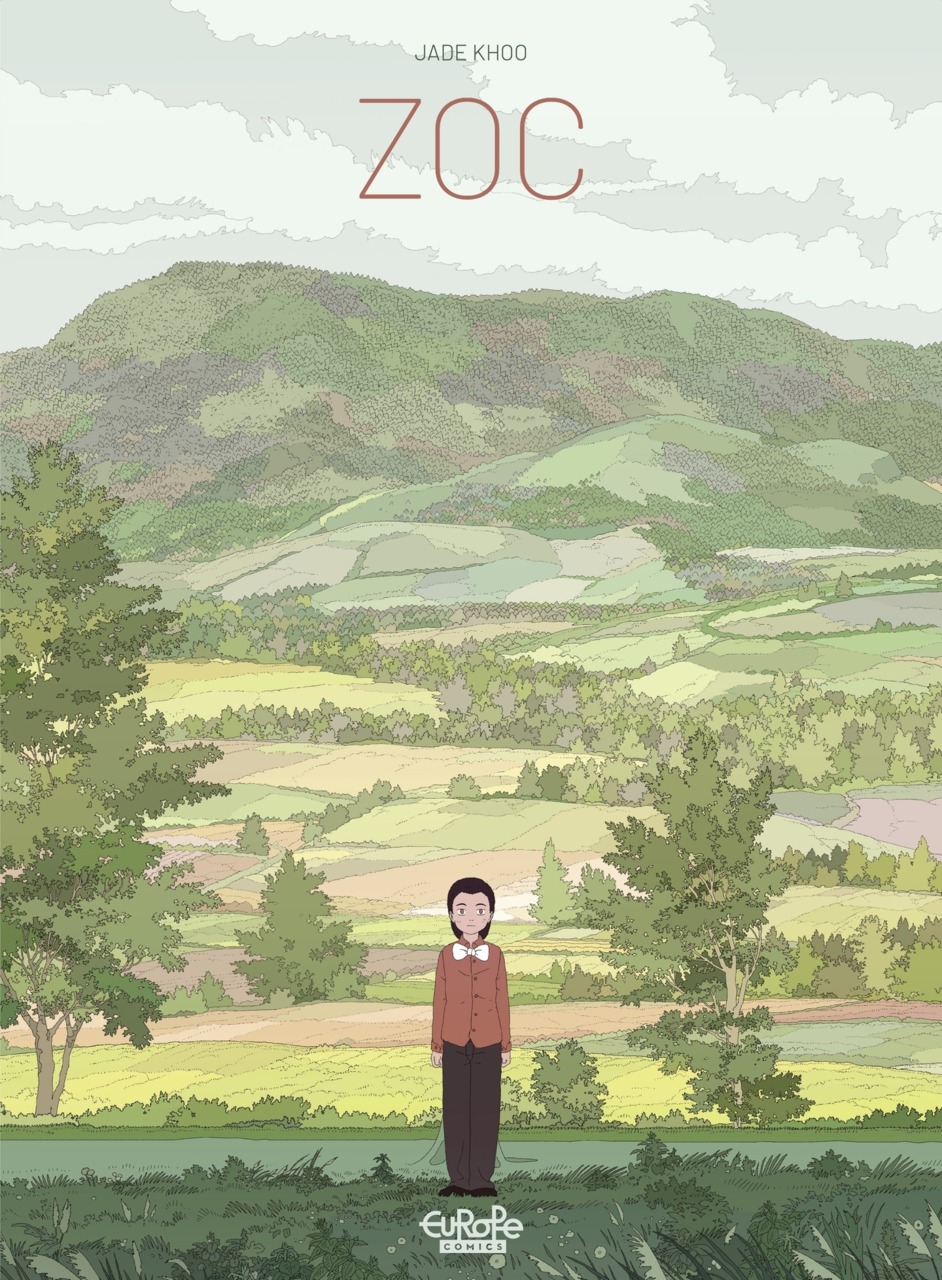
Zoc by Jade Khoo

Some books are influenced by other books - that's what we expect, most of the time. But some are more influenced by other things - especially in a visual medium like comics, where the influences of other visual media can be immediate and clear.

Jade Khoo's debut book, Zoc, is strikingly influenced by animation; I would say most deeply Miyazaki and Studio Ghibli, in both her character designs and larger story structures - the way she draws landscapes and the ways her narrative turns to landscape to rest between story scenes. I see online that she works in animation, so I don't think that's just my eye: I think it's the way she thinks and lays out stories....at least this time. (The way anyone does their first big professional work is not necessarily the way they'll go on in the future.)

Miyazaki is a huge influence for a lot of younger animators and cartoonists, but Khoo is closer to the model than most. She doesn't just use Ghibli-esque moments or motifs; the whole story and structure of Zoc feels like a new or lost Ghibli movie - which, again, is a major achievement for a young creator. Zoc is a mostly quiet, character-focused work, with lots of stillness and silence in it - there are larger things happening outside the narrative, but this book is mostly about one girl, walking - trying to figure out what to do with her life and how to best use the things she can do.

Zoc is French, like her creator. She's still in school, but old enough to be responsible. Khoo's Ghibli-esque style makes her look young, but my guess is that she's in the high-school equivalent: just a year or two away from the end of this phase of school, at the point where next steps and life paths and purpose start to loom larger. At the beginning of the book, we see her with a career counselor, and she has only one vague thought about the future path of her life.

She has a special ability: water is attracted to her hair. It accretes and is pulled along, in a growing, gelatinous mass, like she's some kind of highly-specialized katamari. She can do it on purpose, to move masses of water from one place to another, but it happens all the time no matter what - in the first scene we see her walking along, the rain gathering behind her, until a passer-by complains. To release the water, she needs to cut the end of her hair: cut the water away to let it settle into its new place.

Zoc can pull what seems to be tons and tons of water; this isn't a book about examining or defining powers, so we don't know how much. But we think she could move an entire river, if she wanted to. Maybe a medium-sized lake. We have no idea what would happen if she went to the sea.

She wants to use that power as an adult. She wants to have a job that somehow is "dragging water with her hair." Everyone around her, obviously, thinks this is not a viable path.

But Zoc puts up ads in her town, to see if she can get jobs. And, quickly, she does get one: the town of Nemours has just been flooded. She's hired to take the waters away. For reasons the book doesn't go into, she doesn't take those waters to a lake or river, but across country to near the town of Marsier - maybe that's just where the best lake or river is. That journey will be long, taking several days and covering about a hundred miles. And she's dragging a whole flood behind her the whole time.

Along the way she meets a boy of about her age: Kael. He has a special ability as well: when he's around someone in pain, he catches on fire. He's been driven out of his home town for obvious reasons; he's even more solitary than Zoc. But he walks with her for the rest of her journey.

The narrative is closely focused on Zoc. We only see pieces of the outside world when she does: coming into towns, talking to wandering minstrels (drawn as colorful animal-headed people, in another Ghibli-esque touch), meeting other walkers. We hear that the countryside is divided about her work, that she's become famous, that the flood dragged behind her has had some not-good effects on the lands she's dragged it through.

In the end, she makes her delivery. She's ready to go back home. She's not sure if this is the right way to use her special ability. But things happen, and a new idea, a new model, comes to her.

Zoc is a lovely, fully-formed story. It can be read to have a message, but it's a story rather than a fable or parable, set in a self-consistent world and about real people. I'd recommend it particularly to anyone intrigued by the Ghibli influences: Khoo is good at the quietness and calming camera of that style. This book may be organized into a Young Readers section by some libraries or stores, but there's nothing childish about it: what can be more grown-up than the question of what purpose your life has?