Tuesday, November 08, 2022

Groo: Friends and Foes, Vol. 1 by Sergio Aragones with Mark Evanier

I feel like I've read Groo comics off-and-on almost since I knew what comics were, but that can't be true, on either end. The first Groo appearance was in 1982, when I was thirteen. And the only Groo book I've ever covered here is the utterly goofy Groo Vs. Conan, four years ago.

So I may instead be thinking, "My kid brother used to love Groo in the '80s, and I ended up reading pretty much all of the Marvel series, which is a hell of a lot of Groo, isn't it?" And it was a hell of a lot of Groo. But there's been a lot of Groo in the twenty-five years since then, too.

Not different Groo stories, mind you. Groo stories are always pretty much the same: that's the whole point. (Comedy thrives on repetition and expectation.) But more Groo stories.

One of the more was the one I recently picked up: Groo: Friends and Foes, Vol. 1, which collects the first third of a twelve-issue series from 2015. As always with Groo, it's written and drawn by creator Sergio Aragones, with letters from Stan Sakai and colors from Tom Luth. Mark Evanier does something to do with writing - the general guess has always been that he's somewhere in the vague territory among scripter and editor and translator - which role is not being given oddball labels these days as it was back in the Old Times.

Friends and Foes is episodic, and I suspect the rest of the series follows exactly the same pattern, since Groo has always been about doing something funny and then repeating that thing over and over and over again. Groo is traveling, as he often is, since no one actually likes having him around. And, each issue, he meets one of the major recurring characters from his history, and runs through his standard plot with that person.

To back up slightly: Groo is the guy in the right foreground of the cover. He's a barbarian adventurer in a standard secondary fantasy world, full of kingdoms, dragons, magic, and so on. He is exceptionally skilled at violence. And he is as dumb as a post. This is comedy, and generally comedy suitable for younger audiences, so he tends to hurt people rather than slaughter them, and even more so cause gigantic destructive calamities that everyone somehow escapes, moaning and wringing their hands about how stupid and destructive and horrible that Groo fellow is.

That's what a Groo story is. He comes to a place, causes chaos by being really stupid and/or clueless and/or overly literal-minded, and generally leaves at the end.

He is the epic fantasy Amelia Bedelia, basically.

The four "friends and foes" here are Captain Ahax (whose every ship is sunk by Groo), Granny Groo (who tried, and failed, to teach the young Groo to be a "gypsy" thief), Arba and Darkaba (two witches whose plans for domination are always foiled, inadvertently, by Groo), and Arcadio (a very handsome "hero" whose schemes are always disrupted by Groo).

And that's what happens. There's also a little girl who wanders through each issue; I presume her story is what makes this a mini-series, and her quest for her missing father will eventually be the overall plot. Of course she will find that father in the last book, and her father will be a major character in the series - probably not Groo himself, but that's an outside chance.

As I expected, Groo stories are Groo stories. If you've ever read one, you've basically read them all: they just ring changes on the same bag of tricks. Aragones is an amusing cartoonist, and whoever does the final script has some clever wordplay, so it's always fun and entertaining. But you will never be surprised by anything in a Groo story, and I was not here.

Monday, November 07, 2022

Reviewing the Mail: Week of November 5, 2022

Two library books this time, which I expect to read immediately. (This should not be surprising; it's the nature of library books. You need to read them right away, so you only check out books that you're willing to jump right into.) Both are also translations from Japanese, for no obvious reason.

Tono Monogatari is the name of a major work of Japanese folklore, a serious work of scholarship and a central pillar of Japan's literary culture. The book I have in front of me with that title is famed manga-ka Shigeru Mizuki's adaptation into comics of that work - I gather that he retold some stories and interspersed them with tales of his own hunts for yokai, the mythological creatures of Japan. I think the only previous Mizuki book I read was Onward Towards Our Noble Deaths, so this will likely be surprising in multiple ways.

And A Journal of My Father is a fictional story by Jiro Taniguichi, about a man returning home for his father's funeral and the memories that stirs up. I read a cluster of Taniguchi books five years ago - the two volumes of A Distant Neighborhood and the first volume of The Summit of the Gods - but otherwise he's just been a name on my list of "people I really should read more of."

Saturday, November 05, 2022

Books Read: October 2022

This is an index, and it's primarily for Future Me. If you find it useful, that's a nice bonus. Links will show up later, once the posts go live. But, for right now, here's what I read this past month:

Sarah Andersen, Cryptid Club (digital, 10/1)

Roy Morris, Jr., Ambrose Bierce: Alone in Bad Company (10/1)

Pornsak Pichetshote and Alexandre Tefenkgi, The Good Asian, Vol. 2 (digital, 10/2)

Jean-Yves Ferri and Manu Larcenet, Back to Basics, Vol. 3: The Great World (digital, 10/7)

Tom Perrotta, Tracy Flick Can't Win (10/7)

Jiro Taniguchi, A Journal of My Father (10/8)

Shigeru Mizuki, Tono Monogatari (10/9)

Aude Picault, Limited Edition (digital, 10/15)

Michael Dirda, Readings (10/15)

Debbie Tung, Everything Is OK (digital, 10/16)

Nathan W. Pyle, Stranger Planet (10/21)

P.G. Wodehouse, Heavy Weather (10/21)

Matt Madden, Ex Libris (10/22)

Luciana Cimino and Sergio Algozzino, The Incredible Nelly Bly (10/23)

Josh Ritter, The Great Glorious Goddamn of It All (10/23)

Max de Ragiguès, Simon & Louise (10/24)

Elodie Durand, Parenthesis (10/29)

Ayun Halliday, No Touch Monkey! (10/29)

Lewis Trondheim and Fabrice Parme, Venezia (digital, 10/30)


Next month: more books!

Quote of the Week: How the Other Half Lives

Sei had never been comfortable in the presence of books. Their natural state was to be shut, closed, to grin pagily from shelves, laughing at her, promising so much and delivering such meanness, such thinness. They displayed only men and women with dead eyes and rituals of living she could not understand. When closed, books gave impressions of perfection. They did not need her.

 - Catherynne M. Valente, Palimpsest, pp.95

Friday, November 04, 2022

Palimpsest by Catherynne M. Valente

I've had this book on my shelf almost as long as I thought I did. In my mind, it was there before Tragic Tuesday, the day I was expelled from working in the SFF field forevermore, and maybe that I was even considering it, way back when, for that employer I can mention in passing these days, now that it's been so long.

But Palimpsest was published in 2009: that's two years later. So, not for the first time, my memory is making a better story out of the past than the facts would warrant. But good stories are the point, right? If we're talking about fiction, why rely on dull ol' truth when we can have a juicy, exciting story?

My memory is this was Catherynne M. Valente's first "big" book, after the two volumes of the Orphan's Tales series, and just before the "Fairyland" YA books (see my post on the first one) - which I had forgotten grew out of, or in tandem with, this book - at the point where she was one of the most exciting writers of the New Weird - or maybe the thing or movement that went beyond New Weird, which was getting codified and maybe dying at the time.

Again: what did I just say about memory? But Palimpsest is a strong, demanding book, that stakes out its literary territory fearlessly and sets out to tell four interlocked stories from the start, a book that swirls rather than charges forward, that entices and seduces rather than explains, a book that is definitely Weird in all the best ways and still feels New more than a decade later.

Palimpsest is a city. It really exists: it is not a dream or mirage. But it's not in our world; it doesn't seem to have any world around it, actually. Valente is fuzzy about its extent, and whether there is anything not-Palimpsest just beyond its borders, or even how its borders are defined: the edge of the city's streets, where the fields start? Further out, past the crops grown for the people of Palimpsest? Nowhere and everywhere?

There are people who live in Palimpsest. It seems that they are like people anywhere, but our story is not about them. Again, this is a New Weird book, or something like that, so there is magic or technology or things that don't obey the laws of nature as we expect them. All of the insects and little creatures of Palimpsest are manufactured, for example, under the control of Casimira, the most recent of her name, who is as close to a ruler of Palimpsest as we see.

But our main characters are all from our world. I won't say the "real" world: many Palimpsestians, and others, insist theirs takes that crown. And who am I to deny it?

Many people from our world can travel to Palimpsest. But the rules are strict and precise: they only travel at night, while asleep in our world. They cannot live or stay there - with one possible rumored exception, which comes up later. They only have access to specific spaces in that world, the ones related to their partners.

You know a person who has been to Palimpsest by their tattoo: each one has, somewhere on the body, a map of some cluster of streets, some neighborhood of Palimpsest. And from that person you can get to travel to that neighborhood. Presumably, if everyone got together, from all over the world, their skin could trace a complete map, laying bare all of Palimpsest's roads and alleys and buildings.

And how do you make the journey? You get to Palimpsest by fucking someone who has already been there. On your first trip - the time when you don't know it will happen, before you have your own tattoo - you join a group of four, who will be tightly connected forevermore, and get tattooed with your particular bit of map. Is that random - the bit of map, the group of four? I don't know. Valente doesn't say. No one questions or thinks about it: this is just how it is.

One particular group of four is at the center of this book: Sei, a Japanese woman barely out of her teens, obsessed with trains; November, a quiet beekeeper somewhere outside of San Francisco; Oleg, a young locksmith in New York obsessed with his dead sister; and Ludovico, a book-binder in Rome. They are all obsessed: that may be why they all got to go to Palimpsest. Or it may be why they were linked together, or why this group is the first of its kind to...oh, wait. That would be telling.

Palimpsest, the book, rotates around them, with chapters in our world and then Palimpsest, first in that order, and in the same order of characters, and then shifting as the book moves forward, as order reverses and Palimpsest becomes larger and larger in all their minds. They all must give up many things to stay in Palimpsest: huge things. They all have a Palimpsestian, of one kind or another, leading or guiding (or blocking or fighting) them.

What they want, what everyone who ever touches Palimpsest wants, is to stay and live there forever, to put our world firmly behind them and never have to go back. Palimpsest is the story of what they do, separately and together, in pursuit of that aim. That's all I can say. To know more, you would need to read the book.

Thursday, November 03, 2022

Be Your Own Backing Band by Liz Prince

Liz Prince really loves punk. This book is a love letter to the punk she loves, and it's fun and conversational and personal and all kinds of good things.

But my first reaction was somewhere in between "Wow, I am old because my definition of 'punk' is ten to twenty years older than Prince's" and "I have no idea who any of her favorite bands are" and "Hey, wait, is this pop-punk? Do we count that as real punk?"

I was never a hardcore guy, but I grew up in the '80s and had a bunch of friends who were real hardcore guys - Black Flag, Bad Brains, Misfits, that kind of thing. (And sometimes metal guys, too - the kind of guys who just liked stuff loud and obnoxious and didn't mind as much what kind.) So my image of "punk" is either historical - Ramones, Sex Pistols, early Clash - or that '80s boiled-down-to-the-essence scene.

Prince went to a lot of shows, and her comics here originally appeared in a punk magazine and on a punk website. I am in no way trying to claim I'm more punk than she is - I think what I'm saying is that punk mutated and changed so much over the years that pretty much anyone who says they're a punk can be equally right, even if they're into totally different things.

I haven't read any of Prince's comics in a few years - and this book is about fix years old itself - but I was really impressed with both her memoir Tomboy and her diary comics in Look Back and Laugh about a decade ago. So when I saw she had a book about punk, I think my reaction was something like "Hey! I like punk, too," only to find out (as just explained) that what she means by punk is not the same as what I expected.

Anyway, this particular book is called Be Your Own Backing Band. It's not long - just about seventy pages - but the comics pages are full of words, since Prince loves this stuff and wants to cram in as many details (song lyrics! names of bands! road-trip stories! set lists!) as she possibly can. And that's the glory of loving music - of loving any kind of artistic expression: that you want to share it with other people and loudly say, "Hey! This is really cool and I hope you love it as much as I do."

I know basically none of the bands she mentions. Most of them because they're fairly small or local, some of them because they're the favorites of someone who grew up a decade later than me somewhere else. Oh, she does mention Green Day a few times - I do know who they are, and have heard their stuff, but never owned anything by them. (My pop-music loves all tend much more smart-ass: They Might Be Giants, Oingo Boingo, Elvis Costello, Fountains of Wayne.)

But this is a cool, energetic, utterly DIY book by one creator who really loves this kind of music, has been to a lot of shows (and even, I think, dated some musicians, if that makes any of you more interested), and pours out that enthusiasm and do-it-your-way attitude right onto the page. And that is totally punk, no matter what your definition is.

Wednesday, November 02, 2022

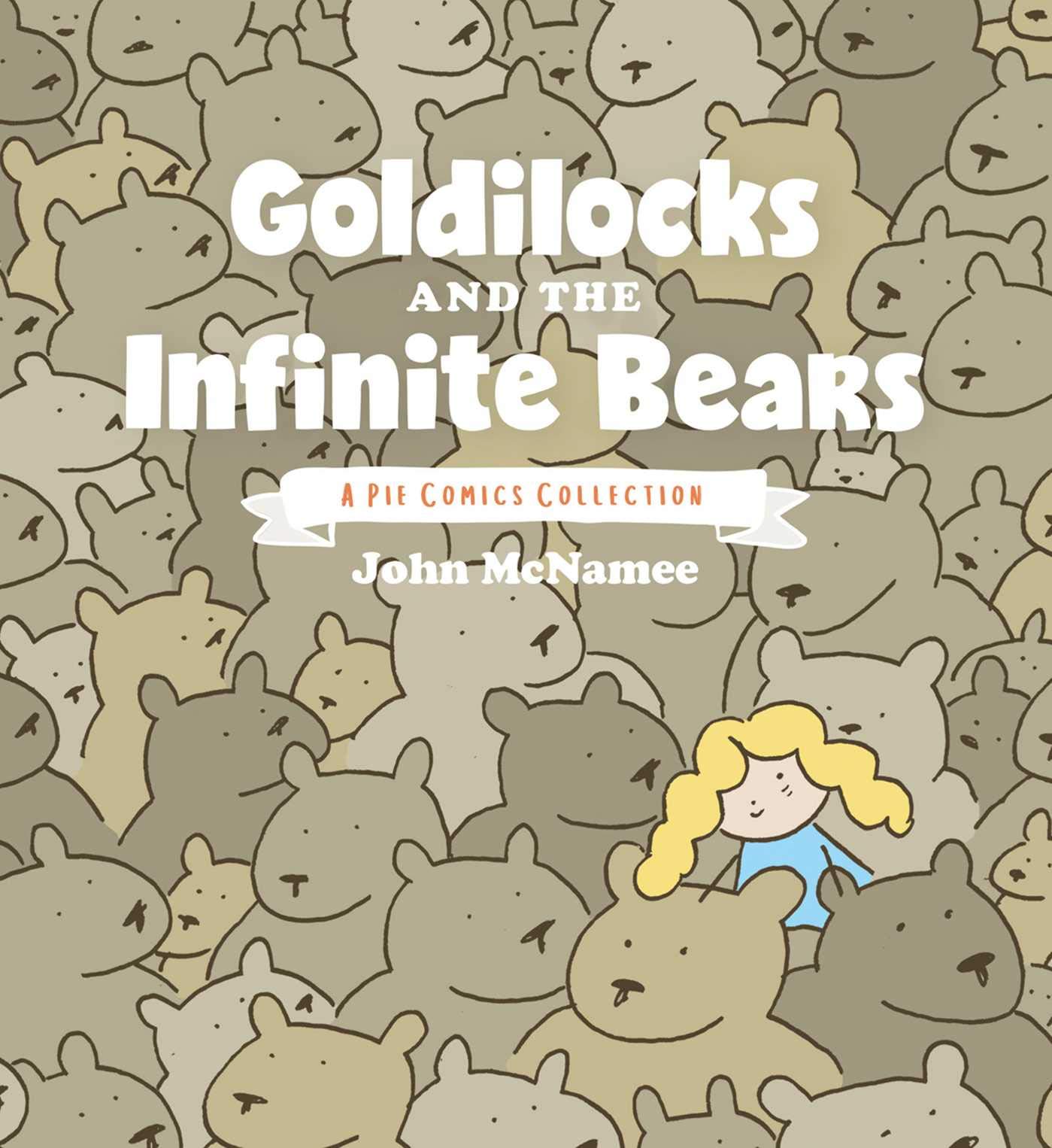
Goldilocks and the Infinite Bears by John McNamee

Discovering something creative that you like is fun. Learning that it's over is sad. But what if you're not sure if it's over or not?

Pie Comics was (is?) a strip by John McNamee. It used to be on GoComics. It used to update regularly on Tumblr. The Tumblr page mentions a website that doesn't resolve. But there have been three collections of the series, all of which seem to have come out after the last update to the Tumblr page.

My theory - which is mine, and what it is too - is that McNamee did this strip regularly in the mid-teens, and collected it mostly after it ended, and that there will be no more. But I'd be very happy if that theory were wrong.

(I also can't find anything else by McNamee since the last Pie collection in 2020, so I hope he's working on a bigger story that will come out very soon and make us all happy and laugh and rejoice.)

I'm thinking all this because I recently found the first collection, Goldilocks and the Infinite Bears, semi-randomly in my library's digital-reading app and just read it. (The other two, unfortunately, are not also in the same app, so I'll have to search for them elsewhere.)

So: yay! This is funny and neat, in a vaguely Tom-Guald-ian way - McNamee's art style and his tone are both in the same vague space that Gauld has been working - and collects a hundred or so comics, mostly single-pagers (with a few epic two-pagers), mostly four-panel, and entirely about fairy-tale, folkloric, and other fictional creatures.

(Note: the Judeo-Christian God does show up a few times. I stand by my immediately previous statement.)

McNamee has a simplified, fun style that makes everything more amusing, and his writing is zippy and smart, too. I am happy that there are two more books to search out, and mildly optimistic that McNamee (who seems to still be pretty young - he references being in college in the Aughts) will do more Neat Stuff in the near future. If you, too, like funny comics about fairies, wizards, Godzilla, zombies, dragons, demons, Death, unicorns, Superman, and their ilk, you'll want to check it out.

Tuesday, November 01, 2022

The Blouse by Bastien Vives

Severine is a college student in Paris: mostly quiet, mostly diligent, fairly pretty. There's nothing extreme or outré about her: she may not be bland, exactly, but she doesn't really stand out. She sits quietly while her boyfriend's friends chatter around her, about computer stuff and gaming stuff and random stuff. We assume she has big dreams and ideas, because everyone does, but we don't know what hers are. She studies classical literature, and is getting close to her big final exams: we get the sense she is doing well, that she has always done well, but that she has always been overshadowed by other people.

But one night she's working as a babysitter for the Marguet family. The parents come home early, angry with each other - and the kid, a girl of eight or so named Eva, wakes up right then, throwing up all over Sandrine. She borrows a silk blouse to wear home, expecting to return it quickly.

That's The Blouse. It changes her life. Or her life changes when she wears it - however you want to put it. She starts wearing it all the time, after it first supports her in a major class presentation and then is instrumental (we think) in other dramatic moments in her life.

Bastien Vives tells his story subtly: we don't see Severine act all that differently wearing the blouse than she did before. Not at first, at least. But it makes her seen, it puts her at the center of things, and she commands attention and interest.

I'm not sure if I should add "from men" to that last sentence. The attention of men is central to The Blouse, and Severine, eventually, revels in it and goes ever further to get more of it. But I'm not sure if that's the blouse, or Severine, or just how this story turned out. My guess is that it's the story: the blouse would have driven whatever attention its wearer wanted, or needed.

You may ask if The Blouse is fantasy, if the blouse itself has some power or if this is entirely psychological. You may ask. Vives will not tell you. I won't venture an opinion here, either. It does this for Severine. However it acts, whatever the reason, is not important. What matters is how it catalyzes this change in her.

Vives keeps his focus tightly on Severine here, but never brings us into her head. We see what she does, and we come to thrill with the changes along with her, but we never really know how she feels about any of this - not from the inside. She is ultimately unknowable, just as other people are always unknowable, and the unexpected and surprising things she does only underlines that thought.

There's a lot to think about in The Blouse, a lot to unpack. It's worth reading, if any of the above has intrigued you. It lives up to the questions and ideas in your head right now. And it ends very well, in a moment that puts huge swaths of the story into a different light.

Monday, October 31, 2022

Reviewing the Mail: Week of October 29, 2022

Two books this time, both recently published and both from Tachyon. But, otherwise, they are quite different....

The Unbalancing is a new book in R.B. Lemberg's "Birdverse" universe. It's at least the second published book in that world, after Four Profound Weaves, but the first novel. (I also think there have been some pieces of short fiction, published elsewhere and maybe even collected when I wasn't paying attention.)  This is a fantasy world deeply influenced by language and, I think, with more gender options than some readers are used to. Lemberg is a poet as well - I think a poet first - which likely influences the language.

The Emperor's Soul is a 2012 novella by Brandon Sanderson, who you may have heard of. A few of his books have sold a couple of copies, you might say. This won the Hugo when it was originally published and was nominated for the World Fantasy; this edition is a 10th anniversary republication with a deleted scene and some other stuff added. 

Saturday, October 29, 2022

Quote of the Week: I Don't Know But I've Been Told

I was not looking for friendship at Fort Lewis. The people were boors. Trainees and drill sergeants and officers, no difference in kind. In that jungle of robots there could be no hope of finding friendship; no one could understand the brutality of the place. I did not want a friend, that was how it stood in the end. If the savages had captured me, they would not drag me into compatibility with their kind. Laughing and talking of hometowns and drag races and twin-cammed racing engines - all this was for the others. I did not like them, and there was no reason to like them. For the other trainees, it came too easy. They did more than adjust well; they thrived on basic training, thinking they were becoming men, joking at the bullyism, getting the drill sergeants to joke along with them. I held my own, not a whisper more. I hated the trainees even more than the captors. But I hated them all. Passionate, sad, desperate hate. I learned to march, but I learned alone. I gaped at the neat package of stupidity and arrogance at Fort Lewis. I was superior. I made no apologies for believing it. Without sympathy or compassion, I instructed my intellect and eyes: Ignore the horde. I kept vigil against intrusion into my private life. I shunned the herd.

 - Tim O'Brien, If I Die In a Combat Zone, pp.32-33

Friday, October 28, 2022

Skulldigger and Skeleton Boy by Jeff Lemire, Tonci Zonjic and Steve Wands

Nigrum Malleoleum est omnis divisa in partes tres.

Some Black Hammer books have numbers in the title: those are the main series. Before the book I'll be complaining about today, there's been Secret Origins, The Event, Age of Doom 1, and Age of Doom 2.

Some Black Hammer books have the words "Black Hammer" in the title, but no number: Streets of Spiral, the Justice League crossover. These are side stories about the whole team.

(Black Hammer '45 is deeply confusing in this schema, but it actually fits in the next category. The "Black Hammer" referred to in the title is not the same as the other books, for maximum what-the-fuck-age.)

And some Black Hammer books are about other people in the same world, whose stories may intersect the main gang of mopey superheroes or may not obviously do so. (This is superhero comics: all stories intersect in the Grand Summer Crossover eventually.) Before this book, there was Sherlock Frankenstein, Doctor Andromeda, and The Quantum Age.

Skulldigger and Skeleton Boy, as the title implies, is in the third group. For those who weren't counting along on their fingers, it's the eleventh collection. It is written by Jeff Lemire, creator and co-owner of the whole shebang, with stylish gritty art by Tonci Zonjic (often breaking into double-page spreads, which are gorgeous and well-designed but made me wish I wasn't reading the whole thing on a tablet) and lettering by Steve Wands.

Skulldigger asks the superhero question: "what if the Punisher instead used a metal skull on a chain to kill people, instead of guns? Wouldn't that be totally awesome?!" It is perhaps the most '90s idea ever to have been thought up twenty years later, and would have fit comfortably into either DC or Marvel's mid-90s grim and gritty eras - which, of course, is the point of all of the Black Hammer comics: they're meant to seem like that stuff you read long ago while at the same time being new stuff you can buy on Wednesdays.

(The argument about how all superhero comics have been doing this more and more consistently for roughly the past forty years is left as an exercise for the reader.)

Now, in any realistic universe, Skulldigger would be shot dead extremely quickly, but so would Batman, so he gets the same dispensation. At the time of the 1996 of this story, he's been around for maybe a decade, and is seemingly the preeminent crimefighter in Spiral City.

So he's not-Punisher. There's also Detective Reyes, who is not-Rene Montoya (literally: tough female detective, lesbian, always fighting with her captain, olive skinned - I do wonder if Lemire does that on purpose or just can't be bothered to change the details), one of the other viewpoint characters.

The third viewpoint character is Matthew. He's twelve, and we see his parents get murdered in front of him in the first scene, with a particular overhead view that will make you think they just came out of a Zorro movie. (Black Hammer is many things, but it is never, ever subtle.)

Anyway, the story here is: random thug kills Matthew's parents. Skulldigger arrives, kills random thug. Matthew becomes non-verbal at witnessing his parents' murder, doesn't respond to any questioning by cops including Reyes, is institutionalized. Reyes is obsessed with finding and stopping Skulldigger; her boss literally says "he's killing the right kind of people, don't waste time on him."

Look, do I need to give all of the story beats? Skulldigger gets a sidekick. If you've been paying any attention, you know who that is. It's not a good idea, but he at least seems to be devoted to training the kid so he doesn't die immediately.

Oh, and meanwhile, an ex-superhero - formerly the Crimson Fist, now civilian Tex Reed - is running for mayor, on a "let's get back to happy superheroing" platform. (He's an unpowered guy, maybe a bit more Moon Knight than Batman, and now fiftyish and retired for ten years or so.) The Crimson Fist's old nemesis Grimjim - who is not anyone in particular from another superhero universe, but is deeply in the Batman Villain template, something of a mash-up of Joker and Ra's al Ghul conceptually and Killer Croc visually  - has to break out of not-Arkham Asylum to cause trouble.

Tex and Grimjim and Skulldigger have hidden connections, of course. Every superhero story is about the same people tripping over each other over and over again; there's never anyone new.

It is grim and it is gritty and it is violent: this is supposed to be a 90s-style story, from the dark and decadent age of superheroing. We are meant to deplore that at the same time we revel in it.

Frankly, this is one of the most successful Black Hammer stories to date, in my mind: it tells a specific story, beginning to end, without getting caught up in extraneous crap. It isn't burdened with the core series' weird reluctance to move from the initial premise, and has the strengths of the whole series to date: Lemire's naturalistic dialogue and strong plotting, and great storytelling art.

It's still a pastiche grim-n-gritty Punisher/Batman comic that has no good reason to exist, mind you. But it's successful at the things it sets out to do.

One last point: the descriptive copy for this book describes it as a tragedy. It is not. Not in any traditional sense, not in any way. "Tragedy" here seems to mean "a story in which sad things happen," but that's most of them. This is not a tragedy, not for Skulldigger or Skeleton Boy or Det. Reyes, or even for Grimjim. And a tragedy has to be a tragedy for the main character.

Thursday, October 27, 2022

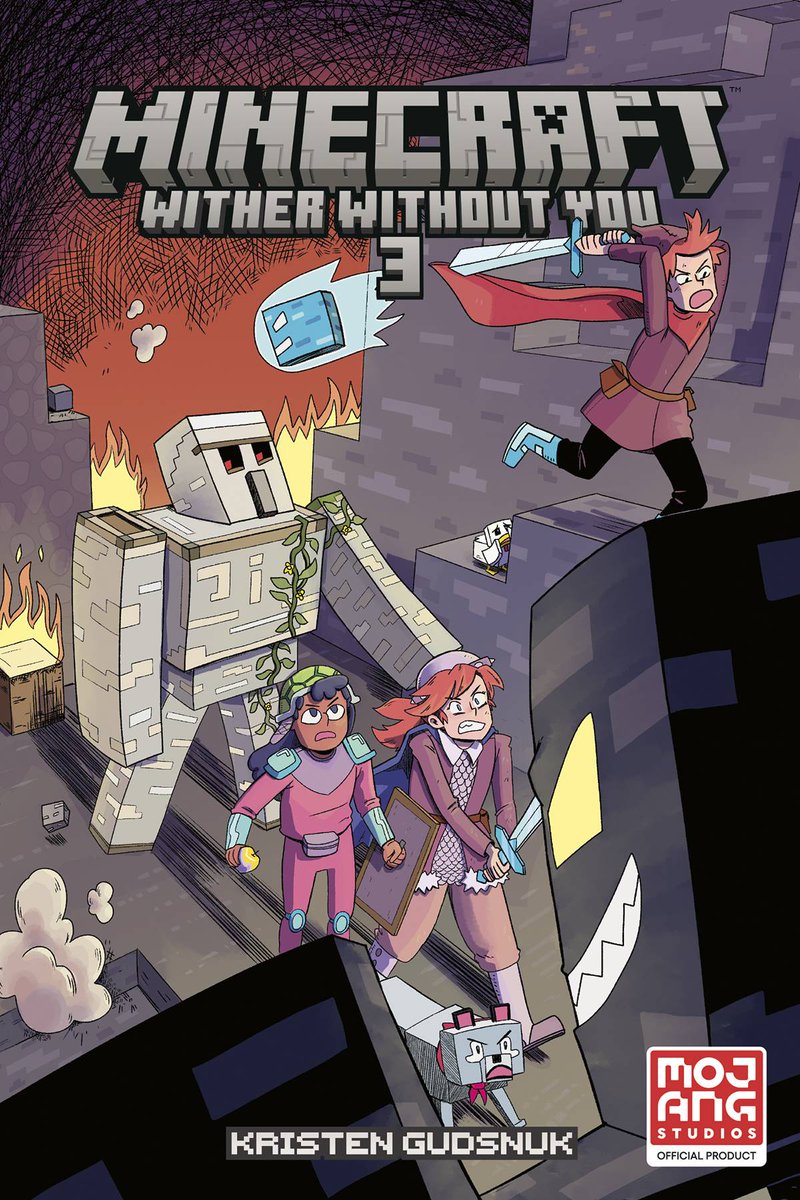
Minecraft: Wither Without You, Vol. 3 by Kristen Gudsnuk

So this is the end of a trilogy: I don't expect you'll know what's going on unless you're familiar with the first two books. Even more so: it's a sharecropped trilogy, set in the world of the videogame Minecraft, so there's an additional hurdle before you even read the first book. So my audience may be...um, somewhat limited today.

Minecraft: Wither Without You, Vol. 3 finishes up Kristen Gudsnuk's take on the Minecraft monster-hunting team story, with friendship and camaraderie and big epic fights and happy endings strewn about like new cars at an Oprah taping.

Go read my post on the first two books (linked above) if you want to know more, but I can give you the TL; DR version here. Gudsnuk is awesome (try Henchgirl if you've never read her stuff!), with a wonderful energy and verve that works well in the Minecraft milieu. In this book, the teen monster hunting twins Cahira and Orion, along with their mentor Senan and Atria, who is something like a comrade and something like a client they're guiding home, both reach their final destination and have the big battle with the fiendish Wither they've been chasing and fighting for two books already.

Yes, they win. What kind of book do you think this is?

As I said the first time, this is mostly for Minecraft fans and secondarily for people like me who just want more Gudsnuk stories. If you're in neither of those buckets...well, you could start with the first book of this trilogy. But jumping right into this book would be deeply silly.

(Coincidentally, a lot of the best stuff in this book is deeply silly.)

Wednesday, October 26, 2022

If I Die In a Combat Zone by Tim O'Brien

The full title of this book may actually be If I Die In a Combat Zone, Box Me Up and Ship Me Home, but it's usually cited as just the first phrase. Author Tim O'Brien never made it to the Russian Front - for multiple reasons, but primarily because, so far, there hasn't been one - so none of us need to worry about the problematic next line of that chant.

I mostly know that chant from the Screaming Blue Messiahs song "Someone to Talk To." Mid-80s post-punk from a bunch of then-middle-aged Brits is not the usual way to learn US GI slang, but I've always taken what I can get. And the attitude and energy of the SBM is not a million miles away from that of the Vietnam-era GI, drafted and sent to a foreign country to "kill gooks" and survive as best he could for a one-year term.

I'm no expert on military service. The threatened war of my generation - the jungle war in Latin America we all half-expected at any time - never happened, and I never came any closer to a uniform than worrying about it. But I have a sense that one-year term is unusual: don't soldiers usually get stuck in for longer? I expect there are some major works about that one-year term, and what it meant for the war itself, and for the men fighting it.

Anyway, If I Die In a Combat Zone was Tim O'Brien's memoir of his year in the 'Nam. That year was 1969-70; he was drafted soon after graduating college in the spring of 1968, but the gears of war sometimes grind slowly, so he didn't end up in Basic until that fall and didn't get sent overseas until even later. But it doesn't matter when it started: every GI got a year in-country.

Unless they got killed earlier, of course. That was always a possibility.

This was O'Brien's first book, published in 1975. He was already on his way to being a respected literary novelist and professor of literature by that point, but O'Brien is the kind of "literary" that meant "uses exactly the right words, and sweats over them." Combat Zone is made up of mostly short chapters, about times and moments and days, mostly of his time in Vietnam but with some background on his life and especially the summer when he knew he would be drafted and agonized about running away to Canada or Sweden to avoid it.

Spoiler: he didn't. The fact that this book exists at all tells you that.

O'Brien didn't die in a combat zone - but a lot of other soldiers did. And O'Brien and his fellow GIs - he was with the 23rd Infantry, mostly slogging around between villages in the region Americans called "Pinkville" - left a lot of Vietnamese bodies behind them, as well. Combat Zone does not shy away from talking about the ways that men die, or kill - though it doesn't revel in it, either. If anything, Combat Zone is a series of thoughts about what it is to fight a war, and how a grunt-level soldier can think about what he does, and what his nation does.

O'Brien is a taut, precise writer, even this far back in his career. Combat Zone is a lean, tight book. I've seen it called one of the best, or maybe the best, memoir by a soldier of the Vietnam war - I don't have enough personal reading experience to validate that, but it's strong enough, and resonant enough, that praise that high does make sense. O'Brien also was in the area of the My Lai massacre, though he arrived a year later, so there's some wider concerns about the war and the American way of fighting it that resonates throughout.

America doesn't fight wars like this anymore, for mostly obvious we-lost-this-one reasons. But the lessons are still true, and O'Brien's insights still as valid, as they were in 1975. I'd especially want anyone eager to send US troops off to invade or "liberate" anywhere in the world to read this book, and books like it, before they talk so loud.

Tuesday, October 25, 2022

Omni-Visibilis by Lewis Trondheim and Matthieu Bonhomme

Herve Boileau is an everyman in Paris: more than a little neurotic, too much of a neat freak, a bit too creepy towards women. But basically a normal guy, probably around thirty. He works in an office doing something we don't know all that much about. We see him go through one day quickly at the beginning of this book.

And, when he wakes up the next morning, he's the center of the world. Not in the sense of having power or influence, but more literally. His senses are somehow broadcast to every human being on Earth - everyone sees what he sees, hears what he hears, smells what he smells. They seem to need to close their eyes to see through Herve's eyes, but he's suddenly no longer anonymous, no longer just another guy.

Everyone wants to find him, to control or exploit this effect, but Herve just wants it to stop. Or, failing that - and how can he stop something completely inexplicable he didn't start? - to get away from people and be left alone. Even with the help of a few friends from work, that's not going to be easy. Or maybe possible.

Omni-Visibilis is the story of Herve's time at the center of the world: it's a 2010 bande dessinee written by Lewis Trondheim and drawn by Matthieu Bonhomme, published in English for the first time in an electronic edition last year as translated by Tom Imber.

After the intro, it's pretty much all one-damn-thing-after-another, with thriller-style plotting: Herve is on the run, trying to find somewhere hidden and nondescript to hide out...because, remember, everyone in the world can see what he sees, so if he looks at anything distinctive at all, thousands or millions of people will know instantly where he is. I don't want to give away any of the twists and turns, since the joy of a book like this is in the discovery - but there is a lot of headlong rush, a lot of ideas and plots. It's not quite one 160-page-long chase scene, but it can feel that way at times.

It's a lot of fun: Trondheim has always been good at recomplication and escalating problems, which serves him well here. And Bonhomme has a crisp, realistic style here, mostly working in a six-panel grid and using a cool blue accent color. It all looks like a modern world, with people only very slightly cartoony to emphasize facial expressions.

There could be a sequel, some day. Hell, for all I know, there are five sequels in French. (Well, no: I don't read French, but I can figure out from the Dupuis web-page that it's still a standalone.) Anyway, this is a hoot. I recommend it for anyone who likes goofy semi-serious fantastika thrillers in comics form.

Monday, October 24, 2022

Reviewing the Mail: Week of October 22, 2022

This week I have one library book - that I actually walked in and picked up off a shelf, like in the Olden Days. Although...I was looking at my online library list earlier in the day, and saw that it was there, so that might be an asterisk.

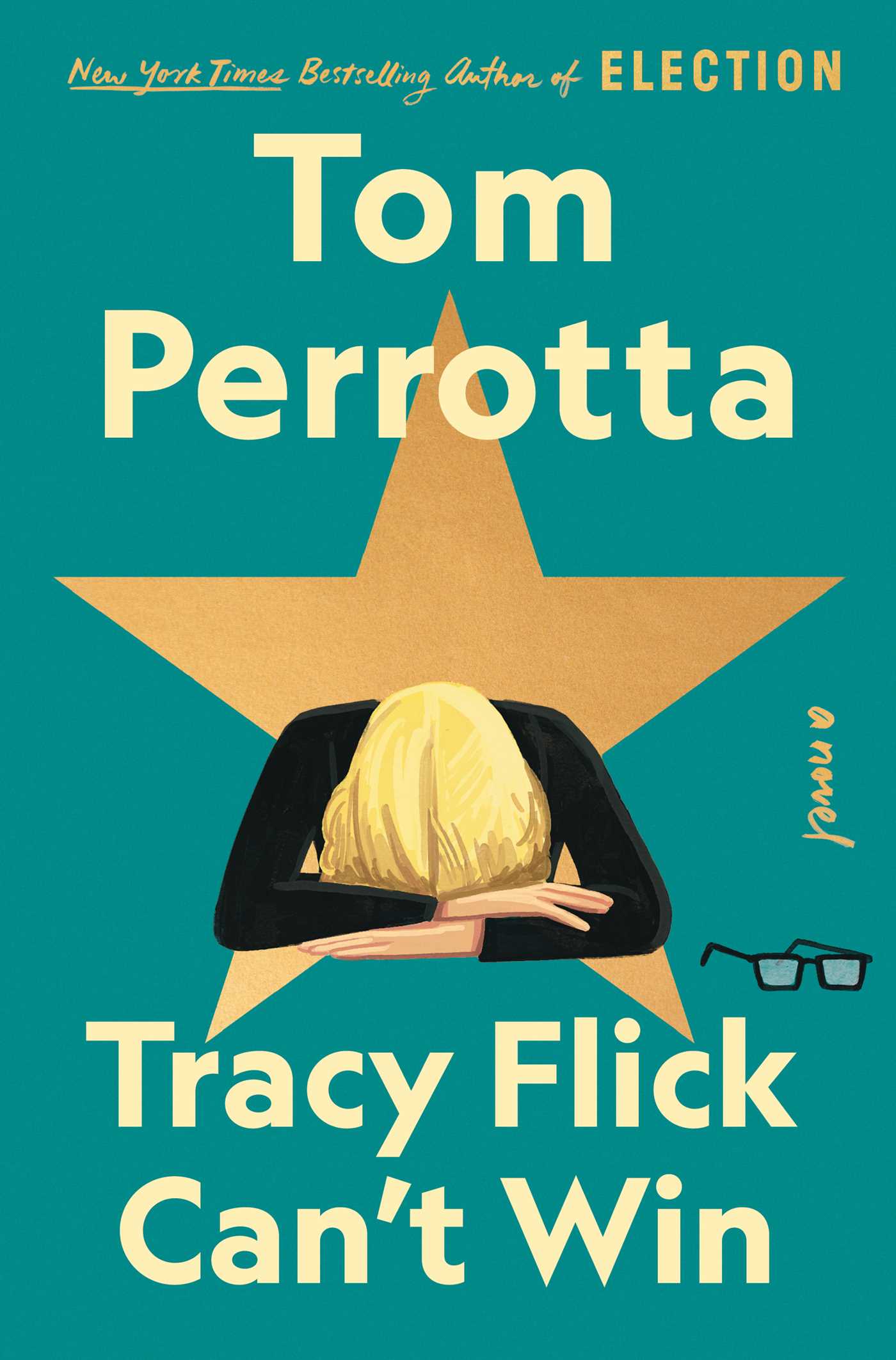
Tracy Flick Can't Win is the new novel from Tom Perrotta, that bestselling chronicler of  lives lived in the modern suburbs. (That sounds dismissive, but it's where I live, and may be where you do, too.) It's the sequel to Election, his second novel, as you might guess from the title. The go-getter from Election is now middle-aged - yes, it's shocking to all of us when we realize it - and apparently has not conquered the entire world as she thought she would.

I liked Election the book and (which is more famous) Election the movie, but ingested both of them well before this blog, so I have no record of doing so. And I've been reading Perrotta - though I still haven't managed to read his Rapture novel, for Rapture-novel reasons - with mostly pleasure and maybe too little distance for about thirty years now. (See my posts on Mrs. Fletcher and The Abstinence Teacher.) So I will read this one quickly, and probably have complicated thought about it, which is good for a guy blogging about books.