Sunday, December 31, 2006

Book-A-Day #167 (12/30): Powers, Vol. 5: Anarchy by Brian Michael Bendis and Mike Avon Oeming

In case you care, here's what I said about Vol. 3 and Vol. 4. (Vol. 2 is at the top of this monthly round-up, and Vol. 1 is buried in this middle of this other monthly round-up.)

I don't really have anything new to say about this volume -- it's still enjoyable, and I think I'll keep going with it, but I don't love it. On the other hand, it has superheroes in it, and I can tolerate it, which is a good sign. (Though, maybe, that has something to do with the fact that nearly every superhero that appears dies quickly thereafter?) I suspect this series mostly appeals to people who used to read superhero comics, but got better,

The Fabulous Book-A-Day Index!

Things Say The Darndest Things

My elder son, whom I usually refer to as "Thing 1," is about eight and a half, and his conversation is usually concentrated on convoluted explications of the mystical and martial-arts backgrounds of his favorite TV shows. (Often without any explanation that he is talking about a TV show, so I sometimes wonder when I see him talking to someone and can't hear the conversation.)

But he can be clear and direct when necessary, as I have to keep reminding myself.

Why, just the other day, The Wife took him to see his doctor, since he's been coughing and sniffling for several weeks straight. The doctor then asked what was wrong with him.

"I've got bacteria in the mucus in my throat," sayeth Thing 1.

The doctor then noted that this is quite common at this time of year, but that most children don't put it quite that way...

Saturday, December 30, 2006

I Am Resolute

Didn't this one come around the same time last year? Anyway, I got it, this time, from Sherwood Smith:


In the year 2007 I resolve to:
Point and laugh more.


Get your resolution here.

Friday, December 29, 2006

Book-A-Day #166 (12/29): Chicken Fat by Will Elder

This is a sketchbook, gussied up a little bit with some captions and a bit of explanation, but it's basically a random walk through Elder's sketchbooks from the past fifty years or so.

It's short, and Elder doesn't seem to have kept (or, possibly, been allowed to reproduce) the sketchbooks that would be the most interesting -- from his EC work in the '50s and from Little Annie Fannie -- so this is mostly minor drawings. Budding art students will get the most out of this, but he did have an engaging style, no matter what he was drawing.

The Fabulous Book-A-Day Index!

Movie Quote Meme

Nick Mamatas was doing it first!

If you build it, Hornswoggler will come.

Which movie was this quote from?

Get your own quotes:

Or maybe:

If you are a minority of one, the Wheeler is the Wheeler.

Which movie was this quote from?

Get your own quotes:

Thursday, December 28, 2006

Childish Pastimes for a Christmas Morn

Every family has holiday traditions, but those of the Wheelers are odder than most -- I could mention the stealing-candy-bars game, for example -- and today I'm here to tell you about one of them.

My mother has been getting my brother Dan and I small Lego sets for Christmas since we were young enough that it made sense. (A related point is that I always complain that Dan gets the better set, because he always does.) This year was no exception; we each got little Lego racers. After the frenzy of package-opening (a frenzy since an eight-year-old and a five-year-old were involved), we started talking about the latest weird Lego thing, which is building small sets in their bags.

Neither one of us had tried to do that yet -- we're only small-time Lego geeks -- but Dan started in on his, and I followed. It's harder than it looks, and it's one of those things that's difficult for stupid reasons, so complaining about it is not met with much sympathy.

In the end, we were both successful. My proof is below; my brother can get his own blog if he wants to brag about his own work. (Though I do have to admit that his set had about twenty more pieces than mine did, and I think the extras were all fiddly little pieces.)

Book-A-Day #165 (12/28): Ask the Parrot by Richard Stark

This is the new "Parker" book, about a tough criminal (although he spends most of this book trying not to kill people, and off-and-on explaining to them why he isn't doing so) in a tough world. Stark is, as most people who care know by now, a pseudonym for Donald E. Westlake, one of the greatest (and, usually, funniest) mystery writers in the world. Stark's books are not funny, though Ask the Parrot has a plot that could easily have turned into a Dortmunder book if Westlake had felt like writing it under his other hat.

One interesting thing (he said, trying not to spoil the plot of this or earlier books) about the series at the moment is how one book is running into the next -- almost in the way an epic fantasy umptology will. The previous book, Nobody Runs Forever, told the story of Parker's involvement in a bank robbery in Massachusetts (which did not end well). Nobody ended at an emotionally satisfying moment -- and at a point where the story of the robbery was clearly over -- but it didn't get Parker home and out of danger, as recent previous books had.

Ask the Parrot opens about a minute after the end of Nobody, sees Parker caught up in a new scheme (and some old troubles), and ends much like Nobody did. It's an interesting strategy, but, as a reader -- and particularly as an editor who has often complained that epic fantasy could learn something from mysteries about making series books more self-contained -- I'm not sure I approve of it in theory. Sure, it works well when Stark/Westlake does it, but I'm afraid it will encourage other, less skilled writers to do something similar. Worst of all, it makes me wish Stark/Westlake published these books more often than every two years -- and that he was younger than seventy-three (though he seems to be healthy, and I certainly hope he's got twenty or so more good years in him).

The Fabulous Book-A-Day Index!

Book-A-Day #164 (12/27): Fables: 1001 Nights of Snowfall by Bill Willingham and various artists

I just talked about the Fables series earlier this week, when I read Vol. 8, so I'll just say that this book is a great starting point for the series, as I thought it would be. If you like fable or fairy-tale elements in your fantasy, and have any interest at all in American-style comics, you should probably check this out.

The Fabulous Book-A-Day Index!

Wednesday, December 27, 2006

Everything Old Is New Again

I've spent far too much time today upgrading from old Blogger to new Blogger (almost purely because they're not calling it "beta" anymore), so there won't be any actual new posts. (I don't count this one.)

I have been labeling old posts like crazy, and you can see the result to your left (if you're not reading this as a feed). I hope this is either amusing or useful; it will be useful to me, at least.

New Blogger doesn't seem to play nice with Bloglines, so, for the moment, my huge list of links is not to the left, but is instead a click away, under the discreet "Blogroll" link. They're still as interesting as they ever were, but they've been pushed out by the relentless siren song of me me ME that new Blogger does so well.

Otherwise, I've tried to make the new iteration of Antick Musings as much like the original as possible (besides banishing my personal information to the bottom of the sidebar; you don't need my mug up at the top of the page) -- I'm not usually a big fan of change.

Tuesday, December 26, 2006

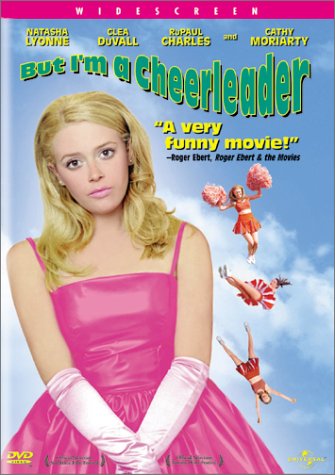
Movie Log: But I'm a Cheerleader

A dumb comedy that thinks it's smart, But I'm a Cheerleader is the kind of movie that's probably much better seen with a group of people. (And probably much better if that group of people is gay.) Sadly, I saw it alone, since it sounded funny -- but I didn't find it so.

Eh.

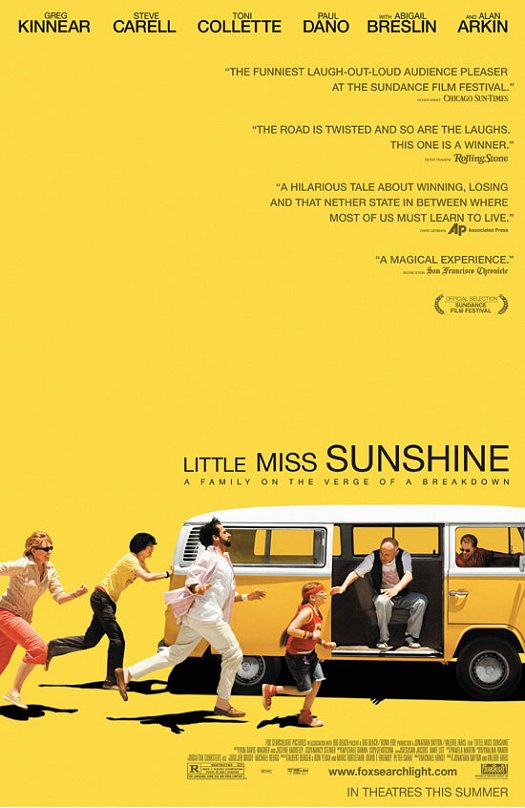
Movie Log: Little Miss Sunshine

The Wife and I watched this Christmas Eve, because it just came from Netflix and because we wanted to see it. It's not particularly a holiday movie, but it's not an anti-holiday movie, either -- it's just agnostic. (It does seem like an odd Christmas Eve choice, I'll admit.)

Little Miss Sunshine was getting a lot of critical buzz earlier this year, but I think the critics have moved on, since I haven't heard
it mentioned recently. Oh, well -- such is the fate of an early-in-the-year movie.

All of the reviews I remember seeing talked about how funny it was, so I was surprised that it started out so seriously (and even dour). But the last twenty minutes is very silly (almost slapstick-y), which I guess colors most people's memory of the movie. It's well-done, with a lot of good performances (but no obviously flashy ones), and it has a nice build. It does seem to be built (self-consciously or not) on the standard Indy Movie Model, but it all works.

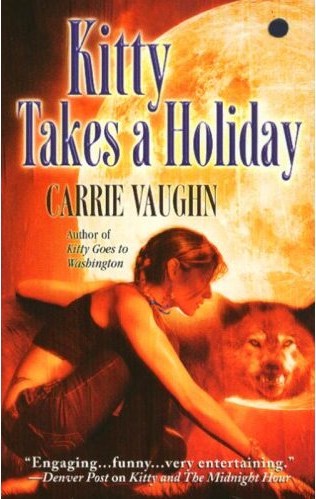
Book-A-Day #163 (12/26): Kitty Takes a Holiday by Carrie Vaughn

This one publishes in April, so all I should say is that it's the third in the series after Kitty and the Midnight Hour and Kitty Goes To Washington, and that, in this one, Kitty is off in a secluded mountain cabin trying to write her memoirs.

And, well, then stuff like the plot of this book happens.

The Fabulous Book-A-Day Index!

Monday, December 25, 2006

Book-A-Day #162 (12/25): Try Rebooting Yourself by Scott Adams

Well, the cover of this latest Dilbert book certainly looks like Adams has stopped trying -- I don't think I've ever seen a more generic comic-strip book cover in my life.

The strips included, though, are Adams pretty much doing the same thing he's been doing for the last several years. The jokes can be a bit repetitive, but I'm still finding a fair fraction of them funny, and so far that's been enough to keep following the series. The biggest interest for me, lately, has been following the minor tweaks drawing on a computer have made to Adams's aggressively minimalist style (it's particularly noticeable on teeth).

If you like Dilbert, you'll like this book. If not, it won't convince you. It's not a great strip at this point, or the breath of fresh air it was in the early '90s, but it's not a strip kept running long past its natural death, either (like Dennis the Menace, or Blondie, or a dozen other strips I'm sure your local paper still carries).

The Fabulous Book-A-Day Index!

Y'Know The Editorial Cartoons in The Onion?

Well, I've just seen one that looks like the same thing out in the wild -- I think it's supposed to be serious.

Lucas Turnbloom, either you are the Zen Master of irony, or your deadline was a real bitch yesterday.

Factoid Of The Week

From the inevitable Elizabeth Bear, talking about fan-fiction, I gleaned the interesting fact that "buttsex" is an anagram of "subtext."

Therefore, I guess, slash is divinely ordained by the Muses of the English Language...or something.

Sunday, December 24, 2006

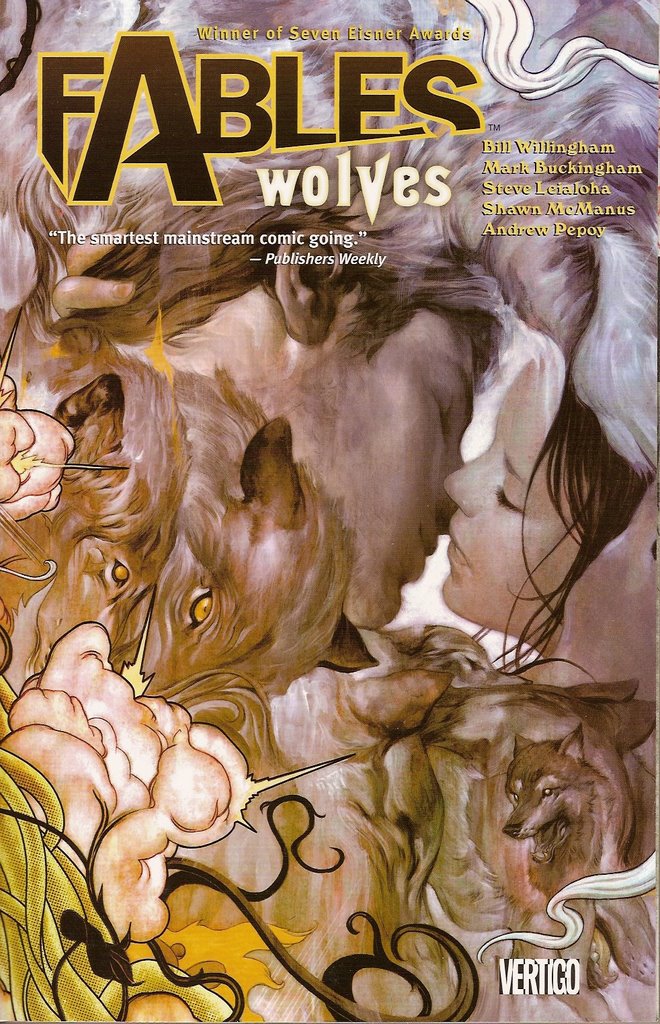
Book-A-Day #161 (12/24): Fables, Vol. 8: Wolves by Bill Willingham and various artists

I read Vol. 7 a few months ago, and didn't have much to say then. I've now read Vol. 8 today, and I still don't have much to say. This collects three shorter stories (one single-issue, a two-issue story, and the 50th issue extravaganza), along with writer Bill Willingham's script for that 50th issue.

It's a great series; Willingham has been an interesting writer for twenty years now, but never found anything as successful as his original series, Elementals. Fables finally moved him beyond that, and had the added bonus of being a good idea done well (sometimes it seems to be rare when the successful series are also the good ones, but it does happen).

If you haven't read Fables yet, don't start here -- either get Vol. 1 or the recent 1001 Nights of Snowfall hardcover. But if you have been reading the series, this is just as good as it's been, and it shows that Willingham is willing to both add things to the ongoing story (the Cloud Kingdoms) and let sub-plots end (Bigby and Snow White).

The Fabulous Book-A-Day Index!

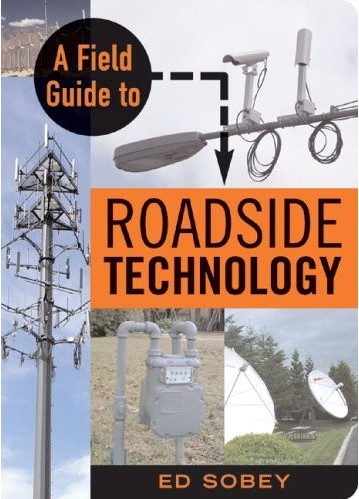
Book-A-Day #160 (12/23): A Field Guide to Roadside Technology by Ed Sobey

If you've ever wanted a book to tell you what various pieces of ubiquitous technology are (and what they do), this the book for you. It covers towers, antennas, boxes, installations, power-generation facilities, and other pieces of the modern infrastructure.

This is really a spotter's guide to "that grey box thing with three wires coming out of the left side, on the pole over there," and the only thing it's missing to that end is a flowchart. I think it might have been originally intended for youngish readers (given the author's previous work, and the tone of some of the "interesting facts" sections), but that's only a vague suspicion.

If you have any interest at all in cable pedestals, lift stations, or border reference monuments, this is probably the only book of its kind.

The Fabulous Book-A-Day Index!

Movie Log: Eragon

Thing 2 has wanted to see Eragon for a while, and we almost went to see it last weekend, when it opened. (Thing 1, though, had just gotten a new video game, so he didn't want to be torn away from home for that long and countered with a suggestion that we watch Castle in the Sky again for Boys' Movie Saturday. He won then, but they both wanted to see it this week.)

How much did Thing 2 want to see Eragon? A few weeks before it opened -- when the ads were running relentlessly on kids' TV -- he changed his then-favorite game (in which he was a kitten or puppy who'd fallen into a stream, which I saved inadvertently while fishing and brought home to love) into an Eragon version, in which he pretended to be a dragon egg and I was the boy.

I was a little worried that the movie would be too much for them -- they haven't seen a live-action movie with a lot of violence yet, and both of them are softies. (Thing 2, my five-year-old "pretend I'm a kitten" boy, is the more tough-minded of the two, just to give you an idea.) But there's no real blood here, and only an Obi-Wan-esque Sacrifice of the Mentor scene for serious pathos, so they got through it just fine. And Thing 2 announced, in the car afterward, "That was totally awesome!"

For adults, it's not as exciting, but I thought it was better than most of the reviewers seemed to. Sure, it's basically a Cliffs Notes fantasy movie -- look! a farmboy wow! check out the destiny! instant grown-up dragon! mentor! evil wizard! platonic love interest! minor confrontation! hidden fortress! major confrontation! is she dead?! of course not! come back for the sequel! -- but the acting was professional (even if the dialogue was a bit bland) and the effects were always believable. I lived through the '80s fantasy-movie boom, and this is better than almost anything from then (except maybe the first Conan movie).

It might not be a terribly high standard, but I enjoyed the movie, and I'm happy that a decent, big-budget fantasy movie (made from a book) is such a huge financial success. I want to see more fantasy movies (of all different kinds, but especially ones I can take the boys to), so success is a good thing. Anyone looking for another Lord of the Rings will be disappointed, but I did think it was better than Chronicles of Narnia.

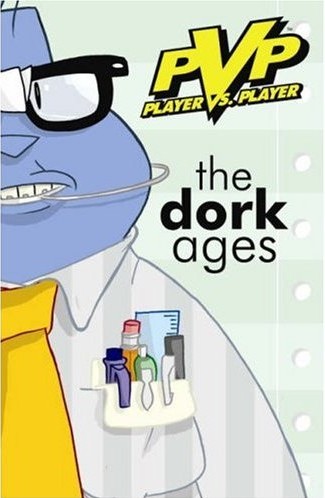
Book-A-Day #159 (12/22): PvP: The Dork Ages by Scott Kurtz

Hey, remember when I read PvP, Vol. 1? So I looked to see if there was a Vol. 2 when I was back at the comics shop, and found this instead -- it's a collection of the comics-pages formatted stories from the six issues of the comic published by Dork Storm Press (before, I gather, it was rebooted at #1 at Image).

(Hey, remember when Elkman used to come over to the room? A No-Prize to the first person to get that reference.)

I think Kurtz is better at the cadence of comic-strip stories (rather than those told in full comics pages, like here), but this is still quite good -- there's a Matrix parody I enjoyed (even never having seen the movie) and some shorter stories.

The Fabulous Book-A-Day Index!

Movie Log: Lone Wolf and Cub: Sword of Vengeance

According to Netflix, I had this 83-minute movie for nearly three weeks before I managed to watch it. I'm not sure if that was busy-ness or laziness, but I finally did get around to it on Wednesday night.

Lone Wolf and Cub: Sword of Vengeance is the first of a series of movies (six, I think) that adapt stories from the Lone Wolf and Cub comics series -- though I guess I should say "manga," in this context. This one in particular mostly draws from the stories ""Wings to the Bird, Fangs to the Beast" and "The Assassin's Road" (both collected in the first Lone Wolf and Cub digest-sized collection in English).

I read the comics in the recent Dark Horse-published translation (28 volumes -- which, if I'm counting right, makes this the longest single comics story by a single set of creators, half again as long as Dave Sim's Cerebus at about 8500 pages), and they really impressed me. The movie is a bit more conventional and of its time (the early '70s) in its treatment of violence (Peckinpah-derived blood squirts) and -- I think -- spaghetti-western influences. But it still manages to be an action movie that's about more than its action, and I liked it a lot.

I intend to watch the rest of the series, and I hope they don't sit around the house as long as this one did once they arrive.

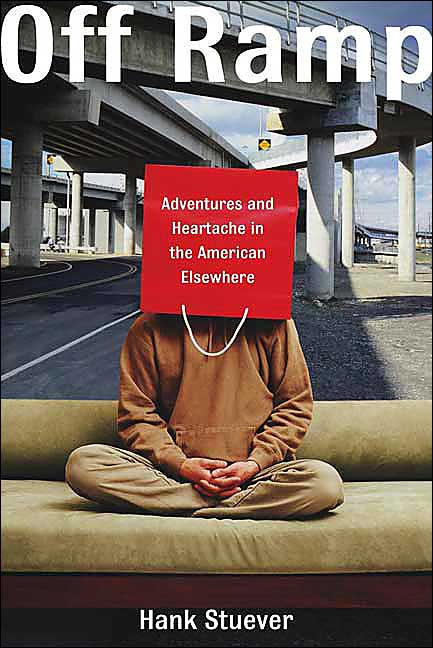
Book-A-Day #158 (12/21): Off Ramp by Hank Stuever

I got into another one of those "I don't want to read pretend stories" moods earlier this week, and so I rummaged through the to-be-read bookcase for a book of reportage. I came up with this one.

Stuever is yet another Oklahoma writer (like Mark Singer, author of Somewhere in America and Funny Money) who went elsewhere to write -- in his case, Albuquerque, Austin, and D.C. -- as a newspaper reporter. This is the first book of his I've read -- I think it's his first book, period -- and it's a nice collection of essays about ground-level American life.

Stuever introduces this book by saying that he's interested in the "Great American Elsewhere" -- essentially the edge-city/suburbia landscape of franchised retail, frontage roads, and aging infrastructure -- and then presents about a decade's worth of longish reportage pieces (on mostly everyday things like weddings, bowling, funeral homes, and self-storage, with the last section collecting his sidebar reporting on big-news stories like Chandra Levy, 9/11, and the D.C. snipers).

I enjoyed this quite a bit, but I had an odd reaction to it. In about the third or fourth piece (probably the one on the TV show Trading Spaces), I began to suspect Stuever was gay, and then started searching for clues one way or another. (Eventually, I got to the Acknowledgements at the end, where he thanks a boyfriend -- I took that as a Major Clue.) And that got me examining my own reactions. If a straight guy likes oddball middle-class culture, it may be a bit quirky, but that's all. But if a gay guy spends his time reporting on the Miss America pageant and KOA "kampgrounds," suddenly it starts to feel campy and kitschy -- even if he's doing exactly the same kind of reporting. There's a certain attitude towards that kind of pop culture that's expected of gay men, and I could read it in even when it wasn't really there. Let me be clear: I don't think Stuever is distancing himself from his subjects ironically, but the expectation is that a gay man would only be interested in these things as mediated by irony.

I was a weird realization: that just knowing something about the author's personal life could make me think about the same essays in a different way. But the book is what it is either way, and for readers interested in reportage about American lives (as I am), this is a good one.

The Fabulous Book-A-Day Index!

Saturday, December 23, 2006

Something Itzkoff This Way Comes

(Before we start, here's the link back to earlier Itzkoff posts -- Stalking the Wild Itzkoff, Part Two, which links part to Part One, which in turn links to all of Itzkoff's reviews, and all of my posts about same. Hm. If I keep posting at this rate, I may need to create an Itzkoff-dex.)

Tomorrow's New York Times Book Review (which subscribers to the newspaper get with the Saturday edition) has another "Across the Universe" column from Dave Itzkoff. As usual, he gets a full page (page 12), and, as is becoming his norm, he uses that to review one book. This time, it's John Scalzi's The Android's Dream. Actually, Itzkoff doesn't get to Android until nearly the end of the essay, since he starts off talking about Heinlein, then gives a thumbnail sketch of Scalzi's career to date. If this was done well, it might be useful to the supposed purpose of "Across the Universe" -- introducing modern SF to an audience that doesn't read it -- but, well, this is Dave Itzkoff we're talking about here.

So let's start with the quotes. Itzkoff opens elliptically:
When an emerging science-fiction writer's work earns him comparisons to Robert A. Heinlein, should he take them as a compliment? Don't misunderstand me: I have no reason to doubt that the old master's classic novels "Stranger in a Strange Land" and "The Cat Who Walks Through Walls" are still as good as I remember them (and if they aren't, please don't tell me). But Heinlein's military sci-fi, particularly the book that practically invented the genre, "Starship Troopers," has not aged well, to put it mildly.
We'll start small and work our way up:
  • The Book Review has not yet discovered italics, so I'm replicating their style here. It's a small but telling point about their view of the world and of change.
  • John Scalzi's name does not appear until the fourth paragraph of a review of his book. I haven't noticed that the Times typically reviews Zadie Smith's books via an extended explication of the works of Alice Hoffman, so this must be either an Itzkoff tic or an attempt at a crib sheet.
  • "Heinlein's military sci-fi?" Quick -- name a military SF novel by Heinlein that isn't named Starship Troopers.
  • Now, I'm well-known as a defender of The Cat Who Walks Through Walls -- I consider it a typical late-Heinlein, borderline-boring, self-indulgent adventure story with a great ending, which means I like it a lot better than most people -- but even I wouldn't call it one of Heinlein's classic novels. For Itzkoff to drag it out that like implies...well, that it's one of the two Heinlein novels that he actually read. (And, given that Itzkoff is thirty, that makes sense -- Cat was Heinlein's new novel in 1985, when Itzkoff was about ten, and in his prime reading-SF-indiscriminately years.) This is worrying, but not news; whenever Itzkoff talks about classics, he sounds like someone who hasn't studied for the big test and is desperately trying to wing it on charm.
After that, Itzkoff's essay spends two paragraphs describing Starship Troopers and three more running through Scalzi's first novel, Old Man's War. (The main connection is that many reviewers called Old Man Heinleinian, which of course it is. Itzkoff seems to think Old Man was Heinleinian because it was a military SF novel, though, which was not the parallel most of us saw.) Itzkoff finally gets to Scalzi's second novel, The Ghost Brigades, and a direct Heinlein comparison:
...but what I can't completely overlook is an unusual swipe it [The Ghost Brigades] takes at Heinlein himself. During their training, Dirac and his company are made to read "Starship Troopers," which they collectively decide "had some good action scenes but required too much unpacking of philosophical ideas." Heinlein may have cultivated a philosophy that now seems distasteful bordering on appalling,
Itzkoff's account of Starship Troopers called it fascist, for all of the wrong old reasons...
but it is unfair to criticize him for simply having a philosophy.
Did you catch that? I had to read it twice to be sure. Itzkoff thinks the characters in Ghost Brigades disliked Starship Troopers because of a hidden philosophical agenda. I won't say that Itzkoff has never read Starship Troopers and is coasting on memories of the movie (though I'm certainly thinking that), but he's utterly misread one of the most obviously didactic, and intensely philosophical, books in all of SF. (His thumbnail description of the plot, earlier in the review: Johhny Rico "is instructed through a series of deep space combat missions that war is not only unavoidable, it is vital, and even noble." That may be what he learns, but it's not the main way he learns it. Oh, and that's a comma splice, too.)

After all that, he finally talks about The Android's Dream, and doesn't like it all that much. But, by that point, Itzkoff has blown any credibility he might have had, so why bother to listen to him?

He ends with "a half-century later, some petulant, know-nothing critic will dismiss his [Scalzi's] ideas as dangerous and obsolete, then Scalzi truly will have earned his place alongside Heinlein in the canon of military science fiction -- and not a moment too soon."

Again, Heinlein's place in "the canon of military science fiction" is primarily as the author of one novel (and his help fixing Niven & Pournelle's The Mote in God's Eye, the true ur-MilSF text). Scalzi has already written two. Itzkoff is, at best, confused. And I need to take my kids to see a movie, so I'm outta here.

Friday, December 22, 2006

Incoming Books: 22 December

In the midst of a flurry of Christmas-shopping today, I dropped into a bookstore (to pick up a book as a present, of course), and, while I was there, I, oh, just happened to drop a lot of money on books for myself.

It was mostly comics stuff:
  • the new Dilbert collection, Try Rebooting Yourself
  • a Foxtrot treasury, Jam-Packed Foxtrot
  • the big Ivan Burnetti-edited An Anthology of Graphic Fiction, Cartoons, & True Stories, the book with the most boring title in existence
  • Will Elder's Chicken Fat
  • Abandon the Old in Tokyo, a collection of Japanese comics by Yoshihiro Tatsumi, who seems to have vaguely the same cultural place to them as R. Crumb did in America
  • and the first volume of Alias, which I remember hearing good things about when it was new, and which was half-price.
There were just a few "real" books:
  • the new Richard Stark Novel, Ask the Parrot
  • Sex, Drugs, and Cocoa Puffs, to continue my Chuck Klosterman fixation,
  • and Diamonds Are Forever by Ian Fleming, since I think I will continue through the Bond books in order, and I already have Live and Let Die and the store didn't have a copy of Moonraker.
That last one might sit for a few months until I get to it, but I'm pretty sure I'll run through the other books pretty quickly. (I do tend to read immediately, or almost immediately, the books I get in stores and pay actual money for. My shelves are mostly groaning because I keep picking up books at work because I'd like to own them, or think I might want to read them someday, or aspire to being the kind of person who would read them.)

Book-A-Day #157 (12/20): The ACME Novelty Library, Volume 17 by Chris Ware

This year's ACME installment brings us part two of the epic "Rusty Brown" graphic novel, along with a typically odd Chris Ware backup strip -- "Branford, the Best Bee in the World" -- all wrapped up in a fake-'70s yearbook package.

"Rusty Brown" is feeling more naturalistic, and less deliberately distanced, than Ware's previous work -- though the inclusion of a character (a depressed art teacher, no less) named Mr. Ware is a bit worrying. And Rusty Brown himself is exceptionally unconnected to actual reality -- though some of his behaviors are not too far away from my own older son, Thing 1, so it might just be a bit of artistic exaggeration -- for a character we're supposed to identify with.

Also, all adult men are bald in Ware's world. (I got my hair cut today, though, and most of the guys in there were at least partially balding -- I was the one major exception -- so maybe, again, it's my perceptions that are a bit off.)

This is mostly a bunch of middle, so it's not fair to criticize it for that. We'll see what "Rusty Brown" turns into when we can see more of the shape of the story -- and, at this rate, that will be about 2012.

The Fabulous Book-A-Day Index!

Quote of the Week

"And I'm gonna lock my son up in a tower 'til
He learns to let his hair down far enough to climb outside."
- Liz Phair, "Whip-Smart"

My Virtual Chinese Food Delivery Came

And, after I ate my dinner...

My Fortune Cookie told me:
Expect the Spanish Inquisition.
Get a cookie from Miss Fortune
I'm sorry, that's simply impossible. I physically can't do that because, as everyone knows...

The Passion of Archie Andrews

If you wandered over into the comics sector of the blog world over the past week, you probably tripped over one of the usual more-heat-than-light bloggy furors. The reason this time: Archie Comics is publishing stories featuring redesigned characters. The more thoughtful and intelligent bloggers (the ones I read, natch) don't think this is a big deal; companies do this all the time, and Archie's had a pretty rigid house style for forty years now (so a change to appeal to current kids might well be in order).

But there has been much really stupid wailing and gnashing of teeth from certain quarters. ( For example, this guy talks about "messing with people's childhood memories" -- implicitly admitting that he doesn't read Archie comics, and hasn't for years, but that he still thinks Archie should care what people like him think about the change.) In particular, the kind of people who comment but don't blog themselves are up in arms about this -- though, as far as I can tell, the vast majority of them don't seem to read current Archie comics.

Archie editor Rik Offenberger pointed out that this is just one story, and that Archie comics have had many art styles in the past. (He didn't note, but could have, that the "classic" Archie style, the loss of which people are bemoaning, only really clicked when Dan DeCarlo started at Archie in the early '60s -- a good twenty years after Pep Comics started.)

Does anyone else suspect -- as I do -- that the people upset about the Archie redesign are also the ones who hate manga and think that audience will "graduate" to good 'ol American spandex fight-scene comics Real Soon Now? I bet they are; they're exactly the people who have no idea what the young female audience wants.

OK, here's the new rule: no one is allowed to whine about a redesign on a comic that they don't read and never will read. (I'll be willing to bet money that most of the whiny losers on this topic never bought Archie comics in their lives.) And I really hope Archie isn't seriously listening to these nimrods; they're not the audience for the comic, and nothing they say will help Archie target their comics to that audience (pre-teen girls, mostly).

And I've come to a new realization. The Internet isn't for porn (not anymore) -- it's for complaining.

And so I'm...um...well...oh, shit.

Thursday, December 21, 2006

I Am Andy's Heart

Anyone who's just here for the book I-don't-call-them-reviews will want to skip over this post; it's boring personal stuff. Caveat lector.

So I had my first cardiologist appointment in about eight months today -- I'd last seen him in April (I think), and he wanted me to take a stress test. But I kept calling the office (at about six-week intervals), giving them good days for the test, waiting to hear back, and then beginning the cycle again. After three or four times through, I just stopped. (Apparently, there was some trouble getting it approved through my insurance.) Eventually, when I renewed my prescription, there was a plaintive "Make an appointment!" in the middle of the dosage instructions, so I did.
Should I back up? Oh, OK. About four and a half years ago (May 9th, 2002), I thought I was having a heart attack at work -- I had chest pains that didn't go away, cold sweats, pains running down my arms, the whole scary package. (I'd been on a serious diet and exercise regiment from the beginning of the year -- I called it the "jelly bean & ice cream diet," but I was down forty pounds at that point. That's my ironic life -- I have a heart attack as soon as I get into the best shape of my adult life.) It didn't get better as the morning went on, so, around lunch, I thought I should go to a hospital. I got down to the lobby, asked a security guy what the closest hospital was -- yes, I guess I thought I was walking there -- and was sent upstairs to see the building nurse, whose existence I hadn't previously dreamed of.

She stuck a nitro pill under my tongue, and then checked my blood pressure and all that stuff. She told me that she didn't think I was having a heart attack, but she didn't seem happy, and she called an ambulance for me. Soon afterward I was wheeled out of the building, popped into a small converted van, and whisked off to Roosevelt hospital. There, I was stuck in a small room off to the side of the ER area, since they weren't sure what was wrong with me, and I wasn't bleeding anywhere noticeable.

They hooked me up to various scary machines, and some sort of alarm kept going off, bringing some sort of junior doctor at a quick saunter every time until he got used to it. (Eventually someone told me the thing was measuring my heart rate, and that the alarm went off when it dropped below some level.) The young doctors were clearly nonplussed to see me smiling and waving at them when my heart rate was dropping to 18 beats a minute, but I felt mostly OK at that point -- the nitro (or whatever else they stuck in me) had gotten rid of the pain and other symptoms, so I just felt tired. But, according to them, I shouldn't have been conscious at that heart rate, let alone coherent.

Anyway, I eventually got wheeled upstairs and into a bed. I stayed overnight, and all the medical types kept agreeing that I hadn't had a heart attack, and noting that I wasn't in bad shape, but insisting that I shouldn't leave. I spent much of that day pacing the hall, perhaps trying to prove to them that I was healthy enough to get the hell out of there. The Wife and my mother came to visit that evening, hoping to take me home. I eventually got so frustrated that I checked myself out of the hospital around 10 PM -- "the specialist" had been supposed to come see me for about the previous six hours, for what was supposed to be a perfunctory check to make sure I could leave, but he never showed up, and eventually they told me he wouldn't come at all that night (and that they wouldn't release me by choice). I got the big "you could die" speech, and hobbled out under my own power.

(Checking yourself out of a hospital is the rough equivalent of acting as your own lawyer when being sued by a big scary government agency. I don't recommend it. But I also don't recommend being stuck in a big, badly-run old heap like Roosevelt in the first place.)

I got in to see my family doctor the next day (Saturday), but couldn't get to see a cardiologist until Monday, so I had a very nervous, quiet weekend. (As I heard several times, "If you checked yourself out of the hospital, you can't be that worried about your condition." It felt like they wanted me to keel over right there, just to teach me a lesson about Doing What the Doctor Says.) I don't think I was on any medication yet, so I probably didn't fall sleep at random (as I did starting a week or so later), but I felt very fragile and tried not to do anything more strenuous than breathing.

Anyway, to cut the rambling short, I learned that what I had was "heart failure," which is basically the opposite of a heart attack -- the heart muscle gets lazy and slows down, and, eventually, if left untreated, stops working entirely. I was put on medication, which ramped up for the first year or two, switched around a bit in the middle, and has been declining for the last two years. The effect of the medication (beta blockers and ACE inhibitors) has been to slow my blood, making me very cold for a couple of winters and giving me very interesting effects when I stood up for about four years straight. The changes in dosage were also quite entertaining.
Back to now. Dr. Das (my heart guy) said I looked thinner (meaning he remembered me at my porkiest; I put back on most of the weight I'd lost in early 2002 by the end of 2004, and dropped 30 pounds last year -- not quite the same ones, since I started 2002 somewhere over 300 and I started 2005 at 290 -- and have slipped back up about ten pounds this year). My blood pressure was...

...and this gets its own paragraph...

100/60

(though I think I've been not much higher than that for the last year and a half). This was very good news. My heart and lungs must have sounded good, too, since he wrote me a prescription for a heart scan (to check my injection fraction -- if I can get above 50% I'll be basically normal), and told me to reduce one of my prescriptions to a pill every other day.

So, to sum up: I'm not falling asleep in the evenings, I can stand up without all of the blood rushing out of my head, my blood pressure is great, and I might finally stop being a heart patient some time in 2007. I can't frikkin' wait.

Incoming Books: Late December

I may get some more stuff before the month is out (I'm probably going to my favorite book store tomorrow, and there's always the possibility of presents on Monday), but this stack is now heavy enough to present a danger to my printer. So it's time to note what's here, and put it away.

(I should sheepishly mention here that my to-be-read pile keeps expanding. It was originally one bookcase, and now there are at least a couple of hundred books piled on top of that tall case. And all of the classics I haven't read are in the front of ten shelves on another bookshelf. And there's the original overflow, read-it-immediately pile. And, most recently, there's two shelves of even more overflow, read-it-immediately stuff. But now those shelves are full, so there's a pile on the shelf above them. I need to either read faster or acquire books slower.)

Recently arrived in La Casa de Hornswoggler:
  • from today's trip to the comics store: PvP: The Dork Ages, Powers Vol. 5: Anarchy, and Fables Vol. 8: Wolves
  • an order from Amazon UK: Alastair Reynolds's other new collection, Galactic North, and the Ankh-Morpork Post Office Handbook/Discworld Diary 2007
  • and the usual mass of things from the office, one way or another: the big new Neal Gabler Walt Disney biography, Joan Didion's We Tell Ourselves Stories In Order to Live, Never Mind the Pollacks by Neal Pollack (which I avoided buying for a couple of years now, but just found on a giveaway shelf), the new Robert Fagles translation of The Aeneid, another Will Eisner omnibus, Will Eisner's New York, and a couple of other odds and ends.
That's a total of about twelve new books in roughly a week, which -- even for a guy reading a book a day -- is beginning to get alarming.

Meme Me Again, Barkeep!

I think this one has been running around for some time -- I remember taking the quiz back on rec.arts.sf.written a few years back -- but it's a quick quiz, and lots of the Kewl Kids are doing it, so...

I am:
Samuel R. "Chip" Delany
Few have had such broad commercial success with aggressively experimental prose techniques.


Which science fiction writer are you?

That's unexpected. I did this a couple of days ago and I was Frank Herbert, and I think I used to be Jack Williamson or somebody back in the rasfw days. I guess I'm not consistently any one SF writer...

Bow Down Before Me!

There's another silly meme wandering about -- I caught it from Emma Bull.

My Peculiar Aristocratic Title is:
His Grace Lord Andrew the Uncanny of Durdle Door
Get your Peculiar Aristocratic Title

You bet your bippy I'm uncanny. Just watch me and see if I'm not.

Tuesday, December 19, 2006

Book-A-Day #156 (12/19): The Fabulous Women of Boris Vallejo and Julie Bell

This art book collects many (though probably not all) of the paintings by Vallejo and Bell that feature women in them prominently, mixed up unchronologically.

I tend to like Bell's current work better than Vallejo's (he's gotten into too much of a rut for my taste: similar, static poses; overmuscled models; and a very slick finish on the surface), but this also has a lot of Vallejo's more painterly-looking work from the '70s and '80s, which I like better. And I think Bell is one of the best SFF painters working today; she has a great way with faces in particular.

Well, this is what it is: lots of pictures of women not wearing very much, painted by two top artists. If you're interested in that kind of thing, this is one of the best examples of it you could find.

And I should mention that you can buy it from the SFBC...

The Fabulous Book-A-Day Index!

John W. Campbell and Longevity

John W. Campbell was editor of Astounding Stories (no, wait -- Astounding Science-Fiction; no, wait -- Analog Science Fiction Science Fact) from late 1937 through his death on July 11th of 1971. It's unclear precisely when he started, and the transition (as F. Orlin Tremaine gradually let Campbell take over the whole magazine) took until May of 1938. The earliest I've seen anyone put Campbell in an editorial chair at Astounding is in September, so I'm calling it September 1st, to err on the side of longevity. Thus, he held the same editorial job for no more than 33 years, 10 months, and 11 days.

My boss, Ellen Asher -- the uncrowned Queen of Science Fiction -- started work as editor of The Science Fiction Book Club on February 8, 1973. As of today, she is, I think, the longest-serving editor of all time in science fiction.

I know Stan Schmidt at Analog has been there nearly thirty years; are there any other candidates? (I don't think Charles Brown counts, since he owns the magazine and he hasn't worked on it full-time the whole time, but he's certainly got longevity on his side.)

Monday, December 18, 2006

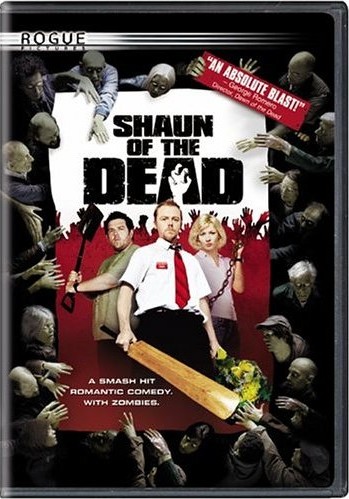
Movie Log: Shaun of the Dead

After a longish dry spell (broken only by The Wife and I rewatching one of my very favorite movies in the world, Love Actually, and watching the MST3K'd The Dead Talk Back one rare day I had the house to myself), I finally saw another movie. Shaun of the Dead came from Netflix about a week ago, but I finally watched it Thursday night.

It wasn't quite as funny as I'd thought it would be (maybe because I'm not steeped in modern British sitcoms, which seemed to be the source of all sorts of jokes that flew past me), but it was definitely enjoyable.

The odd thing is: as far as I can remember, this is the first zombie movie I've ever watched end-to-end. It'll probably stay that way for a while; I have no real interest in watching people die, so horror movies only fill me with a mild distaste for their creators and fans.

Book-A-Day #155 (12/18): Casino Royale by Ian Fleming

I'm sure I've mentioned this before, but this is very typical for me: when there's a big, popular movie made from a book, I very often go and read the book.

In this case, I pulled Casino Royale down off the shelf to re-read it for the first time since I was about thirteen. (I'd bought it and Live and Let Die in the retro-looking Penguin reissue covers a couple of years ago, planning to keep buying the others as I read my way through the series -- well, that still might happen, I guess.)

Everything that everyone has ever said about James Bond and women (though it's probably actually Ian Fleming and women) is completely true, but it's also mostly beside the point: James Bond doesn't like men, either. He doesn't like humanity much, and I don't recall any indication he's much happier about other animals. He doesn't even particularly like himself, though he's not maudlin or whiny about it.

And this book hardly has any plot at all; Bond is captured and tortured a little more than half-way through (which is the end of the main plot). He then gets saved by somebody else and mopes around for fifty pages until the big revelation at the end. I remember Bond being a depressed, broken man in the last couple of books, but I'd forgotten that he started out that way, too.

Well, I might read more of these: they're short and pop-culturally important, and Bond is, despite everything, a fascinatingly prickly character. But I can't recommend them to any women who hope to keep their tooth enamel intact.

The Fabulous Book-A-Day Index!

The Internet is For Animal-Related Humor

OK, so I'm besieged on all sides by animals. Thing 2 has been making a full-court press for a puppy (strictly because his best friend just got one) -- which is not going to happen, by the way -- and the Internet is fuller than usual with picture of cute furry things.

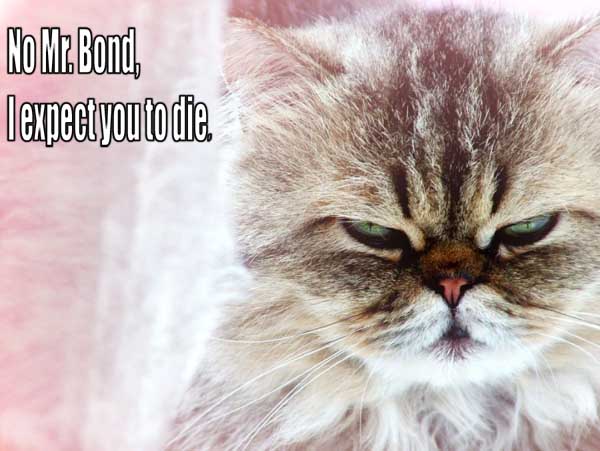
Kevin J. Maroney linked to this massive list of cat-related humorous photos (mostly parodies of "im in ur base..."), which I found only mildly amusing, until I found this picture:


It might not be the very most awesome thing ever, but it's up there.

Sunday, December 17, 2006

Book-A-Day #154 (12/17): Kitty Goes to Washington by Carrie Vaughn

This has been published, but I read it for work, so I should still be a bit reticent. It's the sequel to Kitty and the Midnight Hour, continuing the story of a werewolf radio-host. Yes, it's another one of those contemporary fantasy series (the kind we're calling "urban fantasy" or "vampire shaggers" or maybe something else this week), but the writing moves well and the story is well-told and I really hope the manuscript of the third one will show up in my office tomorrow so I can start reading that one.

I think that all counts as a recommendation; I haven't read piles and piles of this sub-genre, but this is one of the better ones I have read.

The Fabulous Book-A-Day Index!

What I Did Today

The Wife and I packed up both sons and went into the big bad city to see Circus OZ at the New Victory Theater, which I can recommend wholeheartedly to anyone who likes circus-like entertainment without animals. Circus OZ is a bit loud and edgy for really little kids, but both of my boys loved it (ages eight-and-a-half and one-week-shy-of-six), and I bet adult audiences would love it just as much (and they probably won't hear about it, since the New Vic is a specifically kid/family venue).

There's a bit of cabaret, a bit of juggling, a lot of acrobatics, quite a bit of loud music, and a hell of a lot of funny stuff. There's also a singing stuntman, an amazing strongwoman, a mullett-headed trick bike rider, excellent acordion playing, fart jokes, and great hanging-rope acts.

They'll be at the New Vic through the end of the year, but after that they're back in Australia (the next gig listed on their web site is in Perth at the end of February). The site does say they might be in LA, Pittsburgh, and Montreal (among other places) in the near future, so, if you live in any of those places, you can keep an eye out. And I'm sure you can catch them various places in Australia...

The Hornswoggler sez: check it out.

Book-A-Day #153 (12/16): Making Comics by Scott McCloud

I have to admit I'm not the target audience for this -- I'm not a cartoonist of any kind (even "vaguely aspiring"), and my artistic ability is effectively negative (good artists draw badly just because I'm nearby).

But I'd read Understanding Comics back in the day, and the less successful (but still interesting) Reinventing Comics in between, so I felt like I was "keeping up with the series." And I also hope that, if I keep buying everything McCloud publishes, eventually someone will break down and do the fourth volume of Zot! and I'll finally have "The Earth Stories" between durable covers.

I imagine this could be very useful to someone who does want to work in comics (especially as an artist) -- McCloud presents lots of options and ideas (and more than a bit of theory, but it's all inclusive theory) that look like they'd be very helpful. And I did enjoy reading it; it might provide some added theoretical structure to my reading of comics from now on. (Or maybe not; it depends on how much McCloud's theories stick in my mind and how much I continue to agree with them.)

The Fabulous Book-A-Day Index!

Judith Regan's Ouster May Have Nothing to Do With OJ

GalleyCat has a terse report today (following up their even terser Friday account of Regan's firing) giving some details of the firing -- and I think they were the ones who noted that calling a big-business end-of-employment a "firing" is a huge deal, implying that things have gone horribly, horribly wrong -- of the most-tsked-about woman in publishing.

The particularly interesting news is that it might not be the OJ Simpson book (for which all of the "respectable" book world was ready to hang her in absentia) that precipitated her ouster, but some problems with Peter Golenbock's upcoming 7: The Mickey Mantle Novel.

Time Magazine Punts on "Person of the Year"

They've chosen the whole damn planet.

Y'know, they were supposed to start with that list and winnow it down to something smaller. I think pitchforks, torches and Frankenstein rakes are in order here. If Time can't be bothered to some up with something resembling an individual, I don't see why anyone should ever take them seriously again.

According to that article, Iranian President Mahmoud Ahmadinejad was the runner-up, so I guess he'll take the title if "You" is unable to fulfill the duties as Person of the Year. And it sucks to be Than Shwe.

If I May Unsuggest Something...

It seems like a lot of people, particularly authors, are wasting time lately with LibraryThing's Unsuggester. It's a fun little tool for amusement, but it also seems to me that there are some wrong lessons one can take away from the Unsuggester, based on misunderstandings and wrong premises. (I've seen a few authors complaining and fulminating about the people who don't read their books based on an Unsuggester list, for example...)

In case you don't know, the Unsuggester is the flip side of LibraryThing's BookSuggester. LibraryThing itself is an website that allows users to catalog their book collections, and compare those collections to those entered by others. BookSuggester takes one book title as input, and trolls the database of all collections to find out which books are most likely to be also owned by people who own that book. The assumption there is that if someone owns both books, that person is likely to have enjoyed both books, and thus such lists will tend to be indicative of what the user will also enjoy. (Of course, anyone who spends the time required to catalog a decent-sized collection of books is at least mildly compulsive, so the enjoyment assumption is not as strong as it first appears.)

Unsuggester is just the opposite -- it checks to see what books are the least likely to be in the same collections as the input title. Because of the name "Unsuggester," everyone seems to be assuming that means that there is some group of people who "hate" these books, and thus it is saying something about "fans" of particular books. This is entirely false; what Unsuggester is saying is that people who own Book X are notably less likely to own these other books than LibraryThing's general statistics suggest they would. Since BookSuggester's correlations are shaky to begin with, trying to do the same thing in reverse (essentially looking for figures in the negative space between datapoints) is close to reading tea leaves to tell the future.

The first big unexamined suggestion is that users of LibraryThing form a relatively amorphous, undifferentiated population. (Otherwise, the statistical models would simply not be useful.) I think this is assuming a spherical cow; from the results Unsuggester gives, it's clear that there are several different communities using the LibraryThing system, and that they are using it for different purposes. For example, there is at least one community of crafters using LibraryThing to catalog their books -- but it's not clear if those people also read for pleasure, or if they're also cataloging those pleasure-reading books, should they exist.

And that leads into the second assumption: all of these books were read for pleasure, and kept because enjoyed. There are other reasons for reading, and there are clearly communities on LibraryThing who have collections of books for reference and other not directly pleasurable purposes. (BookSuggester and Unsuggester's "if you like..." paradigm is only plausible if the books in the database are there because people liked them.)

Statistical correlations are more dependable directly based on the number of datapoints they compare -- thus, LibraryThing is only as dependable as its users (who are self-selected to begin with -- never a good thing for a random sample -- and who also self-select the books they enter), and is presumably at its most dependable with bestselling books and at its least dependable with little-known works. (So the authors most likely to look for validation here will be the ones that Unsuggester has the least to say to.)

Now, I'm not saying this isn't a fun little tool, but...that's all it is. It's not providing you with valuable insights into the minds of your readers. It's just providing statistical correlations from a biased and unreliable constellation of data. Please obsess about something more useful and directly relevant to your prose (since, lord knows, nobody can stop a writer from obsessing about something.)

Friday, December 15, 2006

Book-A-Day #152 (12/15): PostSecret compiled by Frank Warren

The first collection of postcards sent to the "art project"/blog is probably too much to take in all at once, and would be best in smaller doses. (I read it straight through -- except for the introductions, which I'd read when I first picked it up -- tonight for Book-A-Day.)

I've been reading the PostSecret blog regularly for close to a year now, and some of the cards do affect me a bit...but the cumulative effect of a whole book of them is almost physical. There are a lot of people out there with a lot of secrets -- mostly unhappy ones, since that's the nature of secrets.

So don't read this if other people's troubles easily affect you -- that's all I can say. Otherwise, it's probably particularly interesting to writers, since it has so many people explaining important parts of their motivations in ways they wouldn't publicly.

The Fabulous Book-A-Day Index!

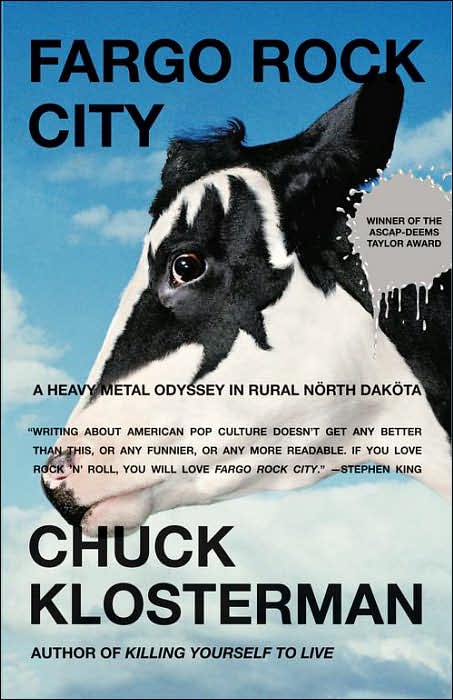
Book-A-Day #151 (12/14): Fargo Rock City by Chuck Klosterman

This isn't exactly a memoir, and it's isn't exactly a history of heavy metal in the '80s. (Though it's much more the latter than the former.)

Klosterman has very little in common with me -- he's several years younger (a whole high-school generation -- I'm class of '86; he's '90 -- which means the cultural referents are very different), came from a very different part of the country (rural North Dakota vs. suburban New Jersey), and like almost none of the same bands. But I still find his take on rock 'n roll fascinating. There's a quote from Jonathan Lethem up front to the effect that he'd never read such a great book about music that didn't make him want to buy a single record -- I'll second that thought. If you're passionate about some kind of popular music, you'll probably like this book (even if you can't stand hair metal).

As far as I can tell, our common points of reference for the period this book covers are Appetite for Destruction and the first two Def Leppard albums. Otherwise, Klosterman was listening to Ratt and Cinderella (boys listened to Cinderella? I never knew) and KISS, while I was vaguely transitioning from generic rock (Springsteen, Rush, Who, Stones, Styx, etc.) in high school to only slightly less generic "alternative" rock in college (R.E.M., U2, They Might Be Giants, Elvis Costello). While reading this, I tried to work out when my own metal period was (nearly every boy in the '70s and '80s had one), and decided that it probably only lasted from about '82 to '84, given the records I could remember buying and listening to. Metal didn't really take with me, though some of my friends (the more stoner types) were metal-heads. But, in my circles, most of the people I knew liked "new wave" or just "rock." (And, thinking back, my guilty pleasures were bands like Duran Duran rather than like Twisted Sister.)

Klosterman also spends most of this book talking about the cheesiest kind of "hair metal" (he's particularly fond of Motley Crue; this book is, in large part, an attempt to rehabilitate their reputation and present them as at least the Aerosmith of the '80s), and I was, I'm afraid, a classicist in my metal period (Ozzy, old-school Sabbath, Judas Priest, Iron Maiden, AC/DC, and only a very little bit beyond that). So, yet again, I have to take his word for it about the kind of music fan he was; I'm sure I knew people who thought like he did, but I never really talked music with them.

Klosterman isn't afraid to have quirky theories about music and life (though nothing here quite reaches the epic insanity of Killing Yourself To Live's extended comparison of the various members of KISS over the years to Klosterman's important girlfriends), and he's very entertaining to read. And anyone who actually liked hair metal will love this.

Finding a major rock critic whose cultural touchstone is KISS rather than the New York Dolls or the Stooges or the Velvet Underground is also great -- even if I don't actually like KISS any better than those other bands...

The Fabulous Book-A-Day Index!

Wednesday, December 13, 2006

Book-A-Day #150 (12/13): Sex in N.Y. City by Alison Maddex

I think I bought this because it was cheap at the Montclair Book Center the last time I was there. In any case; it's supposedly a heavily-illustrated history of sex and sexuality in New York City, but it actually a thinly veiled catalog of a series of exhibits of photos, artwork and ephemera curated by this book's author, Alison Maddex. Each page is generally one piece of art (mostly either photos or vintage art), with a couple of paragraphs somewhat about that piece of art and somewhat about the place in NYC history of whatever kind of sexuality it depicts.

So anyone looking for an in-depth history will be disappointed. This is pretty scattershot, and (as usual with books like this) definitely has a point of view: anything having to do with sex is good, anyone or anything that tends to limit any kind of sex is bad. For most of the people who'd even consider reading a book like this (me, for example), that's not a big deal -- you pick up a book about sex because you like the idea of sex, so it's nice to see the author is in favor of it.

One interesting side note: the interior says that this is title Sex in the City, and the copyright page has a disclaimer that the title is not meant to evoke the name of a certain TV show. Evidently that wasn't enough, because the book was stickered, front and spine, with "N.Y." (in the little lips logo) over "The" -- as you can see on the bookshot.

The Fabulous Book-A-Day Index!

Incoming Books: first half of December

These have been piling up on the scanner (which I now need for today's Book-A-Day), so let's see what I've picked up recently:
  • Gallimaufry, a book of obsolete words by Michael Quinion
  • several mysteries: Parker's Hundred-Dollar Baby, Mosely's Fear of the Dark, Mortimer's Rumpole and the Reign of Terror, and Hiaasen's Nature Girl
  • the PostSecret book
  • The Fabulous Women of Boris Vallejo and Julie Bell, which I bought for the SFBC quite some time ago, but -- as is usual with art books -- wasn't fully designed at that point, so I bought it from seeing a few sample spreads
  • Max Perkins: Editor of Genius by A. Scott Berg, a biography of a guy who got about as famous as any editor ever does
  • Path of the Assassin, Volume 3 by Koike and Kojima, more ninja goodness
  • Why Things Break: Understanding the World by the Way it Comes Apart, a non-fiction book by Mark E. Eberhart that reminds me of Henry Petroski's To Engineer Is Human (a fine book on design and errror)
  • and Schott's Almanac 2007, which probably will be honored by being the first new downstairs bathroom book in the Hornswoggler household for 2007.
Will you folks hate me if I admit that I didn't pay a penny for any of these? They all came home from work with me, one way or another.

Scalzi Top 51 Posted!

John Scalzi has again combed the depths of Technorati and brought forth a list of the top SFF bloggers. (He did this once before, in the summer. And I was quite happy, then. Ah! It seems so long ago, when the world was young and I was carefree.)

I'm not happy about the new list. This list upends the true and obvious natural laws of existence in favor of licentiousness and depravity. (I'd better be careful; I'm starting to sound like John C. Wright.)

Wherefore have I lost all my mirth? Because my previously-respectable ranking (#37) in the Summer Games was all for nothing -- I've fallen off the list with this new version. The lowest-ranked blog on the current list (Barnstorming on the Invisible Segway, by Marissa Lingen) had a Technorati rank of 59,315. Antick Musings comes in at 62,790, and the SFBC blog is at 71,131. Before, I was somebody, and now I am nothing. (Twice nothing, at that.)

Niall Harrison has done a little number-crunching about the list at Torque Control, but that won't ease the pain. I am a shattered and despondent man.

Tuesday, December 12, 2006

Book-A-Day #149 (12/12): The Name of the Wind by Patrick Rothfuss

There's no bookshot up here, because I haven't seen anything that looks final yet -- there are at least two possible covers different places on the web, but neither one looks quite done to my eye, so I won't put either of them here.

This is yet another book from the future; DAW is publishing it in April. They're very excited about it, and I have to say I agree with them; it's a major debut fantasy novel, and a joy to read. (It's a 667-page book, and I sped through it in three days -- I read nearly half of it on Sunday alone.)

But I read it in bound manuscript form, which means what I read was seriously unedited (and I ran across a lot of the typos and thinkos that characterize the unedited manuscript). So I won't comment at all about the plot; with my luck, anything I could mention has already been changed in the final edit. I'll just say that it's a good 'un, and that it's not the kind of story you'll expect from the first thirty or so pages.

The Fabulous Book-A-Day Index!

Book-A-Day #148 (12/11): But I Like It by Joe Sacco

This is a collection of miscellaneous rock 'n' roll related comics by the guy who did Palestine and Safe Area Gorazde. The pieces are pretty solidly of their time (mostly early '90s grunge), and there would be no great loss to the world or the comics industry if they had been left to molder in their original appearances.

Yet another book that I don't mind having read, but that didn't really thrill me. I'm going to try to get my rock 'n' roll fix with my next book -- Chuck Klosterman's Fargo Rock City.

The Fabulous Book-A-Day Index!

Puny Humans!

Yet another meme in lieu of actual thought...


Your results:
You are Hulk


Hulk
80%
Spider-Man
65%
Iron Man
65%
Green Lantern
45%
Supergirl
40%
Catwoman
40%
Robin
37%
The Flash
35%
Batman
35%
Superman
25%
Wonder Woman
5%
You are a wanderer with
amazing strength.


Click here to take the "Which Superhero are you?" quiz...

Monday, December 11, 2006

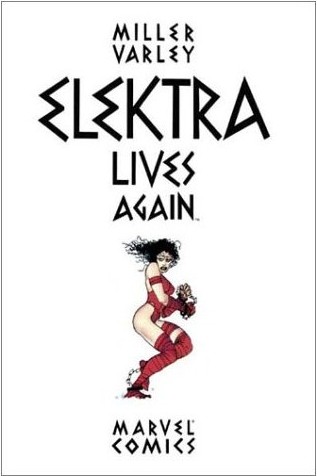
Book-A-Day #147 (12/10): Elektra Lives Again by Frank Miller and Lynn Varley

I'd never read this before; when it was originally published (1990, I see), I decided to wait for the paperback -- I guess some inklings of Miller's future suckage had already wafted into my head. About a decade later, Marvel announced they would finally reprint this in a paperback, then they changed their minds and put out a new hardcover reprint (the bastards). I found a copy in a comics shop a couple of weeks ago (I went with the boys; they wanted to buy Yu-Gi-Oh! cards) for about half price -- $11.99 -- and so I finally got it.

To place this in the Miller timeline, it's just as he started sliding down that horrible long slope. 1990 was in between Give Me Liberty (which had some good points, though subtlety and wit were not among them) and Hardboiled (which had great eye-candy from Geoff Darrow, but found Miller lurching into Pointless Ultraviolence Mode). This is also the last Miller-drawn work before the original Sin City (which I don't think sucks, though the later stories batter that horse beyond recognition).

Miller is just toying with the boxy stylization that will eventually engulf his art here; faces are a bit blocky for no good reason, but otherwise things look like what they are. The story is mildly pointless: Matt Murdoch (the guy who, if I recall correctly, doesn't put the Daredevil suit on once in the book) is obsessing about his dead ninja assassin not-quite-girlfriend, Elektra, whom we know from the Daredevil series was resurrected (presumably to have a second, less violent, chance at life). The evil ninjas, the Hand, kill and resurrect Daredevil's arch-foe, Bullseye, as a vessel for their dead leader, but Elektra and Matt kill him again (and a few ninjas along the way, of course). Elektra may or may not be dead at the end of this story; Matt thinks she is, but then, he was wrong at the beginning on that same point.

So it's a whole lot of running around angsting and killing ninjas. That sounds like a recipe for a good story, but it's all flat -- maybe because I'm reading it over ten years later and I know Elektra has had an ongoing series since then, so she was rebooted at least once. (And I'm pretty sure Bullseye didn't stay dead; this might not be anywhere near continuity at this point.)

On the Miller scale of Elektra stories, this is the least -- it's below the stories in Miller's first Daredevil run, and far below the transcendently wonderful (and goofy) Elektra: Assassin. But I guess it was worth buying a half-price hardcover to finally read it.

The Fabulous Book-A-Day Index!

You Must Be This Smart To Read Antick Musings

A LiveJournal meme (or metric, I guess) that I picked up from James Nicoll:

antickmusings's Flesch-Kincaid Grade Level: 11
Average number of words per sentence:24.94
Average number of syllables per word:1.41
Total words in sample:399
Analyze your journal! Username:
Another fun meme brought to you by rfreebern


When I run this thing on the SFBC Blog, I get up to grade 12 (longer sentences there, since they tend to be lists of links) with 41.14 words per sentence, 1.48 syllables per word, and 288 total words sampled.

See my long sentences, o ye mighty, and tremble!

Saturday, December 09, 2006

Book-A-Day #146 (12/9): Rollback by Robert J. Sawyer

I love my children; I really do. But...they spent the day at The Wife's extended family's Christmas celebration (I didn't have to go because The Wife didn't think she needed to go, and I definitely wasn't going without her, so The In-Laws took Thing 1 and Thing 2 on a day-long sojourn to Deepest South Jersey), and I got so much done. A whole bunch of laundry, dishes, more time with the Times than usual (and it was the annual "Year in Ideas" in the magazine, too), several errands (including getting Xmas cards made), and I also read this here entire novel in one day.

(I miss my old, pre-kid Saturdays; I used to sit down and just plow through a decent-sized SFF novel nearly every Saturday and Sunday, and it meant I was further ahead at work.)

Oh, well, the world must be peopled, as Benedick says.

I'm blathering on about extraneous stuff, because this is yet another novel that hasn't been published, so I don't want to talk about the plot much. It's set just under fifty years in the future (though I think Sawyer's being awfully conservative in the changes over that period), and the plot involves both SETI messages (sent and received) and rejuvenation treatments.

If anyone's still looking for "entry-level" SF, Sawyer's a great example -- he writes very readable books set in worlds and times very close to our own that your Aunt Matilda could probably read and enjoy just as easily as she does Kathleen Woodiwiss or James Patterson or Nicholas Sparks. And, though I haven't read all of his recent novels, I think Rollback is one of his better books. Really, really hardcore SF readers who only want bleeding-edge speculations are not going to be happy with Sawyer, but I'm finding that the people who keep saying "but there's no new ideas in Book X!" are starting to annoy me anyway. So I don't really care what they think. Nyahh!

The Fabulous Book-A-Day Index!

Book-A-Day #145 (12/8): Majestrum by Matthew Hughes

I really wish more people would buy Matt Hughes's books. He's gotten called "the new Jack Vance" a lot, which is a great compliment (hardly anyone can write like Vance, even if they try), but it does tend to make him sound more like a slavish imitator than he actually is. (And his books have been getting less specifically Vancean as he's gone along; this one felt purely Hughesean to me.)

This is the fourth novel (and the fourth-and-two-thirds book, if you count most of The Gist Hunter and Other Stories) set in Hughes's very, very loose far-future series. (The first two books, Fools Errant and Fool Me Twice, have the same main character, but Black Brillion is mostly unconnected to any of the others.) Majestrum is loosely connected to the Fool books, in a way that doesn't require you to know anything about those books (and the ties don't actually come in until most of the way through the novel, anyway). It's more closely tied to the earlier stories of Hengis Hapthorn, Old Earth's greatest freelance discriminator (collected in Gist), but I don't think you need to have read those, either. Basically, Majestrum is a detective novel set on an extremely far-future Earth. It's not deadly serious, but it's not as funny as the earlier books -- I do miss the funny stuff a bit, but I guess you can't be silly all the time.

And I suspect there will be more Hengis Hapthorn novels (I probably wouldn't have to suspect, if I could remember what the Night Shade Boys had told me), so you'd better start buying them now, when there's just one and it's easy to remember the title. Trust me; it's just easier this way.

The Fabulous Book-A-Day Index!

Book-A-Day #144 (12/7): Pearls Before Swine: Sgt. Piggy's Lonely Hearts Club Comic by Stephan Pastis

This was from my emergency back-up reading pile; I'd read most of it a few months ago and put it down there for a rainy day. The rains, as it turned out, hit on Thursday, when, because of taking Friday off (so I didn't read at lunch on Thursday as I tried to get two days' worth of work done in one day) and going to the Spectrum Literary Agency's Christmas party (so I was on a different bus, and didn't read there mostly due to inattention on my part as I tossed my bag onto the upper rack and settled into a window seat without a book), I didn't manage to finish Matt Hughes's Majestrum then.

(And that's the kind of sentence I can put together if I really put my mind to it -- I'm wasted in this century, I really am.)

I read a smaller Pearls Before Swine collection -- Nighthogs -- as Book-A-Day # 36 -- and what I said there about Pastis's style and appeal still holds true. But this book is a "treasury edition," which usually just means that it reprints all of the strips from two smaller collections with Sundays now in color. But, in this case, Pastis has a long introduction about the genesis of the strip, and a large number of comments about individual strips, scattered throughout the book. That's the kind of thing you usually only see in career retrospective collections (like Scott Adams's It's Not Funny If I Have to Explain It or Gary Larson's The PreHistory of The Far Side), but it's nice to see earlier in a cartoonist's career, when he can still remember things clearly. If you're at all interested in Pearls Before Swine, this would be the book to start with; it collects the first couple of years, and has interesting extras.

The Fabulous Book-A-Day Index!

Stalking the Wild Itzkoff, Part Two

Continuing the incestuous Usenet-to-Blogger connection from Stalking the Wild Itzkoff, here are some more posts of mine on the subject...

Johan Larson remarked that there were probably dozens of people more qualified than Itzkoff to do his job, and I replied tersely:
To get a job at the Times, you first need to be someone known to the Times. I don't think most SFF types qualify.
Johan then suggested (being a voice of reason) that the Times should have advertised in Locus. I'm not a voice of reason -- I'm a cynical bastard -- so I shot back:
You're assuming the Times knows -- or cares -- about Locus. Or that they advertise for any reviewing position. Or that, even if they did advertise a reviewing job, they'd consider the skiffy beat worthy of that. All completely unwarranted assumptions.

Remember, the Times is real -- it's "the paper of record." Things are important because they say they're important, and so the things they ignore are by definition unimportant.

We are the outsiders; they are the insiders. If we complain, they're sure it's because we are outsiders, and it only solidifies their image of us.
Johan replied again, and Mike Schilling got into it, too (the whole discussion is interesting; you should go and read it), and, well, here's me again:
Exactly. Read the NYTBR's introduction to Itzkoff, and Itzkoff's first column -- they explicitly say that his job is to find the "good" stuff in our very, very "geeky" genre, and present it so that "real readers" will try it.

In short, you could say that we're being condescended to if there was any reason to believe they cared what we think at all.
And Johan, following that up, asked if there was any metric by which Itzkoff was succeeding (and didn't, himself, think there was a major one). This very evening, I spake thusly:
I think the NYTBR editors are probably pretty happy with Itzkoff; he's choosing relatively populist things that have some lit-snob appeal (without calling anyone's category definitions into question), and presenting them in a cheery, lookie-what-I-found way.

They gave him the cover for a SF-related book, which has got to be some kind of seal of approval.

Again, we're not the people they're talking to. They don't seem to care what the people who already read SF think.
And that's the state of play right now.

Friday, December 08, 2006

Quote of the Week

"When in doubt, have two guys come through the door with guns."
- Raymond Chandler

I Was Told I should Blog This...

So last night I went to the annual Christmas party thrown by the Spectrum Literary Agency -- they've been inviting me for years, but I am a wretched, unsociable creature, so I've never been before -- and someone said to me the words "you should blog this."

(Is this good or bad news? I can't say. But I guess my label as "a blogger" is sticking pretty firmly at this point.)

So, since I am nothing if not deferential to my audience:

I was in Eleanor Wood's office, chatting with a group of people. Jeremy Lassen (the always-dapper -- well, if your definition of "dapper" is a '30s pimp -- alphabetically-first half of Night Shade Books) was in a chair with a gaggle of attractive young ladies (who are also, I must stress, all serious and high-powered editors who could break you like a red pencil) standing around him. (Note to self: there may be something in this '30s-pimp look. Must investigate.) I was leaning in a doorway to stage right. On the other side of the room, Jason Williams (the other half of Night Shade) and David Hartwell (surely I don't have to explain David?) were deep in conversation about something presumably of world-shattering importance.

I was wearing a festive tie, featuring a snowy scene with the tasteful figure of a Grinch at the bottom. And this brought about the wondrous moment.

Remember -- I am in a room with both Jeremy Lassen in full-dress mode and David Hartwell (whose tie, I have to admit, was fairly restrained, for him). But several people commented on how swell and nifty (probably not in those words; I was out of my head on praise and can't recall exactly) my tie was.

And then Liz Gorinsky told me I should blog that moment. Now I have, and I can die happy.

This Is The Year That Was In Hornswoggling

Michael A. Burstein wasn't sure if this was a meme or not, but I figure if people pick it up from each other, then it has become a meme. So I'll pick it up from him, and make it that much more meme-like in the process.

What to do: post the first sentence of the first post from each calendar month of this year, with links.

January:
Rolling three dice for the second time, and I get a 4.

February:
Do you ever stop adding people to your list?

March:
SF Site has just put up their list of the Best SF and Fantasy Books of 2005:

April:
"Life is short, art long, opportunity fleeting, experience treacherous, judgment difficult."
--Hippocrates

May:
I've kept out of the Kaava Viswanathan muddle mostly because I didn't have anything in particular to say.

June:
Into every life a little utter frivolity must fall, and this was my dose last night.

July:
I might seem to be a nice person (not here, I mean, in real life -- if you're one of the few Antic Musings readers who actually know me in real life), but, really, I'm not.

August: I love randomness (at least in small, controlled doses, for purely research or scientific purposes), so I had to do another version of the "set your playlist to random and answer these questions" meme.

September:
Patrick Nielsen Hayden linked to an online Asperger's quiz recently (well, not all that recently, but I was poking though his LJ this morning, and I noticed it).

October:

I spent a few hours yesterday reading the first hundred-or-so pages of a SF novel I was quite enjoying, but, one of the times I came up for air, I had to ask myself the dreaded question "But can I get SFBC members to buy it?"

November:
A collection of cartoons (mostly five apiece) from about thirty New Yorker cartoonists -- but these are all cartoons rejected by The New Yorker.
(Please Note: I do realize that the above is not actually a "sentence" in the strict grammatical sense. Stuff happens.)

December:
"Diplomacy is the art of saying 'Nice doggie!' until you can find a rock."
- Wynn Catlin

It says much more about my posting style than I want to accept on a Friday morning...

Thursday, December 07, 2006

Hey, I'm a "Usual Suspect"!

From Ansible #233:

JAMES GUNN will be honoured as SFWA Grand Master for 2007 at the Nebula Awards weekend next May. [SFWA] The usual mutterings of `shouldn't X be honoured first?' were heard from the usual suspects.

I feel so important.

One More Quick Peeve

Another thing to remember: all of the people you dislike are not necessarily friends with each other. Just because you hate them all equally does not mean that they have any aims in common.

As a matter of fact, thinking that all of your enemies are part of a complex interlocking conspiracy is halfway to a solid diagnosis of paranoia.

I'm looking at you, Dinesh D'Souza...but you've got a lot of company over there in Psychoville.

If This Goes On...

I know everyone loves that idea, but it's really lazy.

Take that trend you see now; the one you're extrapolating out forty years? (Either the trend you like or the one you loathe; it works both ways.) It will be either over, or utterly different, within ten years. Guaranteed. Guaranteed. Everything that rises does not converge, and it will probably stop rising and wander off to the left for a while as well.

I'm not saying what triggered this, but I'm looking at you folks through narrowed eyes from now on. Stop being so intellectually flabby. Whatever you think things are like, they're more complicated than that. (Yes, that goes for me, too.)

If the extrapolation actually is funny, I'll give it to you. (Actually funny, not just attempted funny.) Otherwise, it's just lazy lazy lazy. Cut it out.

Wednesday, December 06, 2006

Book-A-Day #143 (12/6): Spectrum 13 edited by Cathy Fenner and Arnie Fenner

After thirteen years, if I have to tell you what these books are, I weep for you. If you're an artist, art director, or editor in the SFF field, you already have (or should have) a shelf of these; they're pretty much the standard record of the art of the field.

With a book that's almost entirely art, you'd think there wouldn't be much design involved, but you'd be wrong -- and the Spectrum books are very nicely designed and laid out (and the art organized so that it flows well on individual pages from from page to page).

Spectrum got noticeably larger a couple of years ago -- a larger pagecount and slightly expanded trimsize. (The paper seems to be thicker than it was before, too.) So there's even more art goodness for those of us who are trying to figure out who to ask to do the cover for the five omnibuses we're trying to buy this month.

Again, if you care at all about SFF art, you probably already buy these books. If not -- what are you thinking?

The Fabulous Book-A-Day Index!

Tuesday, December 05, 2006

Book-A-Day #142 (12/5): Midnight Tides by Steven Erikson

{heaves large sigh}

I do enjoy these books immensely, but they take forever to read. It took me six days to get through the first third of this one (I always seem to dawdle through the first couple of hundred pages of a Malazan novel, looking things up on websites and referring to the glossary and cast of characters every half-page), then the afterburners kicked in: I read the middle third over the weekend and the last 270 pages yesterday and today. (And, as usual with a book like this, I hit the end at a pace that could easily have knocked off another fifty to a hundred pages today.)

This is book five of the absolutely gigantic "Malazan Book of the Fallen" epic fantasy series, which manages the rare trick of having doorstop-sized books (900 pages or more in paperback) that each tell a complete, semi-independent story with a cast of thousands. The Malazan books are not the story of the adventures of a pig-boy and his buddies across a strange and wonderful land; they're the tales of hordes of people (about half of them from various non-human races -- though Erikson tends to describe all those non-humans as a similar mixture of: tall, slim, has too many joints, nearly indestructible, uses immensely powerful sorcery, deadly in combat) across an entire world, on all sides of several major and minor wars. There will be ten books -- Erikson announced all ten titles some time ago -- so this is the half-way point.

Oh, before I forget: above is what the book I was reading looked like. Down here is what the US edition will look like, in April.

Anyway, I'm very fond of these books. They read a little bit like the bastard child of Moorcock's world-weariness and ambition and Glen Cook's military fatalism. Each book does take a bit of work to get into, since there are so many plot threads going on, but -- for a reader who can stand any kind of epic fantasy -- they're definitely worth it. (In my SFBC blurb for the last book, House of Chains, I said that the Malazan books are what you move up to when you're tired of regular epic fantasy -- or that normal epic fantasy is what you train on to get yourself in shape for Malazan.)

Midnight Tides starts a completely new plot; it's set on the other side of the world from the previous books, several years before the previous earliest book, and only has a few obvious ties (some Crimson Guard show up late in the book, and a viewpoint character here had already appeared in House of Chains; that kind of minor thing) to the earlier books. If you have read the earlier books, it's not a complete departure, but it's still mostly new stuff. (And this after the first four books ranged over big swaths of two continents and nearby islands!)

This is epic fantasy in the big-stakes sense, but no one is on a quest for plot tokens here; Erikson organizes his plots, as usual, around a war. We have viewpoint characters on both sides (loyalists and traitors), as well as plenty of characters who are only on their own sides. And he's perfectly willing to kill characters -- though it's sometimes hard to stay dead on this world.

If you're going to do epic fantasy, this is the way to do it.

The Fabulous Book-A-Day Index!

Stalking the Wild Itzkoff

There's a thread currently running on rec.arts.sf.written about The New York Times's SF columnist, Dave Itzkoff. As someone who can't keep his mouth shut when Itzy is mentioned, I've stuck my head in a couple of times. And, since content has been a bit light here lately, I'll Frankenstein them together for your possible amusement.

First, Johan Larson asked how this fellow Itzkoff got the job, and I replied:
The "Up Front" column in the Book Review with Itzkoff's first column (March 5, 2006) talks about how geeky he thinks he is, but doesn't shed any light on how he got the job.

He was an editor at Spin before the Times gig; he's doing a lot of reporting for the Times, so I suspect he's on staff there (probably officially as a music guy).

"Man writing monthly column for the Book Review" is a job that pays, I expect, mostly in "glamour" -- book reviewing is not very remunerative.
There was the usual Usenet back-and-forth, and a personage with the quintessentially Internet monicker of "Pumpkin Escobar" asked if Itzkoff was on a more regular schedule than the last Times reviewer, Gerald Jonas. I replied:
I think Itzkoff gets a full page roughly once a month -- it's a larger space than Jonas got, more often than Jonas.

Let's see if I'm right:

Neil Gaiman, November 5.

Dune, September 24.

Stross/Robson, July 9.

Nebula Awards, June 11.

David Marusek, March 5.

Well, that's only five columns in nine months -- ten if you count his front-page review of Julie Phillips's James Tiptree, Jr. -- which is more like every six weeks.

That's about as often as Jonas was in the Book Review. And Jonas always reviewed at least three books, which Itzkoff doesn't do. Draw your own conclusions...
Since I'm link-happy today, here are the previous installments of "Pickin' on Itzkoff" -- the Holiday Books Issue, the Gaiman column, the Dune column, the Tiptree review, the Stross/Robson column, the Nebula column, the Itzkoff vigil, and the Marusek column.

Here at Antick Musings, if Itzkoff says anything about SFF, we'll be there to make fun of it -- that's our pledge to you.

Monday, December 04, 2006

Book-A-Day #141 (12/4): Chickenhare: The House of Klaus by Chris Grine

This is an "all-ages" graphic novel that I found on a giveaway pile at work (have I mentioned recently that I love my job?) and read tonight because I'm not quite done with Midnight Tides (Definitely tomorrow, though.)

I thought this would be something I could pass on to Thing 1, but, having read it, I don't think I will -- it may say that it's for "all-ages," but the lower end of "all," in this case, is about ten.

Our hero, Chickenhare (half-chicken, half-hare, in a world with both talking animals and normalish humans -- no explanations of any of this, which is fine) has been caught and sold to an evil taxidermist, who plans to kill and stuff him. He escapes with some other odd animalish creatures, meets some nasty little snow guys and the ghost of a goat, and eventually give the taxidermist his comeuppance.

The whole thing is drawn in a Jeff Smith-ish style, but it's a bit too nasty for little kids. (There's no major violence on-panel, but the taxidermist will be scary to kids, and the ending has a number of gruesome bits for kids who think about them.) I'd hoped this would be a good "if you liked Bone" book, but it isn't. The sweet spot here is probably tweens; I imagine teenagers would find it too cartoony-kiddy. The art is quite accomplished, and the story is fine; Chickenhare is just a bit too scary for little kids and a bit too cutesy for teens. (What Jeff Smith does looks easy, but you can tell how hard it is when other people try to do the same thing.)

The Fabulous Book-A-Day Index!

Book-A-Day #140 (12/3): Does This Cape Make Me Look Fat? by Chelsea Cain and Marc Mohan

I got this for free on a giveaway shelf at work; it's a short, design-heavy humor book with the subtitle "Pop Psychology for Superheroes." Everything it wants to be, How To Be a Superhero (by Mark Leigh and Mike Lapine, illustrated by Steve Dillon) did infinitely better fourteen years ago. If you like the idea, go find Superhero. (No, really -- Superhero is a great book, and amazingly funny. If you ever read superhero comics with any regularity, you should own it. It's the Tough Guide to Fantasyland of long-underwear comics.)

Cape
isn't quite as bad as that comparison makes it sound -- it is mildly amusing -- but the authors seem to know the contemporary world of superheroes less well than I do (and I haven't been able to stand underwear perverts for nearly ten years now). The art in Cape, though, is rotten -- it's credited to Lia Miternique, but it looks like bad clip art. (The same few characters, poorly drawn, in the same poses over and over again.)

This is a book to pick up and peruse when your Significant Other is poking through the next section over in the bookstore (maybe Flower Arranging, or Regional Cookbooks), laugh at twice, and then carefully put down and walk away from. The only reason I could see to purchase it would be as a gag gift for a friend who actually does own a cape.

The Fabulous Book-A-Day Index!

Book-A-Day #139 (12/2): Lost Girls, Book 3

This post has sat, completely empty, for two days while I tried to figure out what to say, and I still don't know.

I don't think Lost Girls is entirely successful, but I have a suspicion that it couldn't be entirely successful -- Moore wanted to write something simultaneously arousing and thought-provoking, and those two aims fight against each other. It's a noble experiment, though; an attempt to push back the barriers of what art can do.

The sex isn't quite as transgressive as some reviews had led me to believe, or maybe I've already been too desensitized by things like Ghastly's Ghastly Comic and Sexy Losers -- in any case, if you're on the Internet and a geekish person of my generation, you probably won't come across anything new. (Now, that's an unfortunate turn of phrase, but what the hell...I'll leave it in.)

I'm a bit more conflicted by Melinda Gebbie's art, which has problems with faces regularly. She's not aiming for a strictly realistic style, true, but she also doesn't seem to be in control of the art for too much of the book.

All in all, it's far too expensive for what it is -- almost certainly to ensure a minimum of legal trouble -- and primarily of interest to Moore completists and connoisseurs of Victorian porn.

The Fabulous Book-A-Day Index!

Saturday, December 02, 2006

New York Times Book Review Holiday Books Issue

I got mine today -- I'd already blogged about the 100 Notable Books list over at the other place, but now it was actually printed on cheap paper, which makes anything more real.

Anyway, this extra-fat issue (88 pages) also contains lists of books in a small handful of genres (much fewer than in past years), which aren't good enough for the main list, but which the Times will deign to mention in passing. Those genres are: Travel, Cooking, and Hollywood. (There are also "Holiday Books" reviews under the titles Jazz, Arts and Letters, Photography, Africa, Comics, Venice, Gardening, Fashion, Annie Leibovitz, Golf, Art and America, Drawing, Music, and Doodles; these are probably not meant to be taken as year-end recommendations, but it's hard to tell.)

Some of those headings could be a bit ambiguous, but the Times's thoughts are clear: only non-fictional genres need apply. There is no SF/Fantasy here (perish the thought!), not even any Mystery/Thriller (though I think they've lowered themselves to that in past years). I need hardly mention that the entire genre of Romances -- fully one-half of the paperback fiction sold in this country -- does not exist in the eyes of the Times. (So I'm sure all of the romance types are crying themselves to sleep tonight on their giant piles of money.)

Dave Itzkoff does get a full page here, but he uses it to burble about some recent and upcoming books by musicians. So that raises the question: is it better for the self-proclaimed "paper of record" to have no reviewer of SFF, or one for whom it is, at the very best, a secondary and half-hearted interest?

Friday, December 01, 2006

Movie Log: Pennies From Heaven

I guess I'm still slowly working through the Steve Martin catalog (going mostly backwards), because I just got to this odd movie.

According to my quick, desultory research, the movie Pennies from Heaven was based on a seven-hour BBC miniseries of the same title from a few years prior, which strikes me as odd, since this movie felt a bit long to me. (Maybe that's an artifact of the movie plot just hitting all of the high points of the miniseries without linking them appropriately, but it did feel like the whole story was in the movie.)

This is a Depression-era musical; Steve Martin plays a sheet-music salesman and Bernadette Peters is the schoolteacher he seduces, abandons, and then runs into again. I suspect the audience is supposed to find Martin a mostly sympathetic figure, but I thought he was a whiny cad with no concept of the real world. The musical numbers are deliberately intrusive, and very disconnected from the regular plot -- characters break into song-and-dance numbers at emotionally appropriate points, but it seems, for a long time, that this may just be in Martin's character's head. But then the movie spoils that interpretation by having a Peters musical number when he's nowhere nearby. The music is clearly a break from the workaday world -- this is, of course, A Theme, and the source of most of Martin's character's angst. The musical bits are all good, and the concept is interesting, but, I'm afraid, the caddishness of Martin's character kept me from really caring -- I felt that he deserved whatever happened to him.

Anyone coming to this expecting comedy -- which would be natural, with Martin and Peters -- will be disappointed; it's a sad movie, with a massively unearned happy ending. Unfortunately, I kept comparing it in my head to O Brother, Where Art Thou?, another highly stylized period movie with deliberately intrusive music and moral questions, and Pennies From Heaven kept losing on all those comparisons. But fans of song-and-dance will probably love this movie -- Christopher Walken's scene is excellent, and the first rendition of "Pennies from Heaven," by the Accordion Man, is transcendently good. I'll also say that this movie is awfully adult about sex in a way that movies mostly aren't these days.

Book-A-Day #138 (12/1): Lost Girls, Book 2 by Alan Moore and Melinda Gebbe

It's been a while since I read Vol. 1, hasn't it? (Looks and links.) Almost two months -- my, time does fly. I had to hide this more thoroughly than it originally was, since my snooping mother-in-law found it. And then I forgot about it, mostly, until this week.

Again, I'll leave off commenting until I read the third volume; it's only fair.

(Oh, and I had a scan of the cover of this volume in here, briefly, but even that has some semi-nudity -- if you squint and imagine -- so I decided against it. I'm getting enough pointless hits from when I read Playboy: The Celebrities, so I don't need any actual nudity here.)

The Fabulous Book-A-Day Index!

Quote of the Week

"Diplomacy is the art of saying 'Nice doggie!' until you can find a rock."
- Wynn Catlin